
The Central Group of Monuments, Mandu
Introduction
Jami Masjid
Hoshang Shah’s Tomb
Introduction
At the heart of Mandu lies a spectacular trio of monuments known as the Central Group—the Jami Masjid, Ashrafi Mahal, and the Tomb of Hoshang Shah. Their name is no coincidence: these grand structures stand clustered near Mandu’s central village, right where two major roads once intersected during the city’s glorious heyday.
In its prime, this crossroads would have been alive with travellers, scholars, and courtiers. The magnificent Jami Masjid opened directly onto a bustling main thoroughfare, a road over ninety feet wide, with the Ashrafi Mahal rising proudly just opposite it. To the north, the second major road led visitors past the serene and imposing tomb of Hoshang Shah.
Together, these three monuments formed the vibrant heart of old Mandu—a hub of architecture, culture, and history that still captivates visitors today.
Jami Masjid
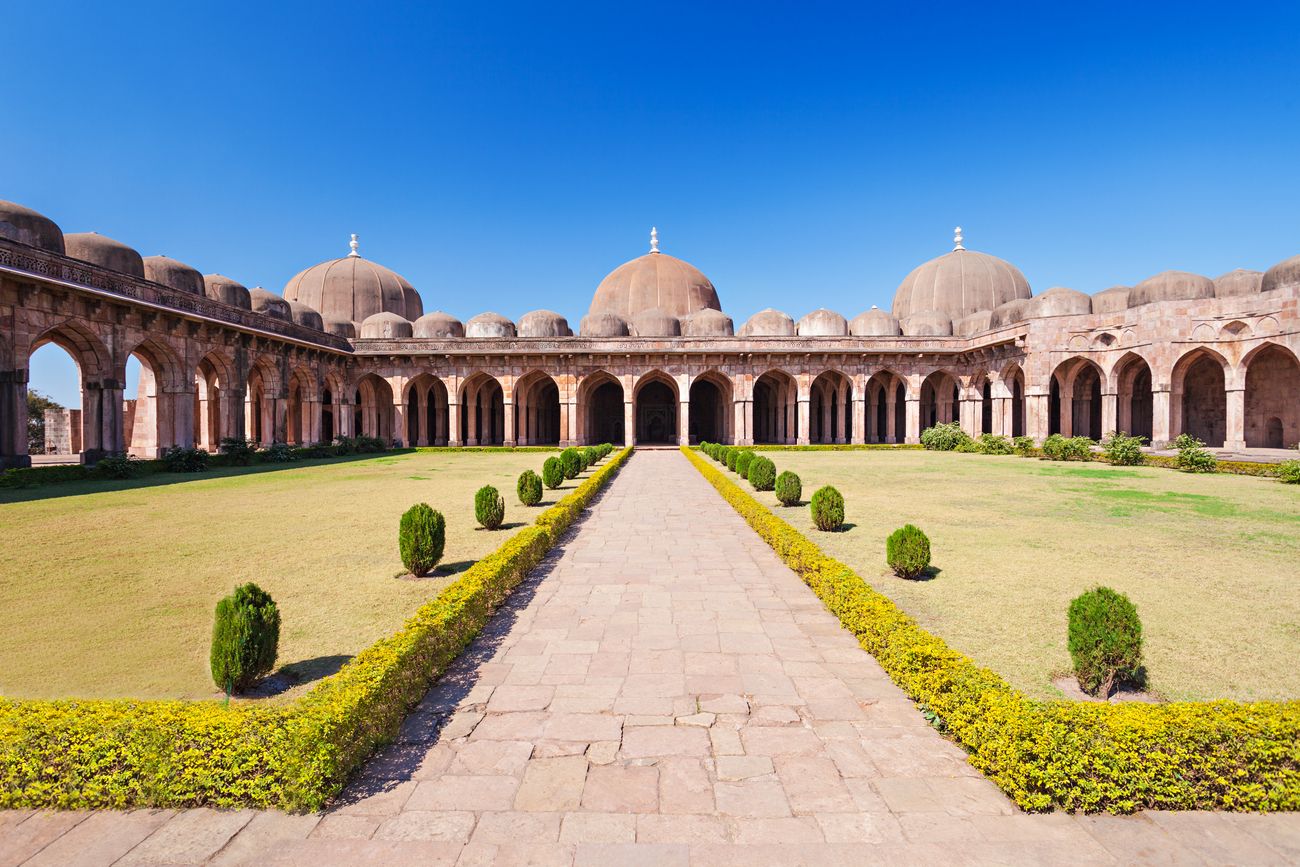
The majestic Jami Masjid began under the reign of Hoshang Shah, but it was Mahmud Khalji who completed this architectural masterpiece in 1454. Built on an awe-inspiring scale, the mosque sprawls across a vast 323 square feet (ca. 30 m²), elevated on a 15-foot-high platform. A flight of steps leads visitors to its grand eastern entrance—a domed porch that immediately commands attention.
An inscription on the porch doorway reveals that the mosque was inspired by the legendary Damascus Mosque, a detail also noted by the scholar Yazdani in the Tuzuk-i-Afghani, Armaghani-i-Shahjahani. The doorway itself is a work of art: marble side panels and lintel, intricately carved and embellished—yet the motifs echo more of Hindu artistic traditions, reflecting Mandu’s unique cultural blend.
Stepping inside, visitors enter a soaring domed hall bathed in soft light filtering through delicate jaalis (lattice screens). Above the window openings, a band of elegant blue star motifs adds a celestial touch.
But the true spectacle awaits beyond the western doorway. Here, the mosque opens into a vast courtyard, breathtaking in its symmetry—three sides lined with sweeping arched colonnades crowned by rows of domes. On the western end stands the magnificent prayer hall, where three imposing domes rise majestically above fifty-eight smaller ones, creating a skyline that embodies both serenity and grandeur.
The Jami Masjid remains one of Mandu’s most unforgettable monuments—an enduring masterpiece of scale, beauty, and spiritual grace.
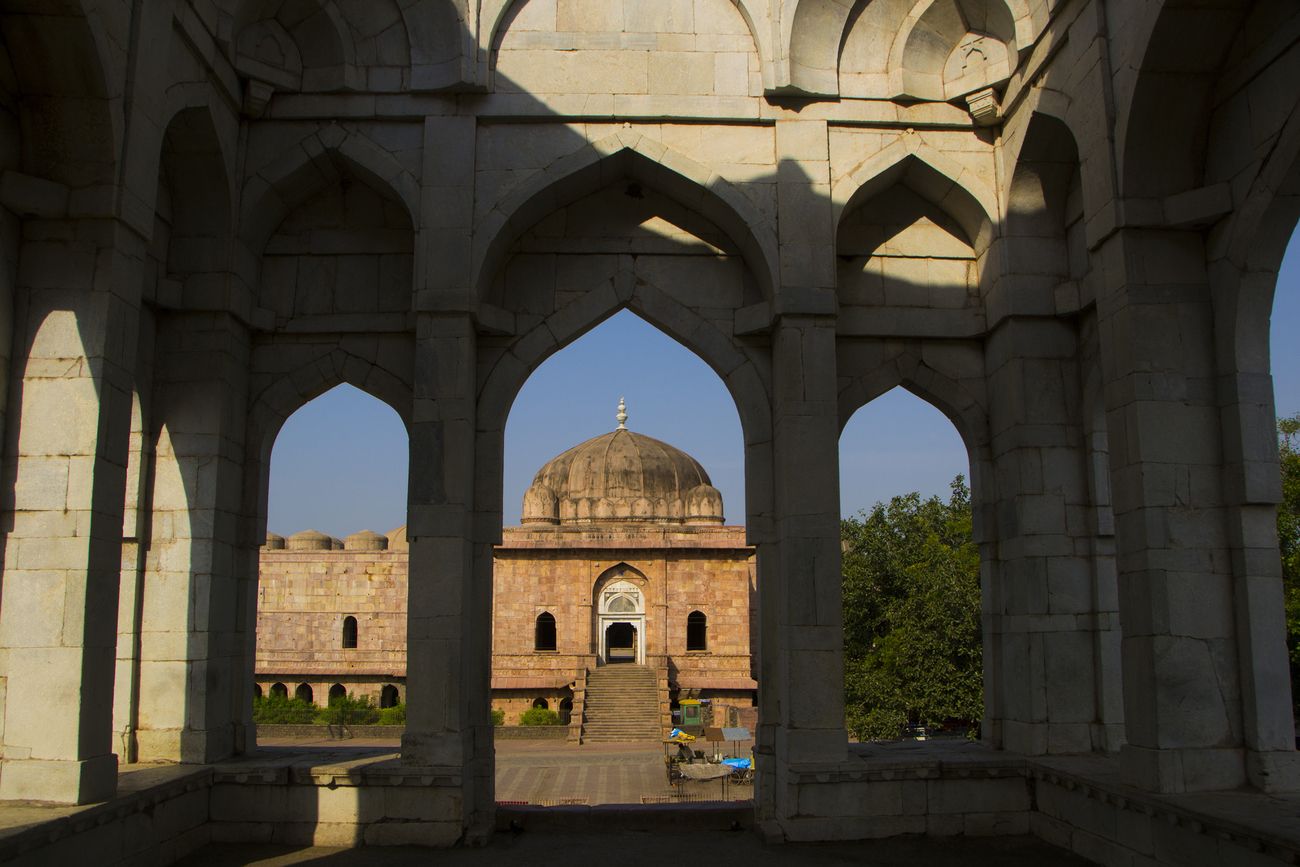
A stunning view of the grand Jama Masjid framed perfectly through the weathered arches of Ashrafi Mahal—Mandu’s history captured in a single, timeless moment. © CRS / Shutterstock
Stepping into this extraordinary prayer hall feels like wandering into a breathtaking forest made of stone—rows of pillars and sweeping arches rise all around you, all sheltered beneath a magnificent canopy of domes. Along the western wall, seventeen carved niches (mihrabs) stand in elegant contrast to the otherwise plain, sturdy pillars. At the center is the main mihrab, richly decorated with flowing Quranic calligraphy, giving the space a sense of solemn beauty. Beneath the great central dome sits a raised platform supported by four arches, crowned with its own delicate marble dome—a jewel within a giant.
The renowned archaeologist Yazdani once remarked that this pulpit “compares favorably with the richly carved wooden pulpits of North Africa or the mosaic marble pulpits of Egypt.” Such praise speaks to the craftsmanship that still dazzles visitors centuries later.
On the upper level, at the far end of the hall, lie the private apartments where royal visitors and noblewomen once stayed. Each chamber features nine stately columns—quiet reminders of Mandu’s regal past.
To the north and south, long colonnades unfold, their eleven arched openings framed by beautifully carved brackets supporting projecting chhajjas. Two doorways punctuate the north wall—one leading to the immense courtyard, the other opening directly into the prayer hall. The latter was once reserved exclusively for the ruler, a grand entrance befitting the king.
Together, these features transform the hall into a mesmerizing blend of artistry, devotion, and royal legacy—a place where history whispers through every stone.
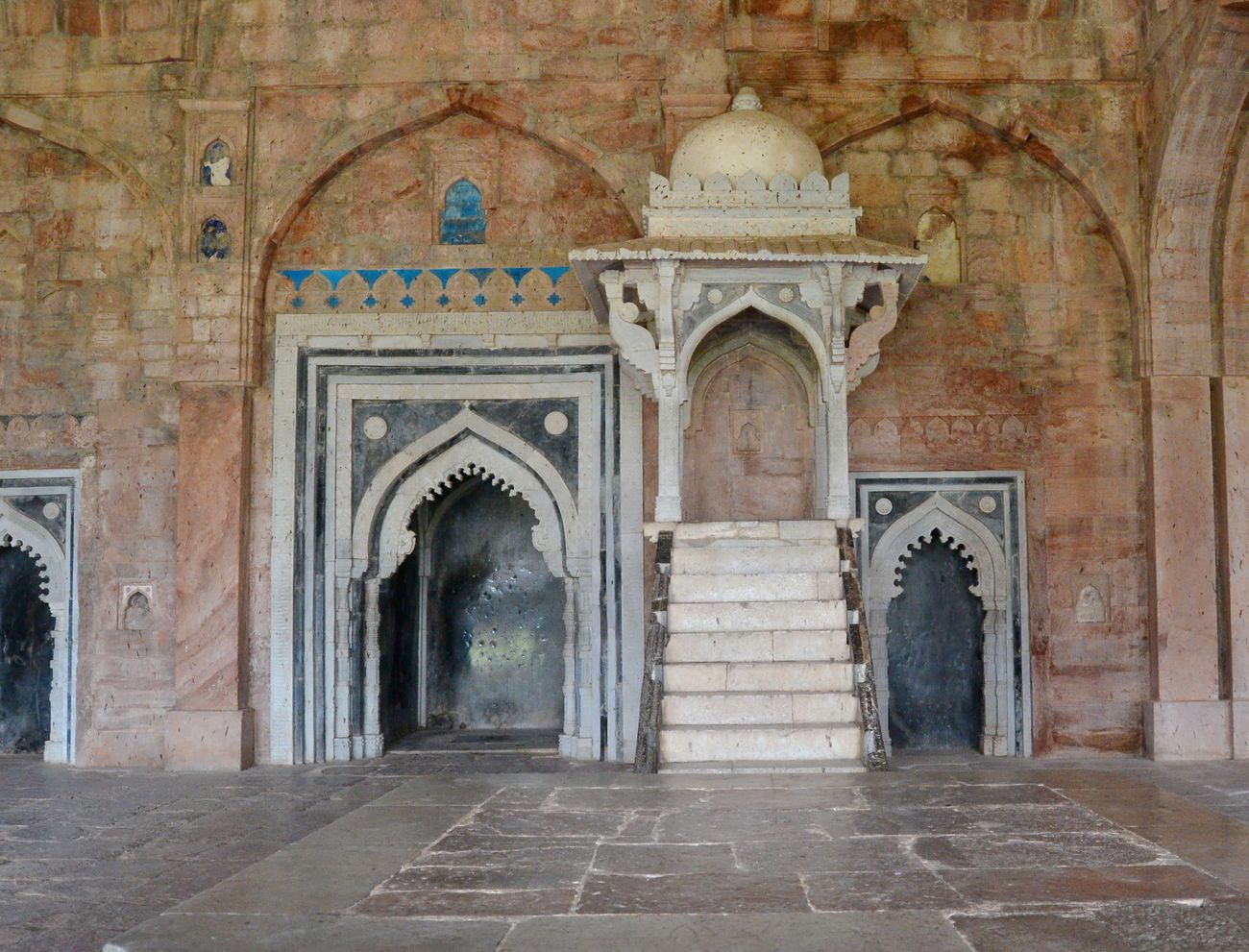
The magnificent mihrab and principal pulpit of Jama Masjid glow softly in the prayer hall, showcasing masterful stonework and centuries-old devotion. © Shariqkhan / Dreamstime
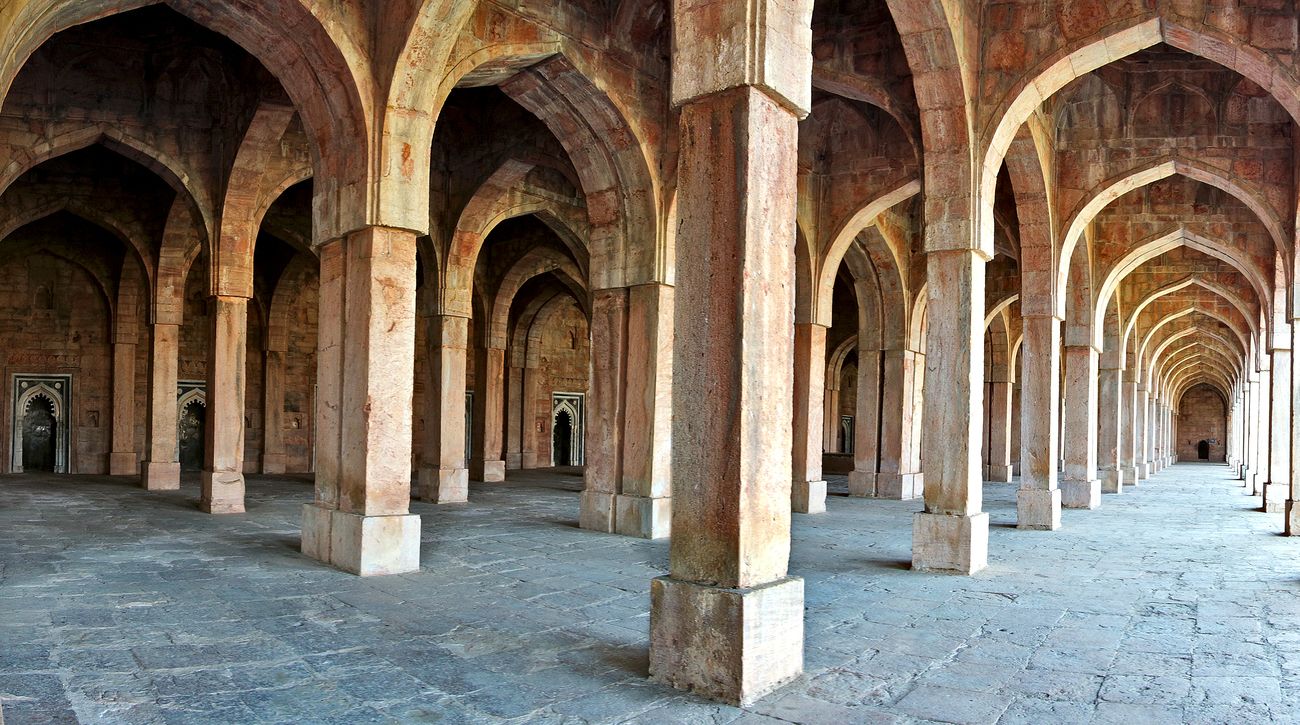
The forest of columns inside Jami Masjid displays a harmonious simplicity—each pillar adding to the mosque’s serene rhythm and graceful symmetry. © Igor Plotnikov / Shutterstock
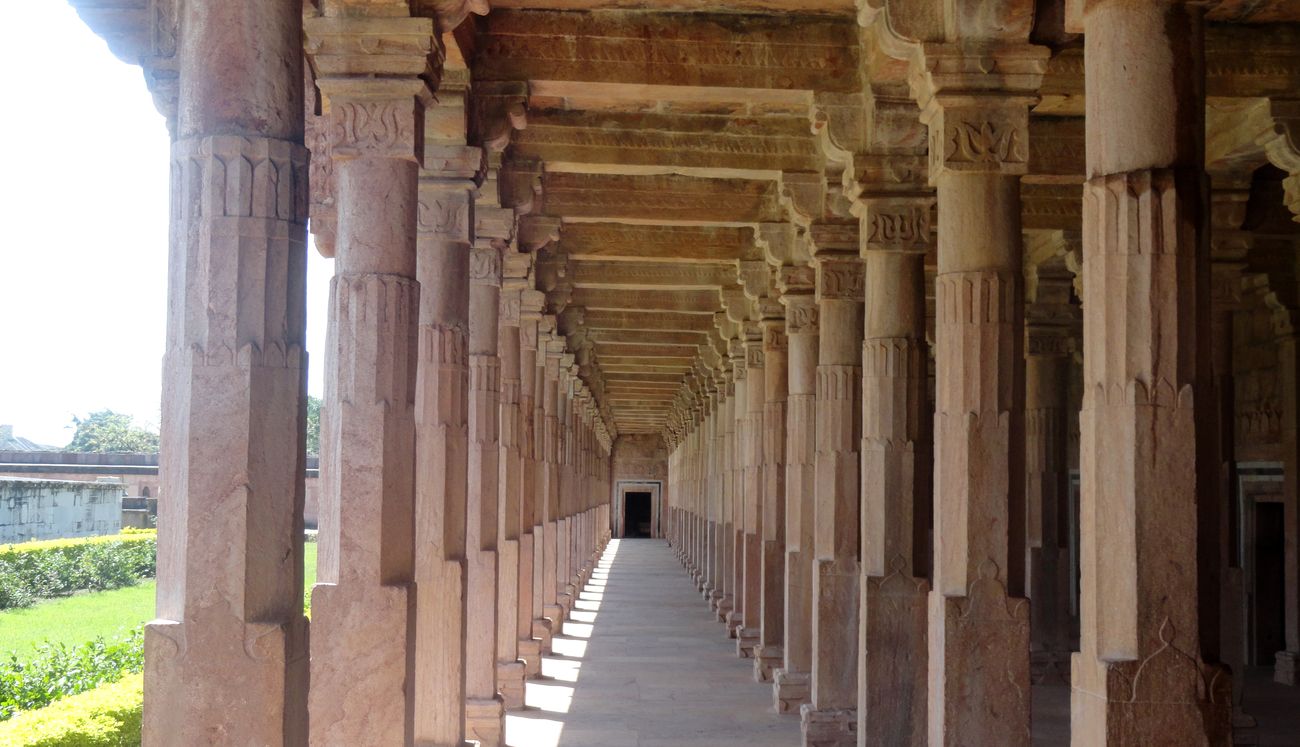
A beautifully composed view down the aisles of Jami Masjid, where arches and columns create a mesmerizing pathway of light and shadow. © Vir Creation / Shutterstock
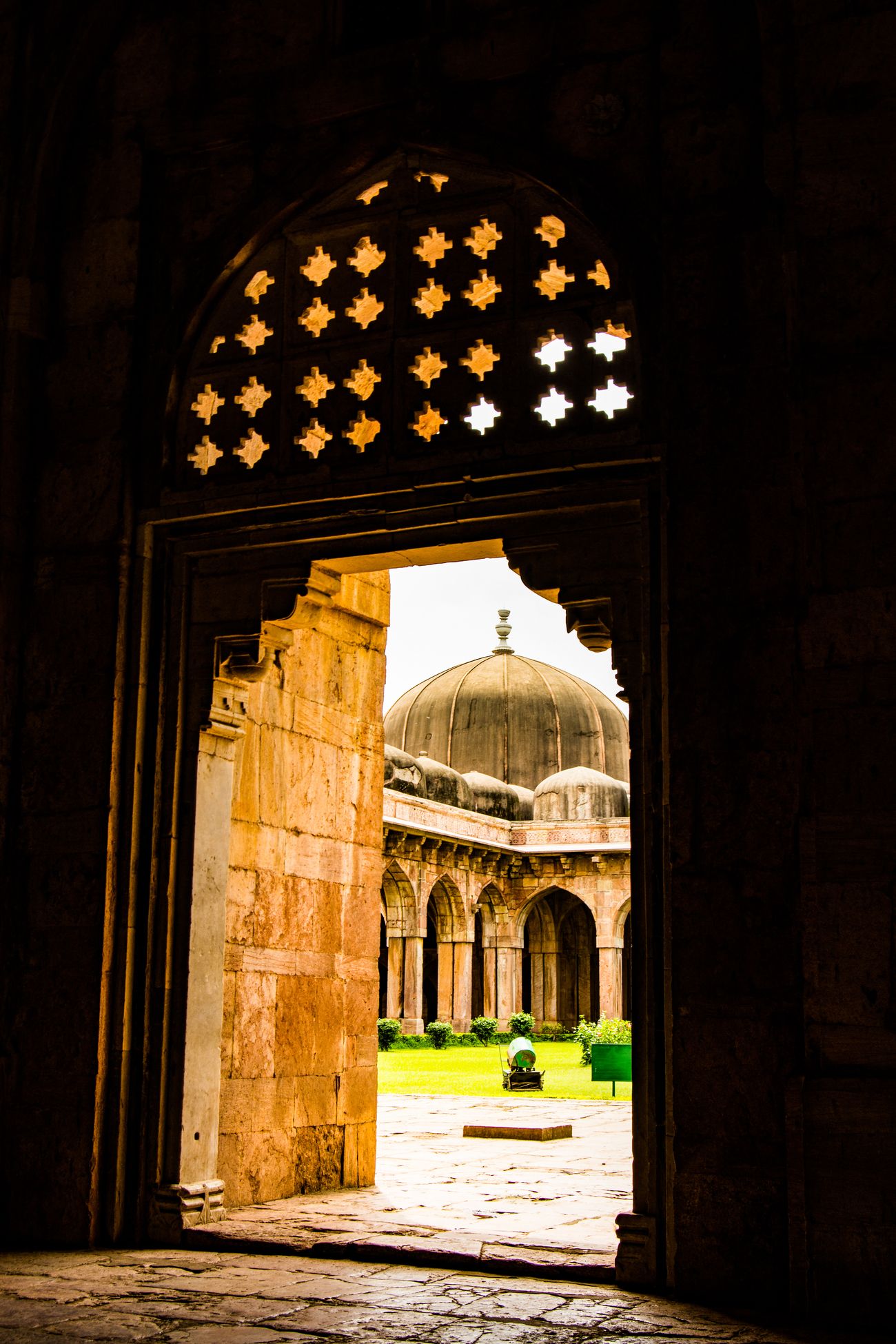
Inside Jami Masjid, the delicate stone jaalis appear sparingly yet make a dramatic impact—paired with an entryway whose elegance lies in its pure simplicity. © VIKRAM SK / Shutterstock
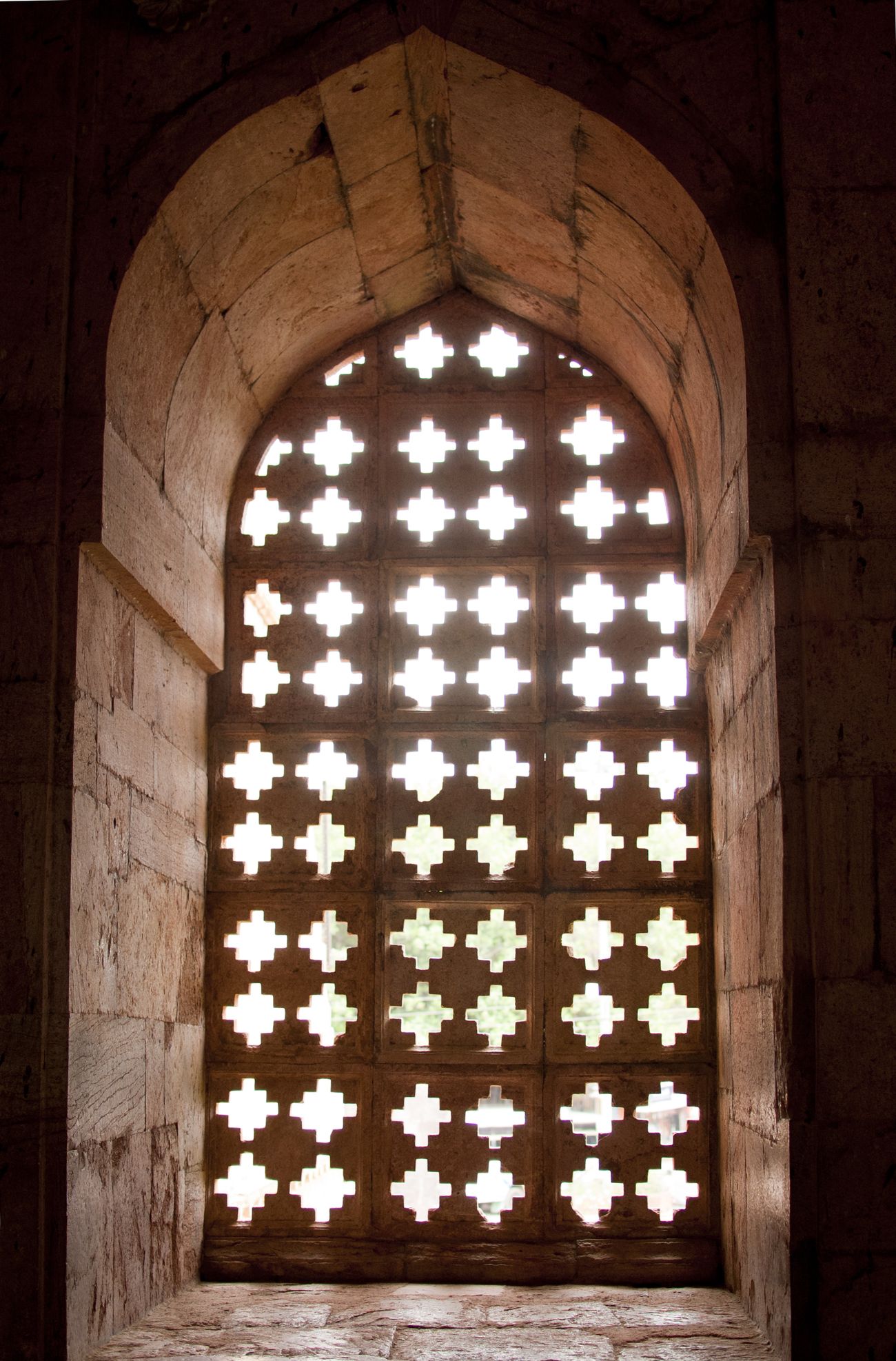
Intricate stone jaalis catch the sunlight in dazzling patterns, adding a touch of poetic beauty to the interiors of Jama Masjid, Mandu. © Mitesh Kothari / Getty Images
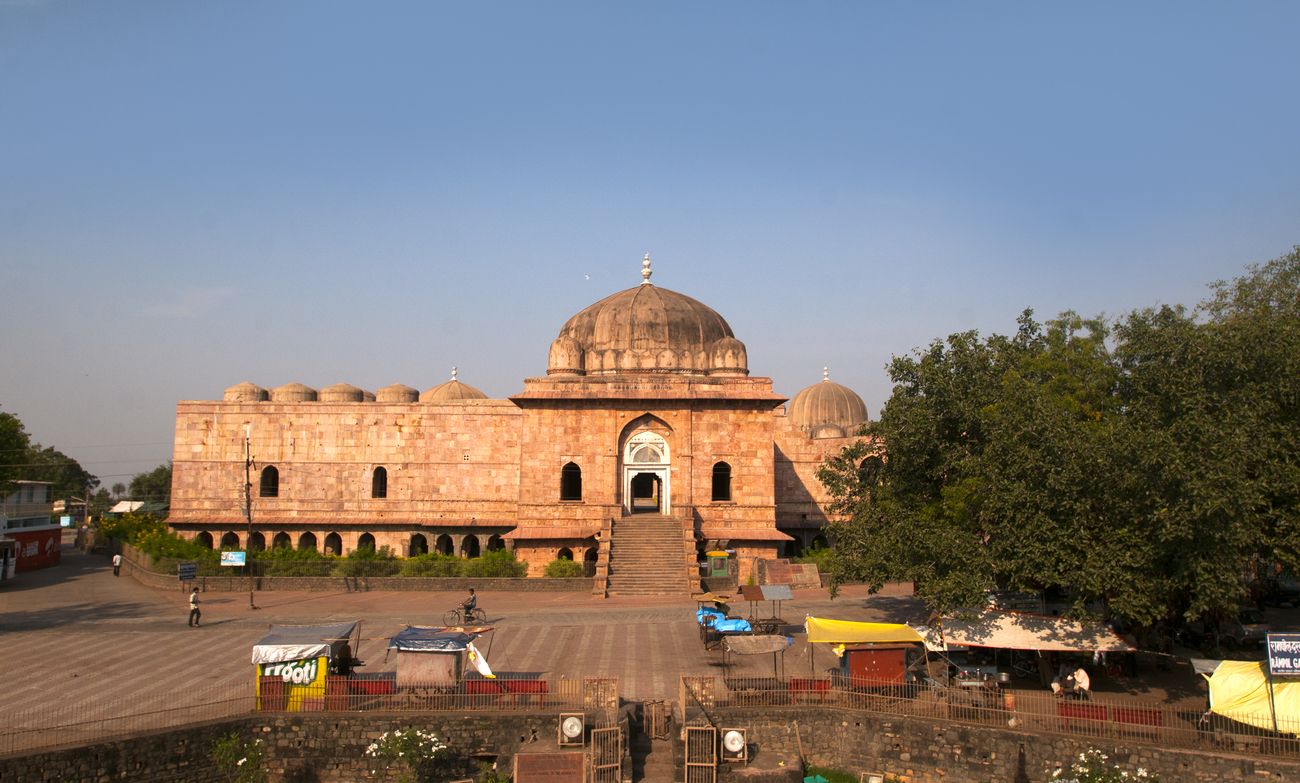
Jama Masjid rises in serene grandeur—undoubtedly one of Mandu’s most majestic and commanding architectural masterpieces. © CRS PHOTO / Shutterstock
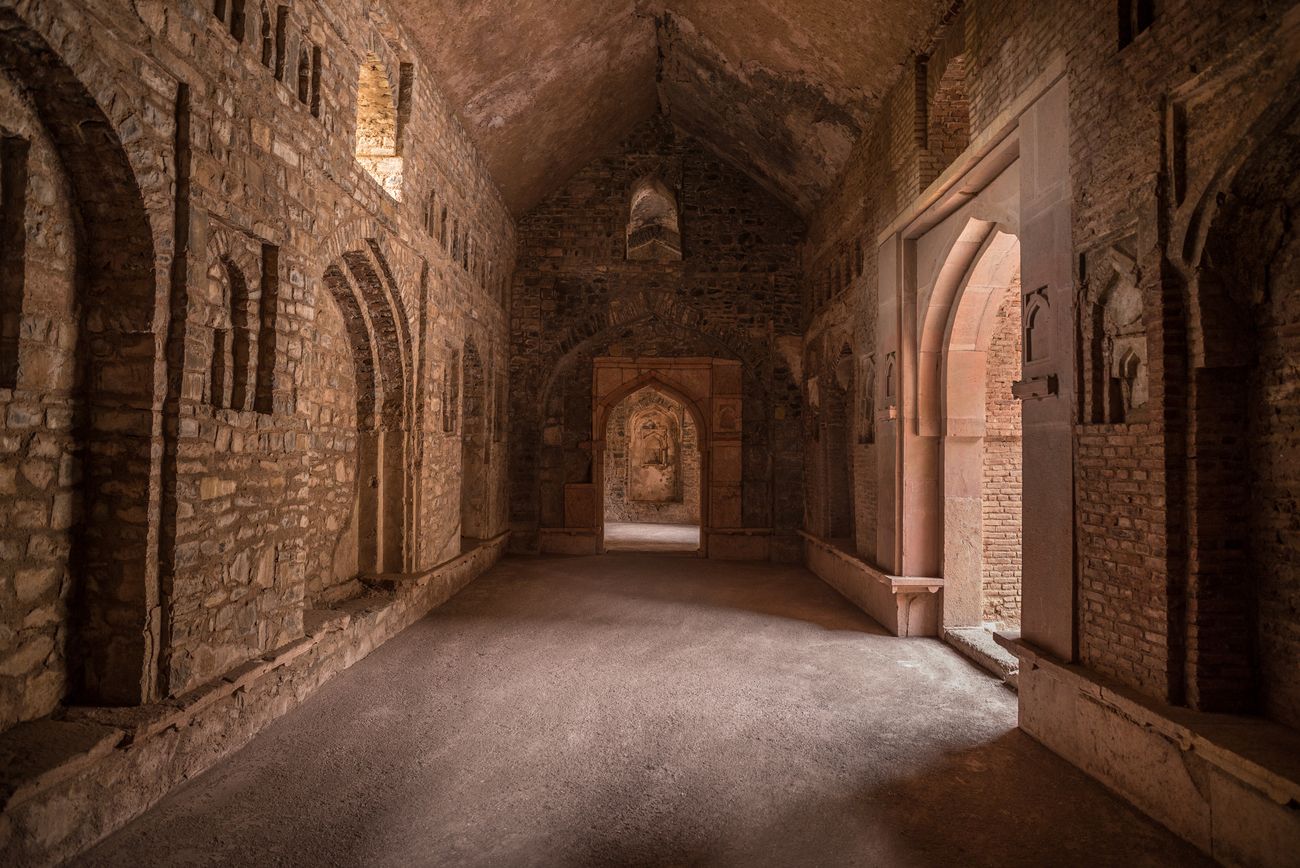
A hauntingly beautiful interior view of Jama Masjid, surrounded by the Afghan-era ruins of Mandu’s Islamic kingdom—history etched in every stone. © Fabio Lamanna / Shutterstock
Hoshang Shah’s Tomb
Hoshang Shah was so deeply revered that after his death in 1435, his mausoleum became a sanctified space—hosting the annual Urs celebrations right up until the nineteenth century. Even today, the monument radiates a quiet majesty that speaks of the affection and respect he once commanded.
At first sight, the tomb appears strikingly austere, yet its simplicity is what makes it unforgettable. The massive marble dome—smooth, pale, and almost ethereal—dominates the skyline, transforming the structure into a timeless architectural marvel. At each corner, conical domed turrets add graceful symmetry, while the crescent-topped finial crowning the main dome reveals a clear influence from Persia or Mesopotamia, as noted by leading archaeologists.
The entire monument rests on a grand quadrangular marble platform. From this base rise the 31.5-foot-high walls, creating a powerful sense of solidity and permanence. Along the edges of the platform runs a beautifully carved ornamental border, a subtle yet exquisite reminder of the Hindu craftsmen whose artistry helped shape this masterpiece.
Serene yet imposing, Hoshang Shah’s Tomb remains one of Mandu’s most iconic structures—an elegant fusion of cultures, craftsmanship, and reverence.
Hoshang Shah’s Tomb stands in quiet dignity amid the ruins of Mandu—its marble form a striking contrast to the derelict city around it. © Bodom / Shutterstock
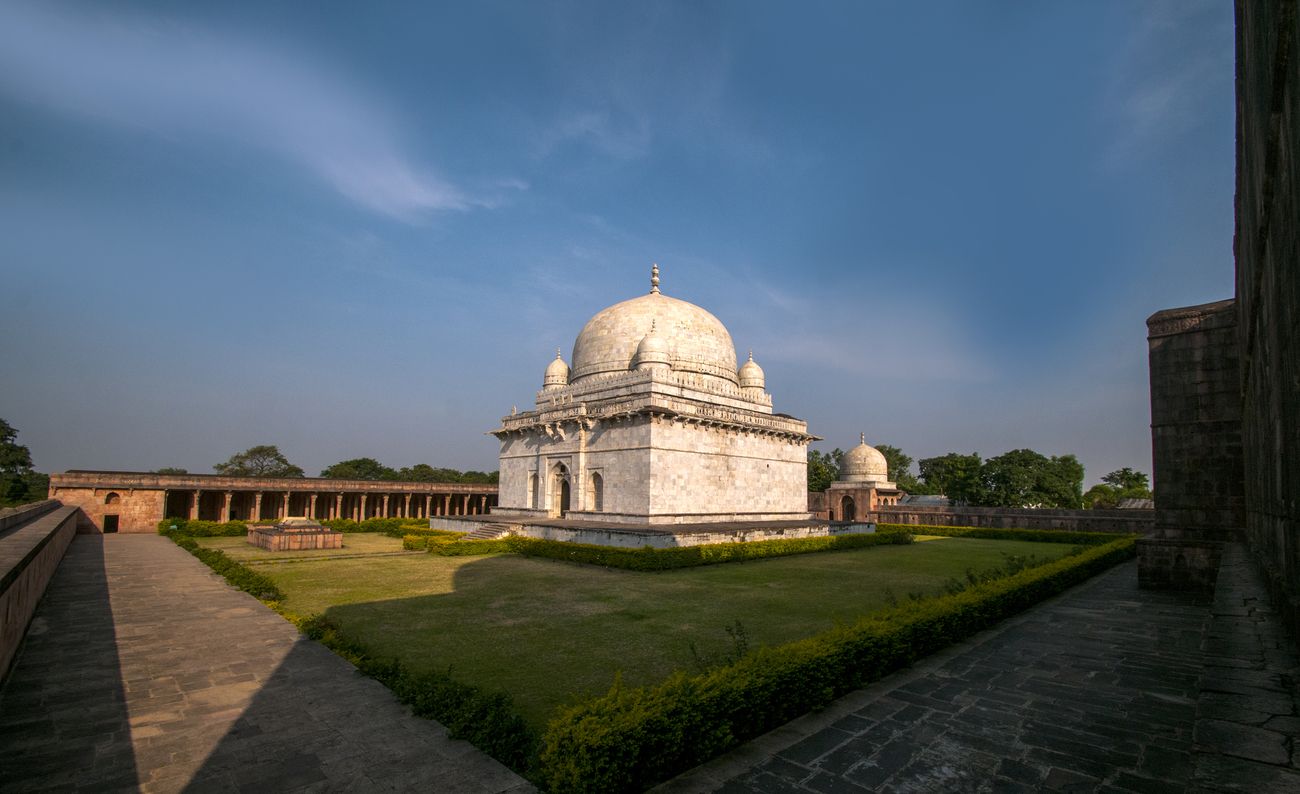
The breathtaking tomb of Hoshang Shah, India’s first fully marble-clad mausoleum, glows with timeless elegance in the heart of Mandu. © CRS / Shutterstock
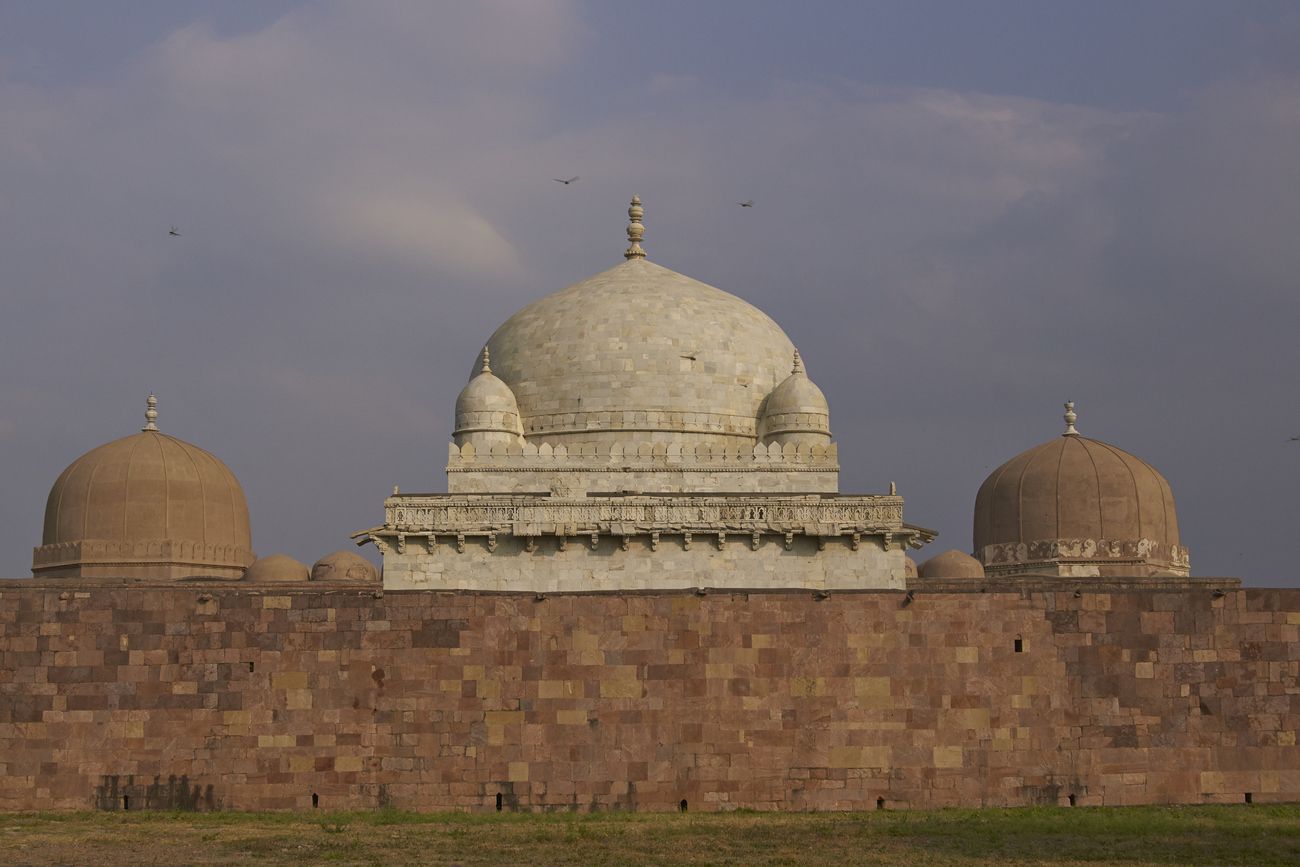
Perched atop Mandu’s hilltop fort, the gleaming white marble tomb of Hoshang Shah—built in the 15th century—remains a magnificent symbol of Islamic architecture. © JeremyRichards / Shutterstock
The beauty of Hoshang Shah’s mausoleum lies in its purity of form. Its architecture is defined by smooth, uncluttered surfaces and a striking absence of excessive ornamentation. Yet even in its restraint, the structure reveals subtle artistry: on the drum of the great dome, a delicately carved parapet appears in relief, with a graceful row of stars etched into the stone beneath it.
Inside, the elegance continues. The illumination is soft and serene—sunlight filters through perforated stone screens, casting gentle patterns across the chamber. The embellishments are minimal but exquisite: delicate moldings, tiny blue enamel stars set into the stonework, and lotus motifs carved with remarkable finesse.
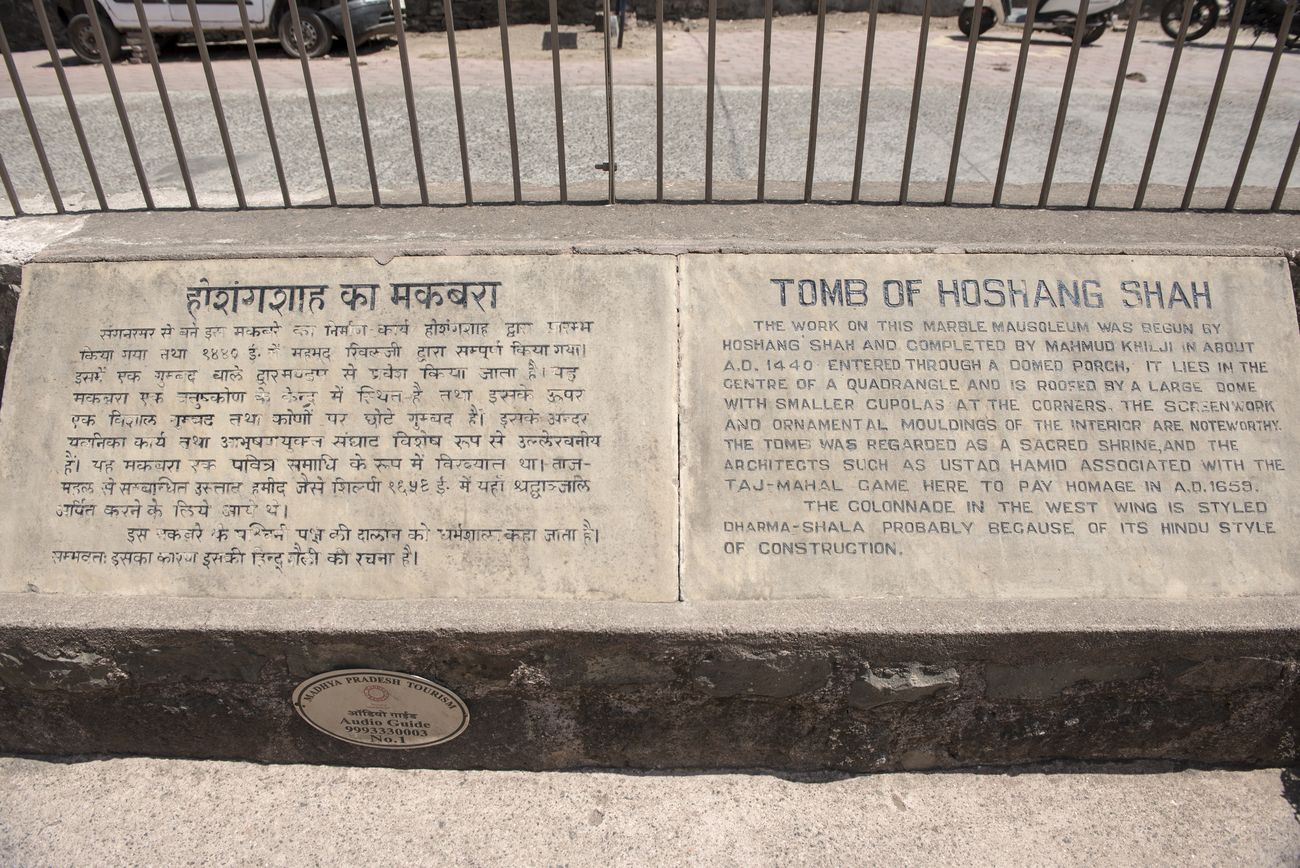
Many believe that this very tomb played a role in shaping one of the world’s most iconic monuments—the Taj Mahal. A historic inscription on the doorway notes that in 1659, four architects of Shah Jahan visited Hoshang Shah’s mausoleum to pay tribute to its builders. Among them was Ustad Hamid, who would later contribute significantly to the creation of the Taj itself.
Thus, within these quiet marble walls lies not only a ruler’s resting place but also the inspiration for a masterpiece.
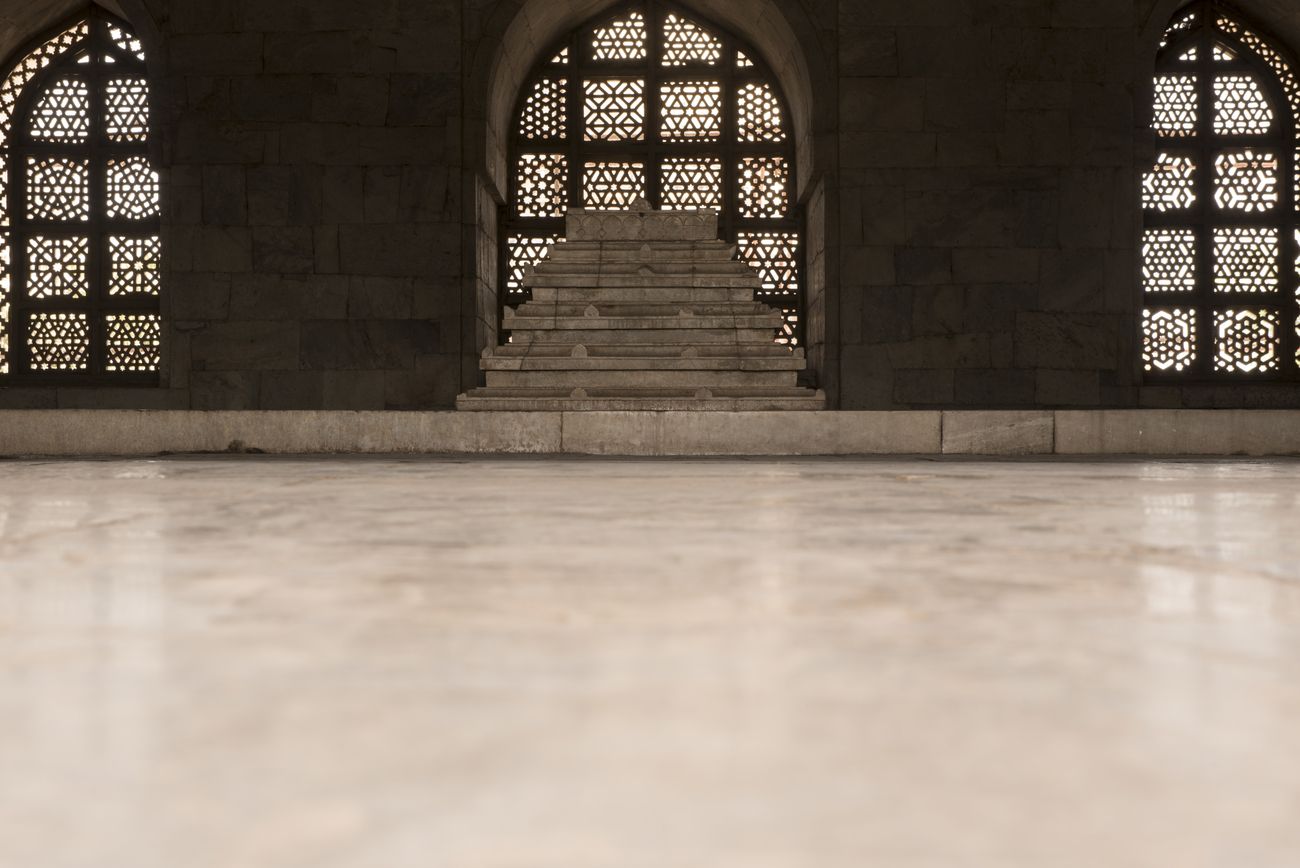
Inside Hoshang Shah’s tomb, the soft light and echoing hall create an atmosphere of serene reverence within Mandu’s crumbling ancient city. © Bodom / Shutterstock
Asharfi Mahal
Today, Asharfi Mahal stands in romantic ruin, yet even in its crumbled state it whispers of the grandeur it once possessed. If time had spared it, this complex would have been one of the finest examples of medieval Muslim architecture in Mandu—an elegant fusion of learning, power, and royal pride.
Its story unfolds in two distinct phases. In the early years of Mahmud Khalji’s rule (1436–1469), construction began on a magnificent madrasa (college) right beside the Jami Masjid. Much like the mosque, the complex was planned as a vast rectangle bordered by a series of small cells where students once lived and studied. Each corner was marked by a tower, and even today the remains of three of these can still be traced amid the ruins.
A few years later, Asharfi Mahal gained a dramatic new landmark. To commemorate Mahmud Khalji’s victory over the Rana of Mewar, the northeast turret was raised into a towering seven-storey structure—an architectural triumph meant to celebrate triumph itself. While most of it has vanished, the massive 32-foot-high basement still stands, hinting at the monumental tower that once dominated the Mandu skyline.
Though much has been lost, the spirit of Asharfi Mahal endures—an evocative blend of scholarship, ambition, and the shifting tides of history.
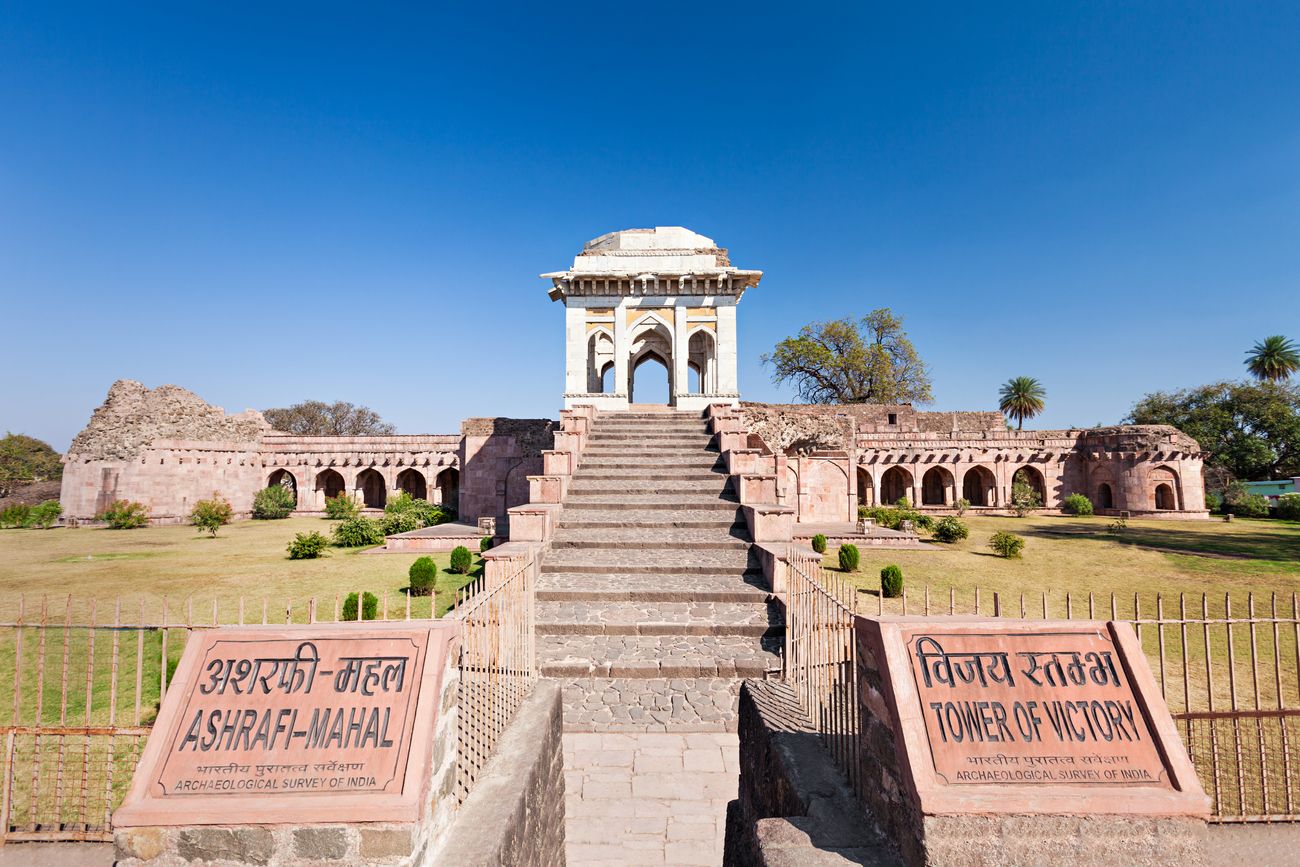
The haunting ruins of Ashrafi Mahal tell stories of Mandu’s royal past—its stone walls still echoing the grandeur that once defined this palace complex. © saiko3p / Shutterstock
Later, the evolving vision for Asharfi Mahal took a dramatic turn. The open courtyard was filled in to create an enormous 26-foot-high plinth, and at its center rose the grand mausoleum of Mahmud Khalji—a structure that was, by all accounts, once the most magnificent building in all of Mandu. The renowned historian Percy Brown observed that even in ruin, it is clear that “few buildings could have been more sumptuously embellished.” Every wall was sheathed in gleaming white marble; doorways, windows, and cornices were carved with exquisite detail; and select areas shimmered with inlaid stone patterns and friezes of blue and yellow glaze.
Sadly, such opulence came with a fatal flaw—the walls and foundations were too weak to bear the immense weight of the dome. The structure eventually collapsed, leaving behind only fragments of its former glory.
But not all was lost. The beautifully carved yellow marble plinth survives, as does Mahmud Khalji’s sarcophagus—both offering a poignant glimpse of what once stood here.
One of the most fascinating details awaits those who stand at the very center of the tomb: the great halls of the Jami Masjid, Hoshang Shah’s Tomb, and Asharfi Mahal align perfectly. It is a subtle but striking reminder of Mandu’s masterful planning and the architectural brilliance of a bygone era.
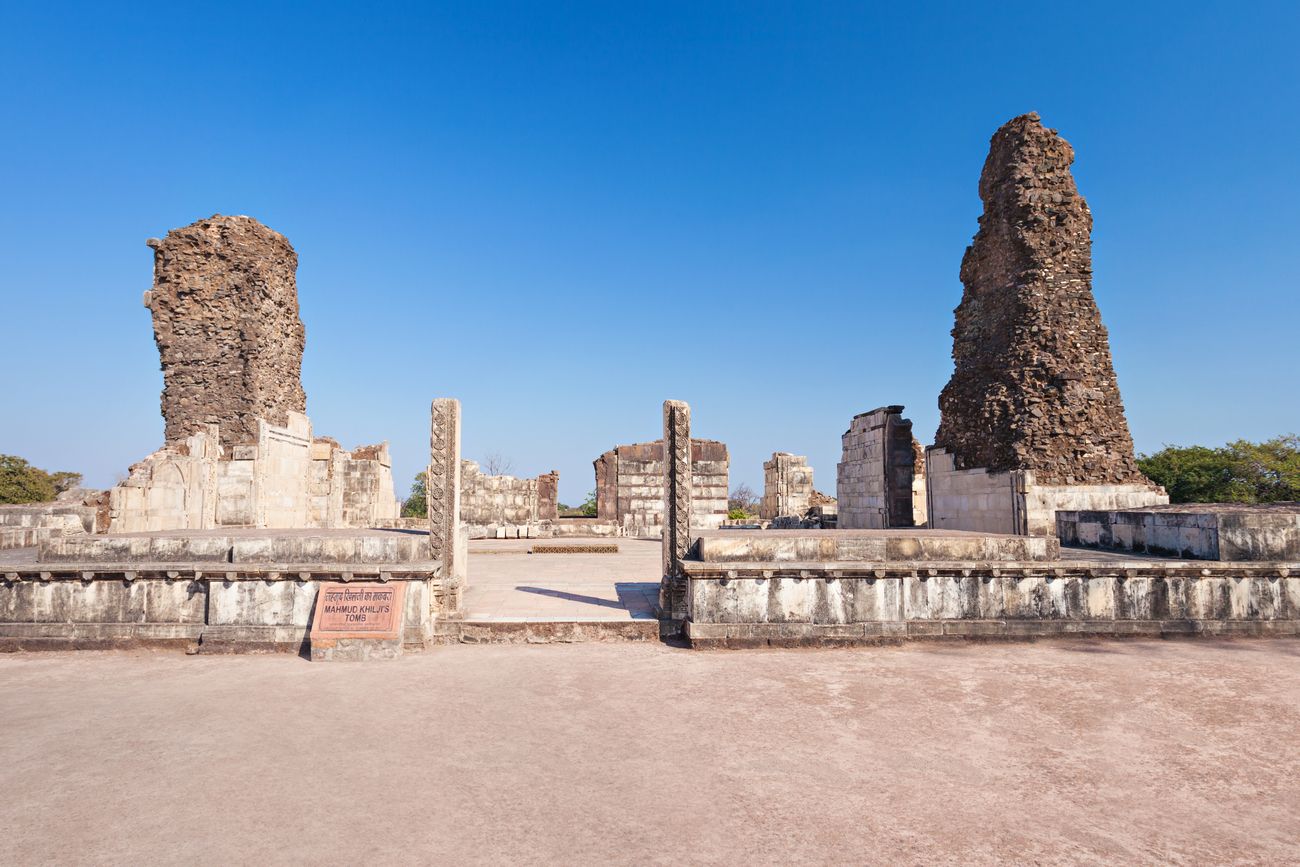
The beautifully carved remnants of Mahmud Khilji’s Tomb at Ashrafi Mahal stand as a poignant reminder of Mandu’s regal architectural legacy. © saiko3p / Shutterstock
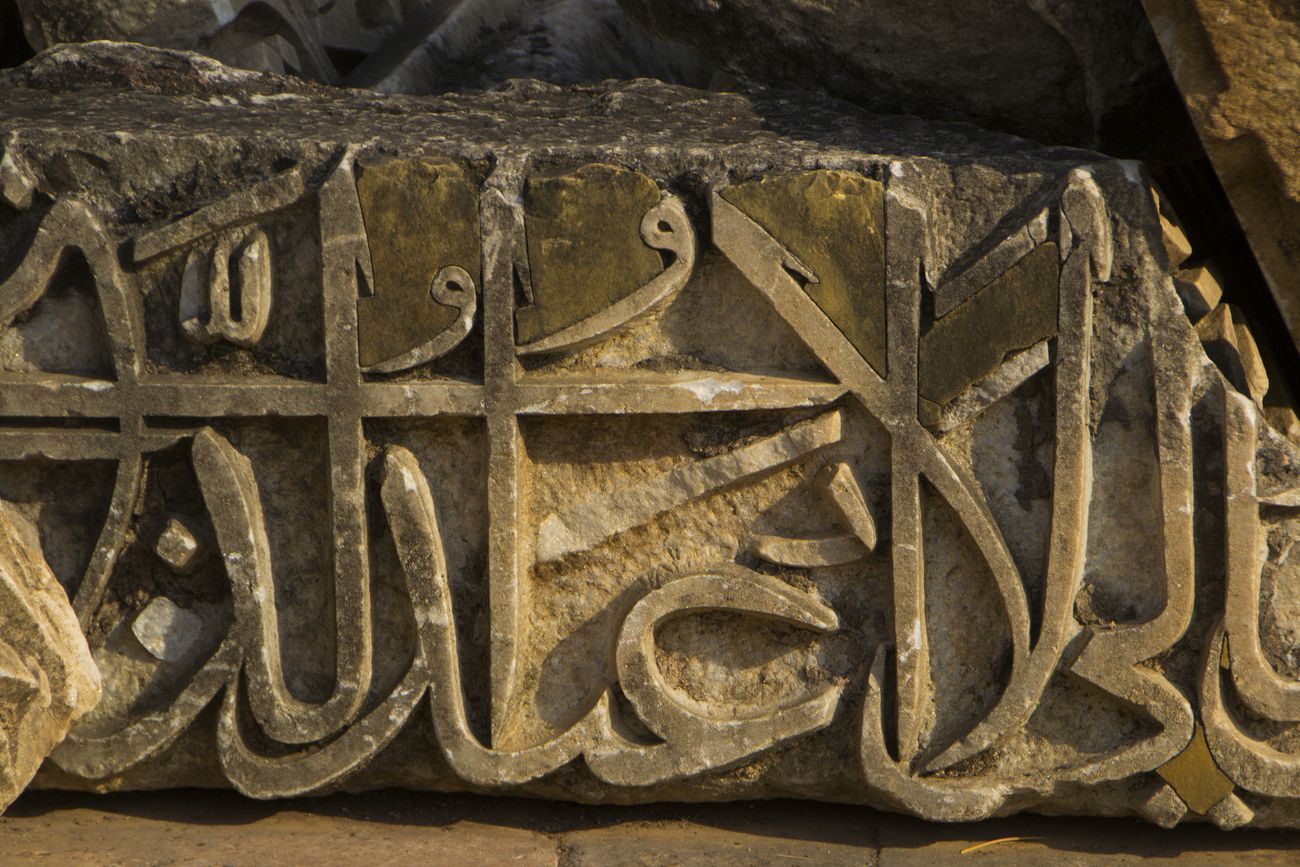
Among the ruins of Ashrafi Mahal, intricate Arabic stone carvings reveal the exquisite craftsmanship of Mandu’s Afghan architects. © CRS / Shutterstock


























![Golden Triangle Tour with Goa [Culture + Beach Vacation] (12 days)](https://www.vacationindia.com/wp-content/uploads/2022/06/golden-triangle-tour-with-beach-vacation-270x160.jpg "Golden Triangle Tour with Goa [Culture + Beach Vacation] (12 days)")