
Pink City Jaipur World Heritage Site Now
Pink City Jaipur: Now a Proud UNESCO World Heritage Site
Why UNESCO Chose Jaipur as a World Heritage Site
Conclusion: Protecting Jaipur’s Legacy for Generations
Pink City Jaipur: Now a Proud UNESCO World Heritage Site
On February 5, 2020, Jaipur’s legacy was officially etched into global history. UNESCO formally declared the Pink City a World Heritage Site, handing the prestigious certificate to Rajasthan’s Urban Development and Housing Minister—a moment of immense pride for India.
Founded in 1727 by the visionary ruler Sawai Jai Singh II, Jaipur is not just Rajasthan’s capital—it’s a vibrant blend of royalty, artistry, and heritage. The city earned its charming nickname, “Pink City,” when its buildings were painted a warm terracotta shade in 1876 to welcome the Prince of Wales, Albert Edward. The color has remained ever since, creating an unmistakable identity admired by travelers from across the world.
A jewel of the Golden Triangle tourist circuit along with Delhi and Agra, Jaipur dazzles visitors with its iconic monuments—
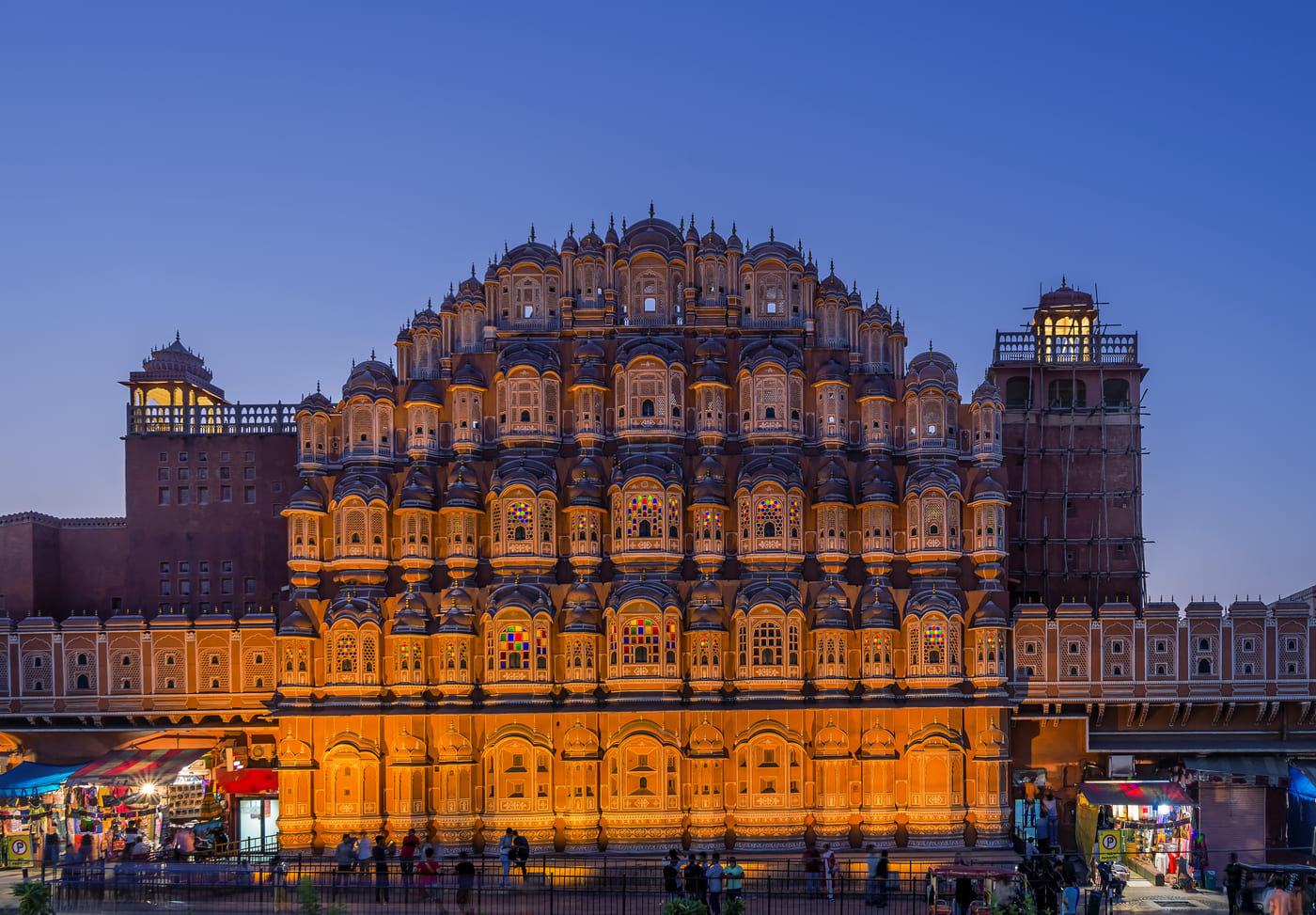
• Hawa Mahal, the Palace of Winds
• City Palace, the seat of royalty
• Jal Mahal, floating like a dream on Man Sagar Lake
• Jantar Mantar, a scientific marvel and UNESCO site in its own right
The city’s layout was masterfully planned by architect Vidhyadhar Bhattacharya, who wove in the principles of Vastu Shastra, ancient geometry, and traditional Indian craftsmanship to create a city of perfect symmetry and function.
Jaipur’s famed walled city is guarded by seven majestic gates, each with its own story:
• Suraj Pol (East): Adorned with symbols of the Sun and gateway to the Sun Temple
• Chand Pol (West): A Rajputana architectural gem, offering spectacular views of the bustling main bazaar
• Dhruv Pol (North): Named after the Pole Star, marking the northern boundary
• Kishan Pol (South): A historic entrance that completes the city’s protective ring
With its pink-hued charm, timeless craftsmanship, and living traditions, Jaipur stands today not only as a city—but as a celebration of heritage, now recognized and cherished by the world.
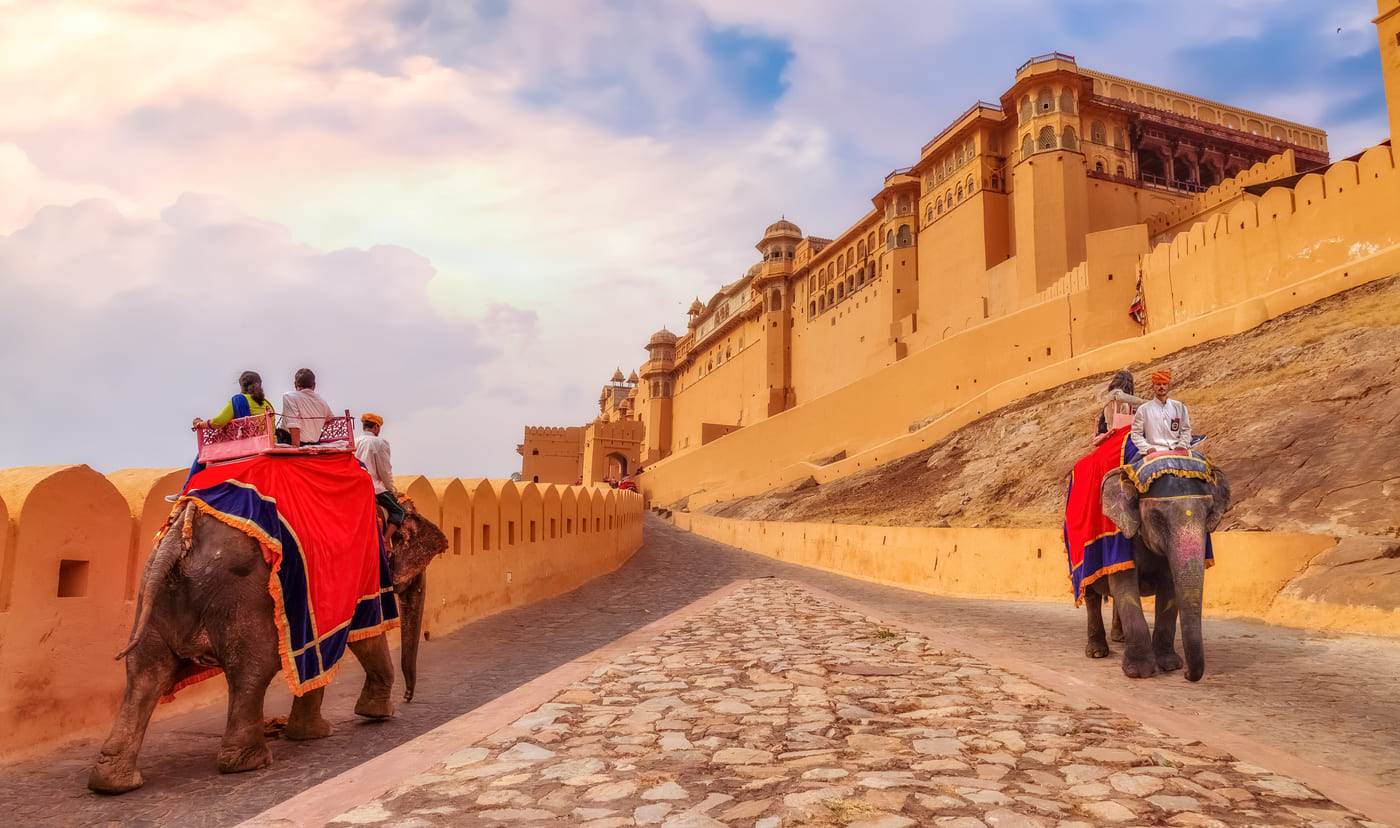
As the sun rises over Amber Fort, tourists enjoy a magical elephant ride—slowly ascending the ancient ramparts while the golden light bathes Jaipur’s royal stronghold in a dreamlike glow ©️ Roop Dey
Why UNESCO Chose Jaipur as a World Heritage Site
Jaipur’s entry into the UNESCO World Heritage list is no small feat. It became the fourth Indian city—after Chandigarh, Ahmedabad, and Mumbai—and the 38th site in India to earn this distinguished honor. The nomination was first submitted in 2015 by the Archaeological Survey of India, and after careful evaluation, the decision was finalized during the 43rd session of the World Heritage Committee.
But what exactly made UNESCO choose Jaipur?
According to UNESCO, Jaipur’s urban planning is a masterpiece—a rare and brilliant blend of ancient Hindu principles, Mughal influences, and contemporary Western ideas. The city stands as an outstanding example of cultural interchange, bringing together diverse architectural and philosophical traditions in a way that few cities in the world have achieved.
While many towns in the Aravalli region grew organically over hilly terrain, Jaipur broke the mold. It was crafted with a precise grid plan based on Vedic architecture, making it one of the earliest planned cities in India. This design not only ensured beauty and symmetry but also supported a thriving commercial and artisanal life. Jaipur flourished as one of South Asia’s most innovative trading hubs during the late medieval period—something UNESCO regarded as truly exceptional.
Equally significant is how Jaipur has preserved its living traditions of arts and crafts. From gemstone polishing and hand block printing to blue pottery and miniature paintings, Jaipur continues to champion artistic heritage that has gained global admiration.
During the presentation of the World Heritage certificate, UNESCO Director-General Audrey Azoulay emphasized UNESCO’s commitment to safeguarding Jaipur’s cultural richness for generations to come.
Jaipur wasn’t just chosen for its past—it was chosen because its heritage is alive, thriving, and deeply woven into the identity of the city even today.
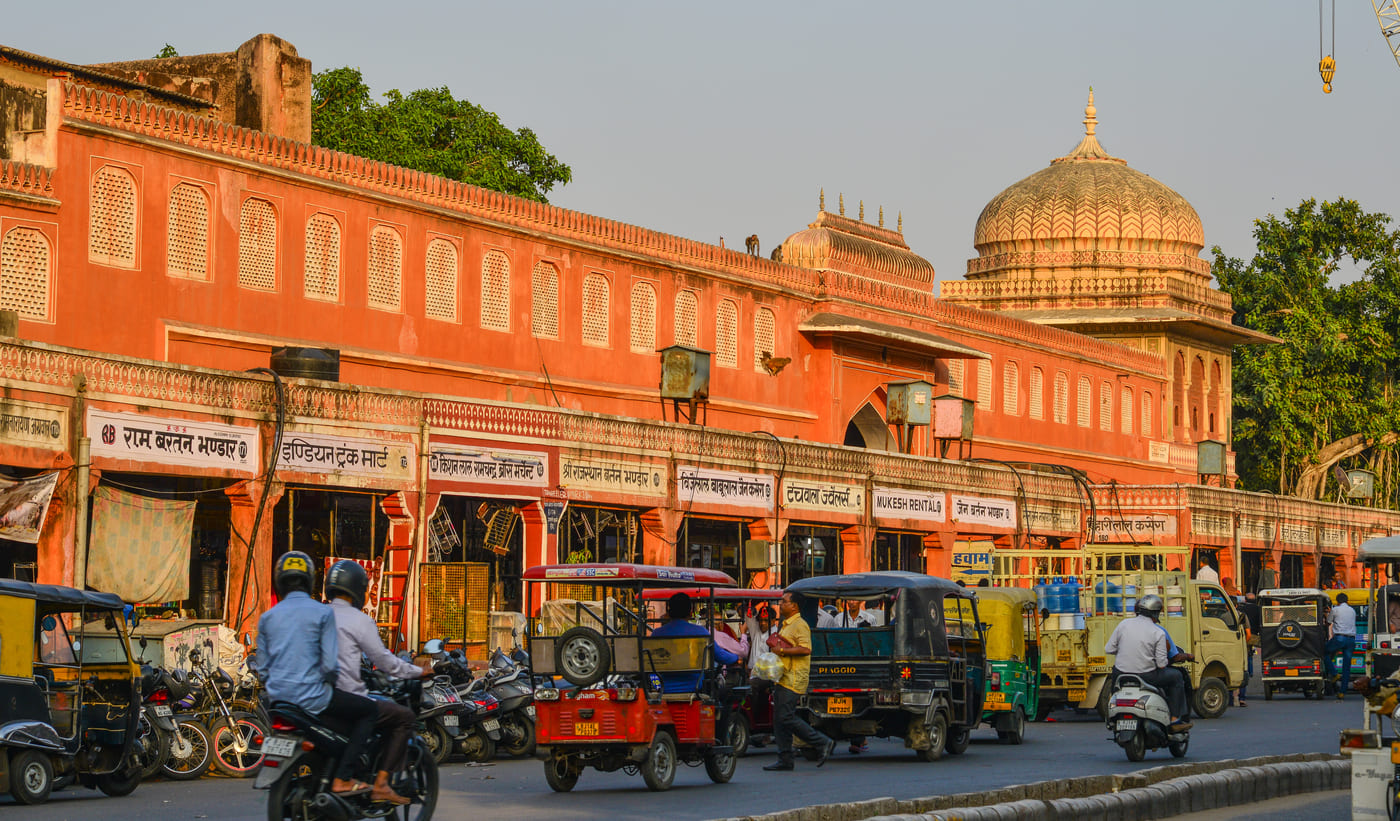
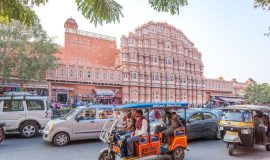
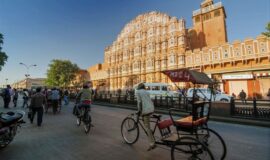
A bustling Jaipur street bursts with color and life—where vibrant markets, pink-hued buildings, and timeless Rajasthani charm create an unforgettable glimpse of the city’s lively soul ©️ Phuong D. Nguyen
Conclusion: Protecting Jaipur’s Legacy for Generations
To honor Jaipur’s new status as a UNESCO World Heritage Site, the Rajasthan government has taken impressive steps to safeguard the city’s priceless heritage. A dedicated state-level committee has been formed, and a comprehensive special area plan is now in place to ensure the Pink City’s architectural and cultural treasures remain protected.
In a move toward modern preservation, the government has completed 360-degree videography and drone mapping of the walled city—creating detailed digital records that will help maintain and monitor Jaipur’s heritage with precision.
Looking ahead, there is a strong push to promote responsible tourism, ensuring that the millions who visit Jaipur each year experience its magic while also contributing to its conservation.
With thoughtful planning, advanced documentation, and mindful tourism, the Pink City is set to shine even brighter—its legacy preserved, its stories celebrated, and its future secure.








![Golden Triangle Tour with Goa [Culture + Beach Vacation] (12 days)](https://www.vacationindia.com/wp-content/uploads/2022/06/golden-triangle-tour-with-beach-vacation-270x160.jpg "Golden Triangle Tour with Goa [Culture + Beach Vacation] (12 days)")