
Holi 2027 – Ultimate Guide to Surviving the Fun!
Holi Dates for 2026, 2027 and 2028
Vrindavan and Mathura: Where Holi Becomes a Living Legend
Lathmar Holi: Where Tradition Meets Playful Chaos
Holi Festival Explained: A Story of Faith, Fire, and the Triumph of Good
How Do People Celebrate Holi?
Where Do People Celebrate Holi?
Extra Tips to Survive Holi (and Enjoy Every Second of It!)
Can Holi Celebrations Be Dangerous?
Women Take Special Care to Stay Safe
What to Pack for the Holi Celebrations
You might think Fourth of July fireworks are dazzling or that birthday balloons burst with every shade of the rainbow—but trust me, both fade the moment you witness Holi, India’s legendary festival of colors.
Sharing photos of Holi celebrations has become a rite of passage for visitors. They proudly pose in shirts splattered like abstract art, faces streaked with neon greens, sunshine yellows, and electric pinks. But Holi is far more than a playful color fight. Beneath the laughter and the clouds of gulal lies a deep cultural story, one every traveler should know before diving in.
Browse through any photo collection from Holi and you’ll see oceans of people dancing, cheering, and celebrating as bursts of powder and colored water fill the air. It looks joyful—and it is—but pictures can only capture a fraction of the magic.
Because the moment you’re there, standing in a lively crowd with a fistful of color and music pulsing through the streets, Holi becomes something else entirely. It becomes an experience that stays with you long after the colors wash away. For me, it was one of the absolute highlights of my month-long journey through India.
This guide is designed to help visitors from around the world understand, appreciate, and truly enjoy Holi—beyond what the photos show. And of course, I’ve included essential safety tips so your celebration stays joyful, safe, and unforgettable.
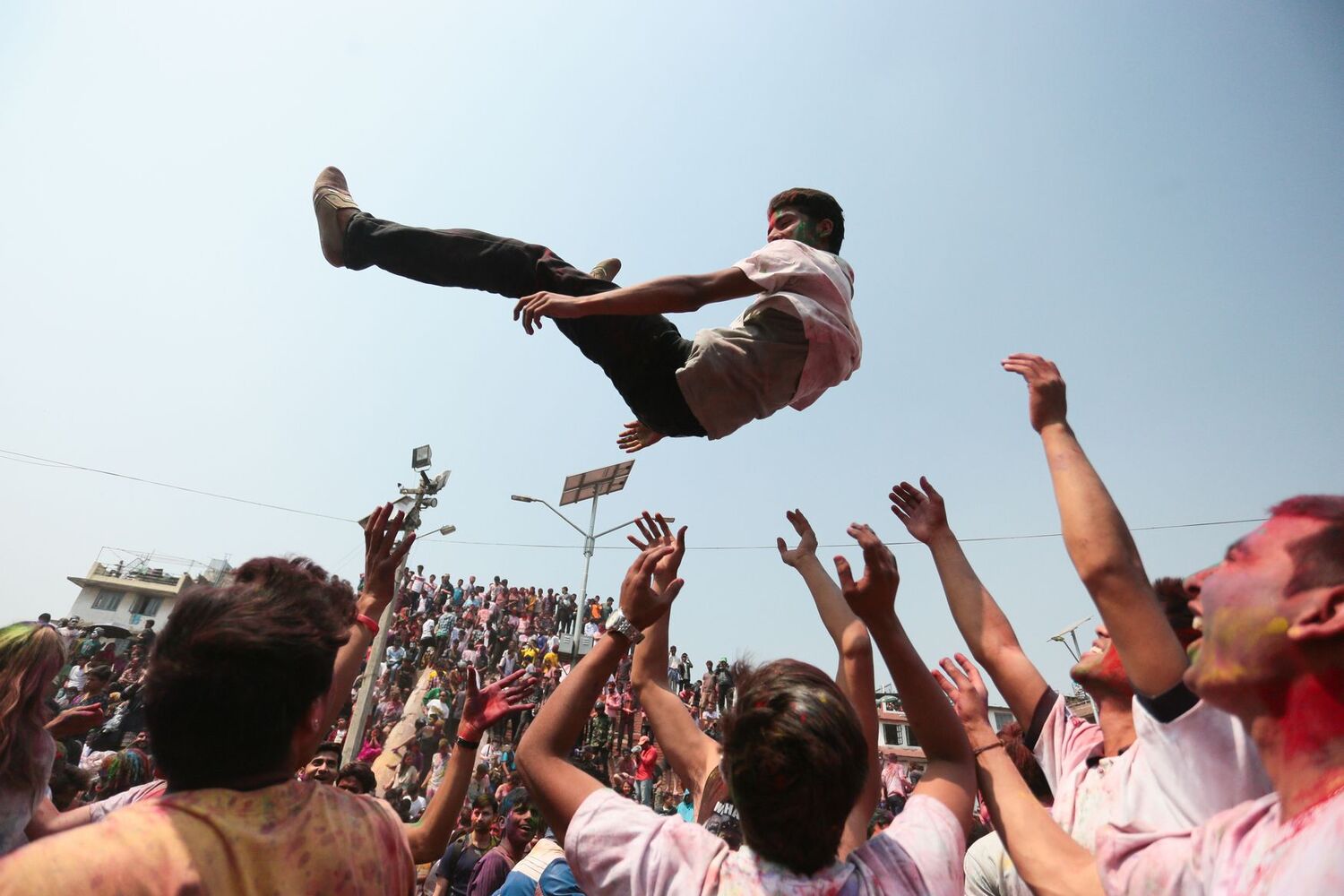
A burst of joy in Kathmandu! Locals and visitors fill the streets with laughter and color as they celebrate Holi—known as the Festival of Spring, Colors, and Love. Captured in March 2025, this vibrant moment shows Kathmandu at its most energetic and enchanting. Photo by udeyismail
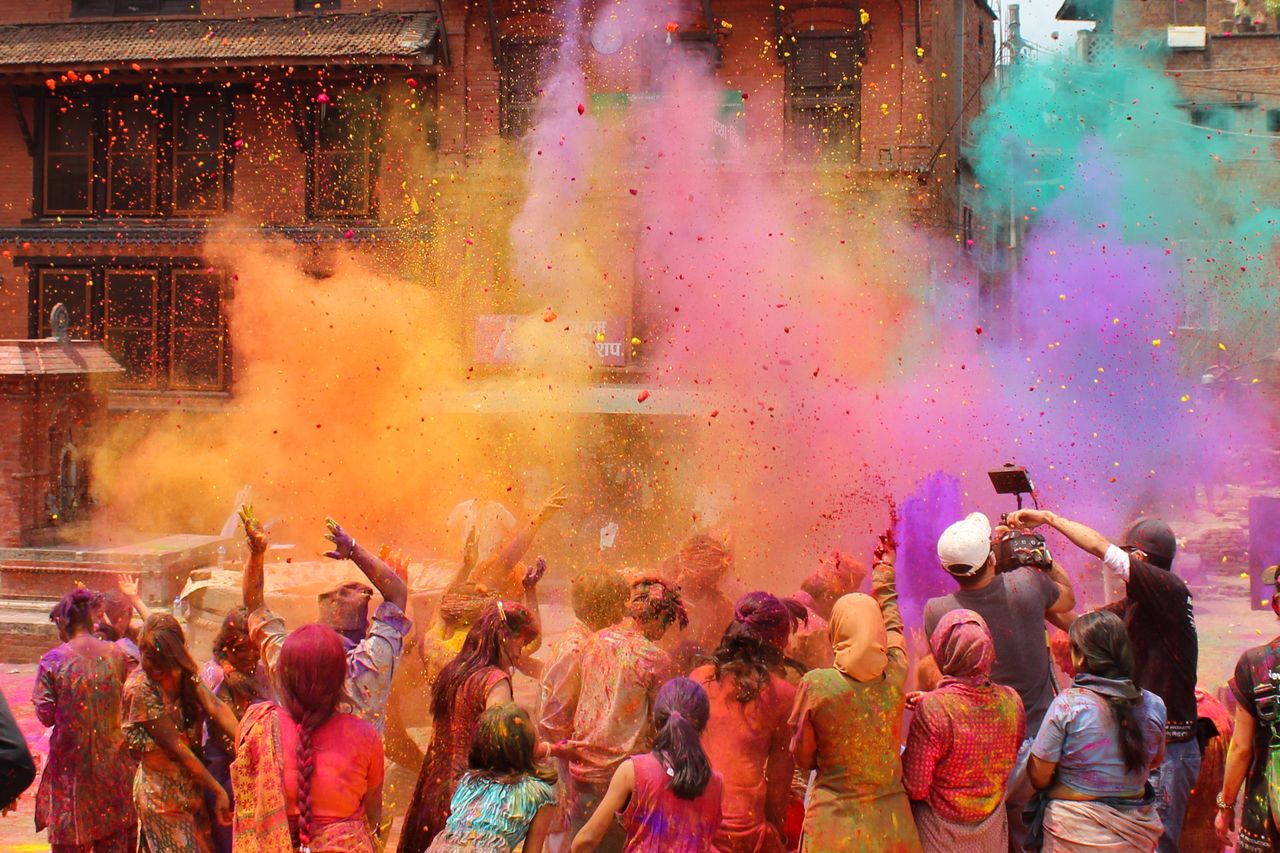
Vrindavan becomes a rainbow! Devotees and travelers toss clouds of bright powder into the air, transforming the town into a living canvas of color during the Holi celebrations. © Kristin F. Ruhs / Shutterstock
Holi Dates for 2026, 2027 and 2028
Holi Dates for 2026, 2027, and 2028
Holi isn’t like Christmas or New Year’s—there’s no fixed date. Instead, this explosion of color comes alive the day after the full moon in March, marking winter’s farewell and the joyful return of warmth, growth, and vibrant life across India.
The celebrations actually begin the night before, when communities gather around crackling bonfires. This is Holika Dahan—a powerful tradition meant to banish negativity and evil, symbolizing light triumphing over darkness. Think of it as Holi Eve, but with ancient stories, rituals, and an atmosphere that feels both festive and spiritual.
When Is Holi Happening?
• 2026: February 26 to March 4
• 2027: March 17 to 22
• 2028: March 6 to March 11
While most of India celebrates Holika Dahan the night before Holi, the eastern states of Odisha and West Bengal take a slightly different—and equally enchanting—approach. Their celebration, called Dol Jatra or Dol Purnima, takes place at the same time as the bonfire night but with its own unique rituals.
Both traditions revolve around Lord Krishna, though the stories and local customs vary from region to region, giving each place its own flavor of festivity.
Whether you’re planning a trip or simply curious about the culture, knowing these dates lets you prepare for one of the most unforgettable experiences India has to offer—a festival where legends, light, and color all come together in spectacular harmony.
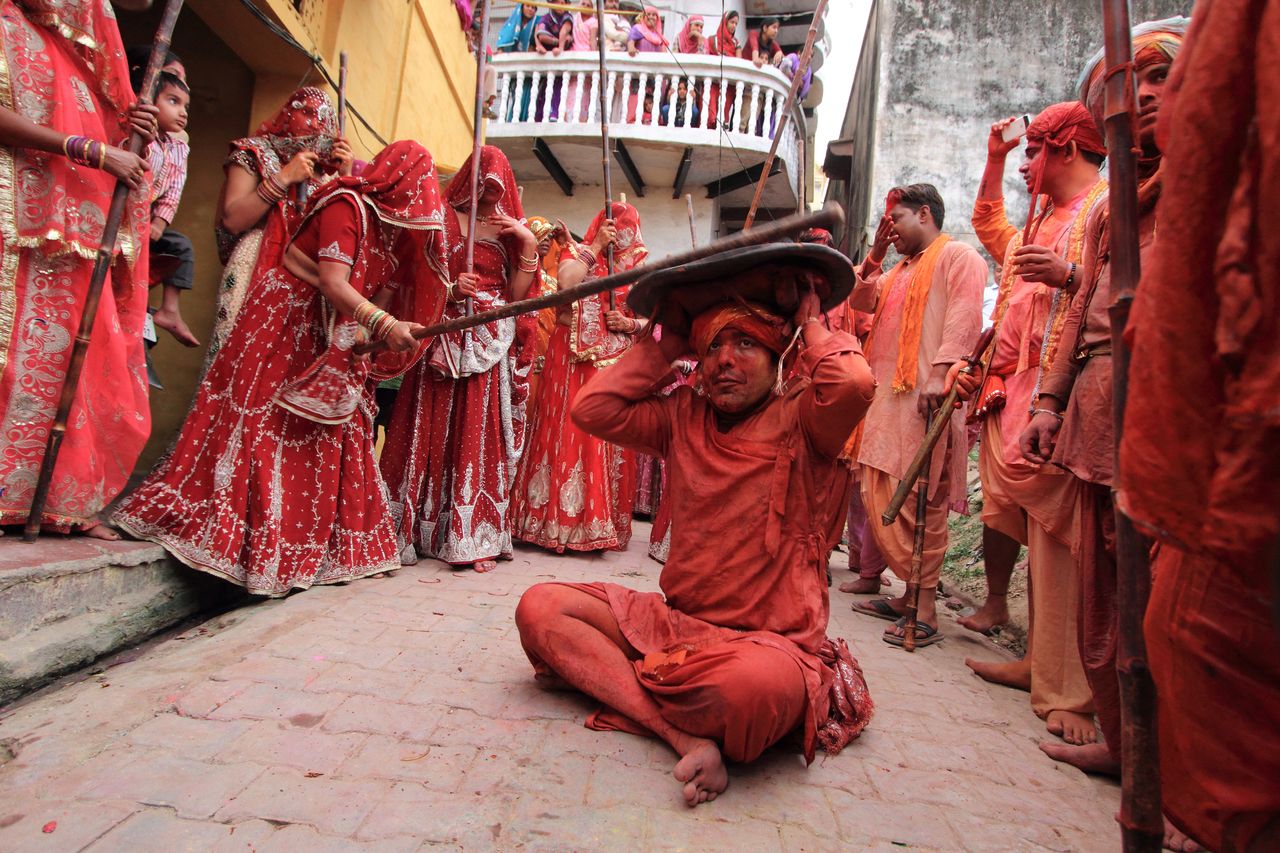
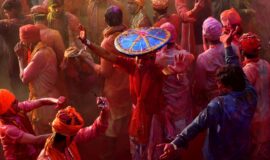
Lathmar Holi in full swing! In Nandgaon, tradition comes alive as village women playfully strike shielded men with long sticks—a spirited reenactment of Krishna’s legendary teasing. © AJP / Shutterstock
Vrindavan and Mathura: Where Holi Becomes a Living Legend
If you really want to feel the heartbeat of Holi, there’s no better place than Vrindavan and Mathura, the twin cities forever linked to the playful tales of Lord Krishna. Here, Holi isn’t just a festival—it’s a week-long celebration of joy, devotion, and color unlike anything you’ll experience anywhere else in India.
Holi in Vrindavan: A 7-Day Explosion of Devotion
In Vrindavan, Holi stretches out over seven magical days, each filled with rituals, music, and traditions that feel straight out of mythology.
The celebrations begin with Phoolon wali Holi, a breathtaking ritual where priests shower the crowd with fresh flower petals instead of colored powder. It takes place at the historic Banke Bihari Temple—and trust me, this is one event you do not want to miss.
• 🕓 Time: 4 PM on March 17
• 🔔 Tip: Arrive early! The temple fills up fast, and getting a good spot makes all the difference when those fragrant petals start to rain down.
The next major celebration unfolds on the morning of March 20, when locals take to the streets to throw colors with infectious excitement. This early celebration happens one day before the rest of India officially observes Holi, making Vrindavan feel like it’s always one joyful step ahead.
Mathura: The Grand Procession of Colors
Just when you think you’ve seen it all, Mathura—Krishna’s birthplace—keeps the excitement going. At 3 PM, a vibrant Holi parade winds through the city’s streets. Drums beat, dancers whirl, and the whole city transforms into a moving canvas of pinks, greens, yellows, and blues.
Unlike the ritual-heavy celebrations in Vrindavan, Mathura’s Holi mirrors the more familiar version enjoyed across India:
pure fun, pure color, pure chaos—in the best possible way.
There are no special ceremonies here, just a community joyfully celebrating together. As the afternoon fades, so does the festival’s energy, and people return home—tired, covered in color, and smiling—to wash up and rest from the day’s beautiful madness.
Lathmar Holi: Where Tradition Meets Playful Chaos
If there’s one Holi celebration that truly stands out—both for its uniqueness and its deep connection to local legend—it’s Lathmar Holi in the twin villages of Barsana and Nandgaon. This vibrant festival takes place about a week before the main Holi celebrations, meaning the 2025 festivities fall on March 15–16, depending on which village you choose to visit.
A Playful Battle Rooted in Mythology
The name “Lathmar Holi” literally means “Holi of sticks,” and it comes from a spirited reenactment of a well-known tale from the life of Lord Krishna. According to legend, Krishna and his friends from Nandgaon would teasingly visit Barsana to play Holi with Radha and her companions. The women of Barsana—never ones to back down—responded by playfully chasing the men away with sticks.
Today, this story comes alive in a colorful, joy-filled tradition.
Women armed with long wooden lathis good-naturedly tap (and sometimes whack!) the men—who protect themselves with shields. The atmosphere is electric: drums beat, crowds cheer, colors fly, and the entire village transforms into a living stage where mythology meets festivity.
A Spectacle Unlike Any Other
Don’t let the “stick beating” scare you—Lathmar Holi is full of laughter, teasing, and fun. It’s theatrical, dramatic, and unforgettable. Visitors gather in huge numbers to witness this extraordinary dance between tradition and celebration.
If you’re planning to experience Holi in its most authentic and thrilling forms, Lathmar Holi in Barsana and Nandgaon is an absolute must-see. Just be sure to arrive early, follow local guidelines, and stay aware—the energy here is as powerful as it is playful!
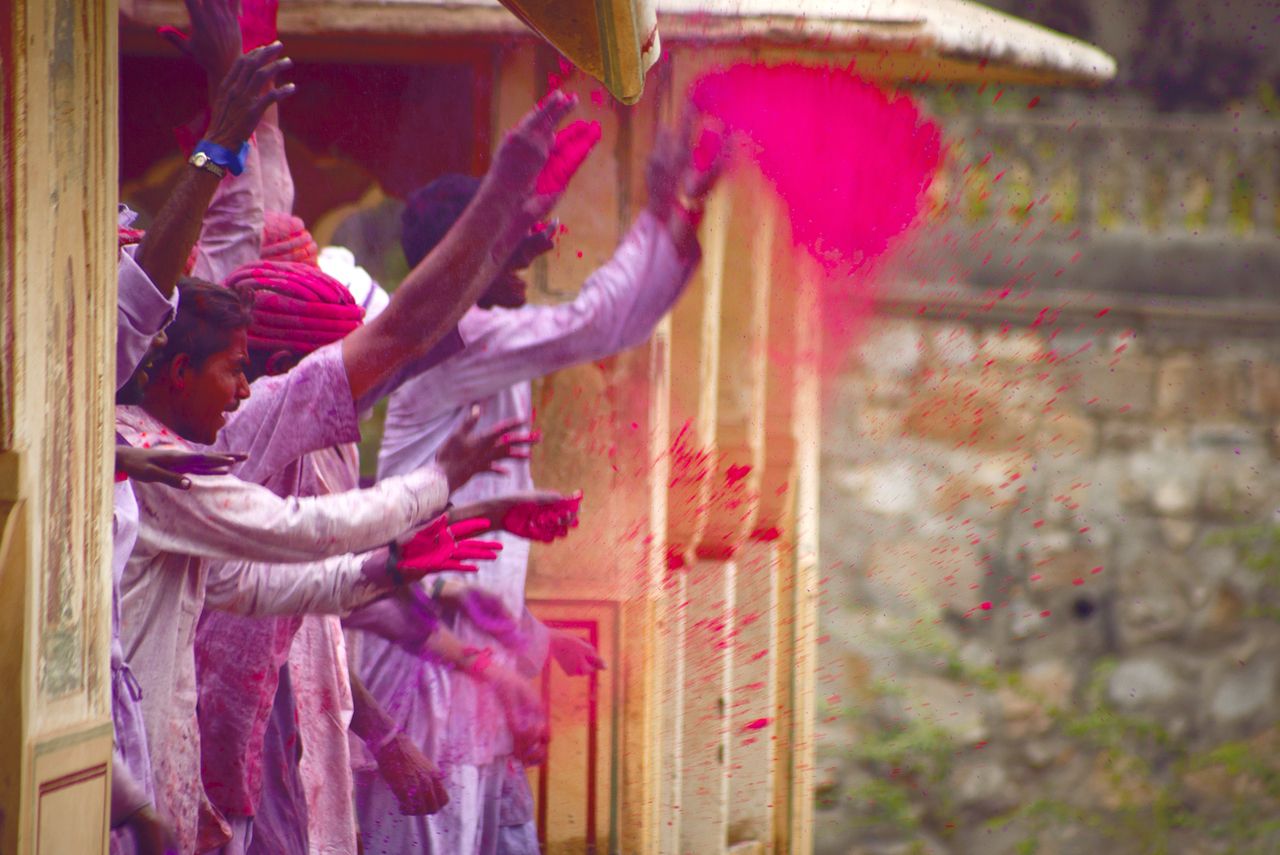
A whirlwind of color in India! During Holi, vibrant gulal fills the air as people splash, throw, and dance through a sea of powder, celebrating one of the country’s most joyful festivals. © Alexandra Lande / Shutterstock
Holi Festival Explained: A Story of Faith, Fire, and the Triumph of Good
Behind the vibrant clouds of color and the joyous street celebrations, Holi carries a powerful message—one that dates back centuries. At its heart, Holi is a reminder of the eternal battle between good and evil, brought to life through one of Hinduism’s most memorable legends.
The Legend of Holika and Prahlad
According to the ancient Hindu text Narada Purana, there once lived a fearsome demon king whose young son, Prahlad, chose to devote himself to Lord Vishnu instead of worshipping his own father. Enraged by this “betrayal,” the king plotted to destroy the very child who refused to bow to him.
To carry out his plan, he turned to his sister Holika, who possessed a magical boon that made her immune to fire. She carried Prahlad into a blazing pyre, confident that the flames would consume the boy while leaving her unharmed.
But faith has its own power.
As the fire roared, Lord Vishnu protected Prahlad, shielding him completely—while Holika, despite her powers, was burned to ash. Her immunity failed because she used her gift with ill intent.
The message was clear: evil may rise, but it cannot win when devotion and goodness stand firm.
Why the Bonfires Are Lit
The night before Holi, communities across India gather around huge bonfires to celebrate Holika Dahan, a ritual symbolizing the destruction of evil and the victory of unwavering faith. Families sing, pray, and walk around the flames, believing that just as Prahlad was saved, goodness will always find a way to triumph.
Celebrating Spring and New Beginnings
Beyond the mythology, Holi also marks a turning point in nature. Much like solstice celebrations across the world, it signals the arrival of spring—a season of planting, renewal, and new hopes. After months of winter’s dullness, Holi bursts onto the scene with color, energy, and life.

Students turn campus into a festival ground! At Jawaharlal Nehru University, young people from across India celebrate Holi with enthusiasm, creating a lively explosion of color and togetherness. © Natalia Deriabina / Shutterstock
How Do People Celebrate Holi?
Although Holi began with the ancient tale of Lord Vishnu and Prahlad, today the festival is far less about rituals and far more about joy, community, and free-spirited fun. It’s one of the few days in India when people of all ages, backgrounds, and social divisions come together with one simple goal: to celebrate life in all its color.
Playing Holi: A Burst of Color and Pure Happiness
As the sun rises, streets across the country explode into motion. People pour out of homes and temples, dancing to drumbeats, singing folk songs, and tossing fistfuls of powdered color into the air.
This is what locals lovingly call “playing Holi”—and it’s impossible not to get caught up in the excitement.
The colored powder, known as gulal, is sold everywhere—from tiny roadside stalls to big markets. Cheap, bright powders are easy to find, while more natural, herbal colors cost a bit extra but are gentler on the skin. Visitors quickly discover that there’s no wrong way to play:
• Throw it dry into the air
• Smear it on faces and clothes
• Mix it with water for a bold splash
• Or turn it into a paste for artistic streaks of color
Children, of course, take things to the next level. Armed with water guns, plastic bottles, and even mini buckets, they sprint around spraying colorful water like mischievous warriors on a mission.
Water, Laughter, and Washing Away the Day
In towns and cities located near rivers or lakes, the festivities often continue at the water’s edge. After hours of color play, people head to the nearest water body to rinse off, splash around, and squeeze a little extra fun out of the day.
One thing is certain: Holi is not the ideal day for anyone who wants to stay clean. Step outside, and you’re part of the celebration—there’s no escaping the color! Still, not everyone dives into the high-energy chaos; many families choose to enjoy Holi quietly at home, sharing sweets and time together.
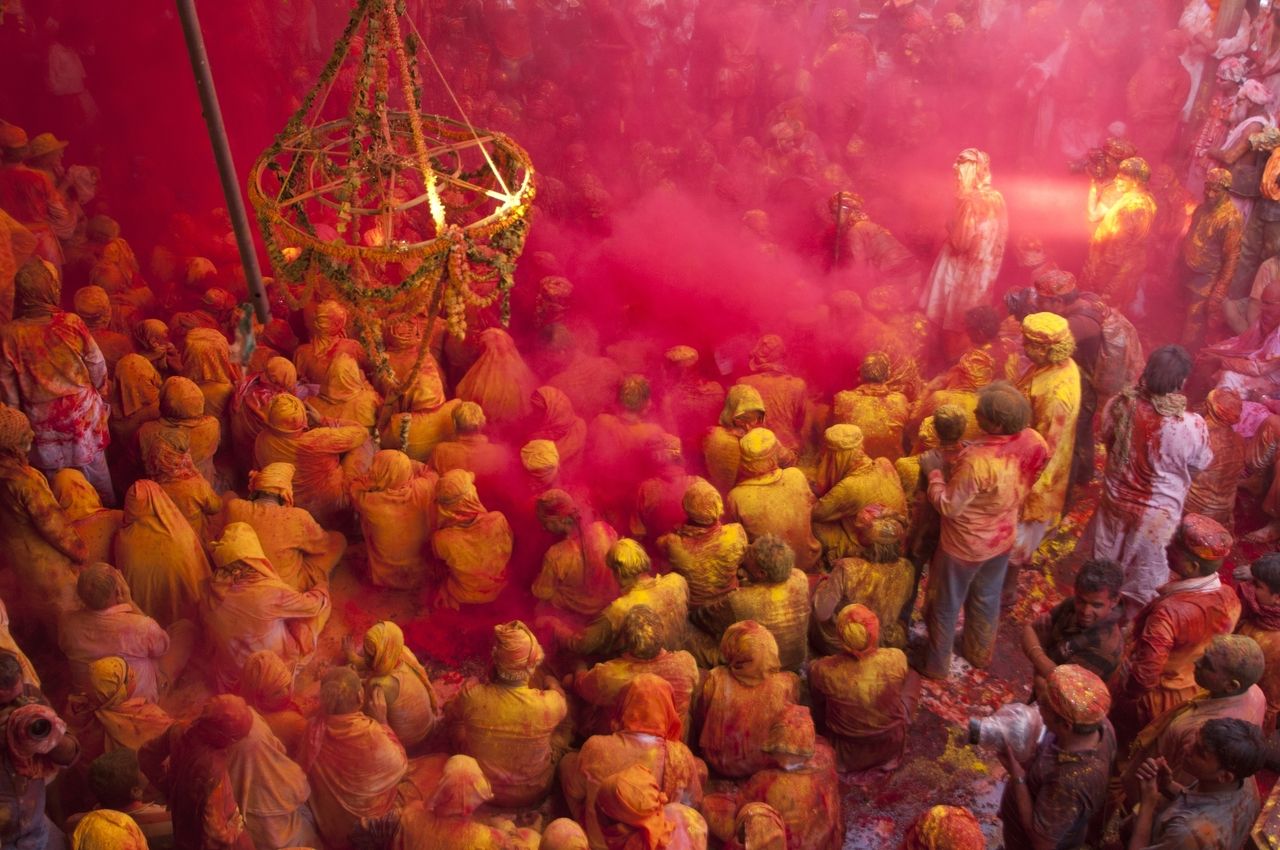
A devotional celebration at Nandgaon’s Krishna Temple. Visitors and locals unite in a spectacular shower of color, honoring tradition in one of Holi’s most iconic locations near Mathura and Vrindavan. © CRS PHOTO / Shutterstock
Where Do People Celebrate Holi?
Holi may be one of India’s most iconic festivals, but it isn’t celebrated the same way everywhere. Its heart—and the most spectacular celebrations—beat strongest in North India, where entire towns transform into swirling galaxies of color.
The Big Cities: High Energy, Huge Crowds
Major hubs like Delhi, Jaipur, and Agra erupt into massive street parties during Holi. These cities host everything from neighborhood gatherings to large, organized events with music, food, and plenty of color. The energy is electric—but for first-time visitors, the crowds can be a bit overwhelming. If you crave a more traditional atmosphere, the smaller towns are where Holi truly shines.
The Heartland of Holi: Around Delhi and Into the Villages
The most famous Holi destinations cluster within roughly an eight-hour radius of Delhi. These places offer deeply rooted traditions, playful rituals, and celebrations that feel like stepping straight into mythology.
Popular hotspots include:
• Barsana – Known for the legendary Lathmar Holi, where women playfully chase men with sticks
• Nandgaon – Krishna’s village, filled with music, ritual, and color
• Mathura – Bursts to life with processions and temple celebrations
• Vrindavan – The crown jewel of Holi, where festivities last seven days, featuring both flower showers and gulal
• Pushkar – A favorite among travelers, with lakeside celebrations set against a scenic Rajasthani backdrop
In Vrindavan especially, the area around the Banke Bihari Temple becomes a magical world of color and devotion, drawing pilgrims and visitors from across the globe.
A Southern Surprise: Hampi Joins the Fun
While Holi isn’t traditionally celebrated with great enthusiasm in South India, one exception stands out—Hampi, in Karnataka. This ancient temple town hosts a lively, inclusive Holi celebration that keeps growing in popularity among travelers seeking something different.
Holi Around the World
Holi’s magic has traveled far beyond India’s borders.
Cities like London and Las Vegas now host large-scale Holi-inspired events, drawing crowds eager to join in the joy of color. Even the now-famous Color Runs—fun races where participants are doused in powder as they jog—draw inspiration from Holi, though they lack the deep cultural and spiritual roots of the festival.
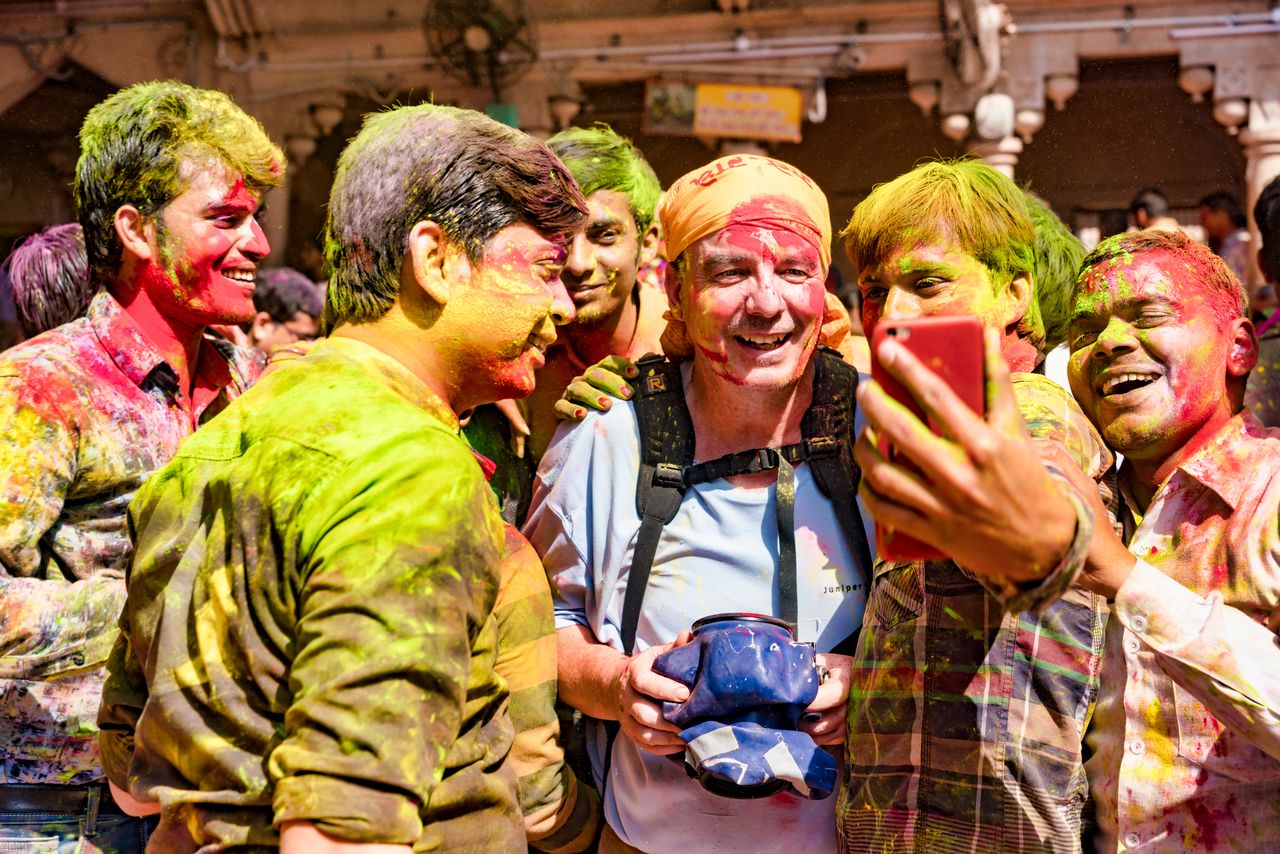
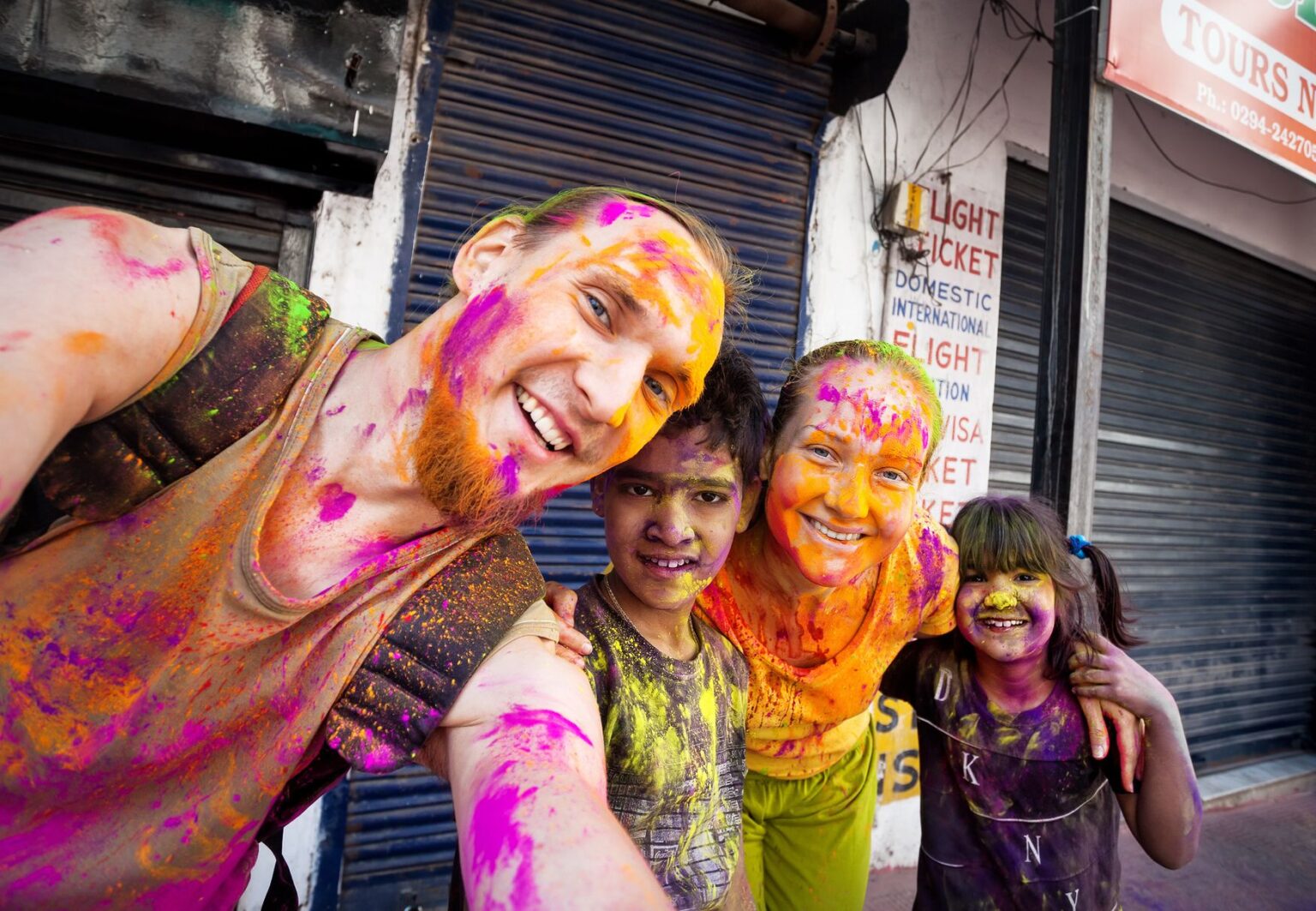
Selfies soaked in color! Locals and tourists snap joyful photos together, their faces and clothes covered in bright Holi powder—capturing memories as vivid as the festival itself. © MindStorm / Shutterstock
Extra Tips to Survive Holi (and Enjoy Every Second of It!)
Holi is all about joy, color, and carefree fun—but like any big celebration, a little preparation can make the difference between an unforgettable experience and an unwanted mishap. Before you dive into the rainbow, here are some must-know tips to help you stay safe, comfortable, and smiling throughout the day.
1. Dress for the Mess
Let’s get this out of the way: Holi powder stains EVERYTHING. Clothes, skin, hair—nothing survives untouched.
So:
• Wear old clothes you don’t mind sacrificing to the festival gods.
• Choose darker shades if possible—they show fewer stains.
• Consider your Holi outfit a souvenir; it may never look clean again.
2. Protect Your Hair (Especially if It’s Light-Colored)
If you have blonde or light-colored hair, Holi powder can cling like a determined memory.
• Rub a thin layer of oil (coconut, almond, or olive) into your hair beforehand.
• Tie it up securely.
• Cover it with a bandanna, scarf, or cap—something that won’t fly off easily in the excitement.
You’ll thank yourself later!
3. Guard Your Skin If You Need to Look Professional Tomorrow
Got a meeting or a flight back home the next day? Then staying spotless during Holi is… nearly impossible.
If avoiding color is essential, your best option is not stepping outside during peak celebration hours. Even a quick walk can turn you into a surprise canvas.
4. Mind Your Eyes, Mouth, and Breathing
Gulal looks beautiful in the air, but it doesn’t belong in your eyes or lungs.
• Avoid letting powder be thrown directly at your face.
• Wear sunglasses as a basic shield.
• Keep your mouth closed during the big color throws.
• Remember: natural, herbal colors are gentler, but most street powders are chemical-based.
If powder gets in your eyes, rinse immediately with clean water.
5. Dry Powder Is Your Friend
While both liquid and dry colors are used during Holi, dry powder is much easier to clean off.
Liquid mixes tend to stain deeper, feel sticky, and cling to hair and skin far longer.
Stick to areas where dry colors are more common if you want a slightly easier cleanup.
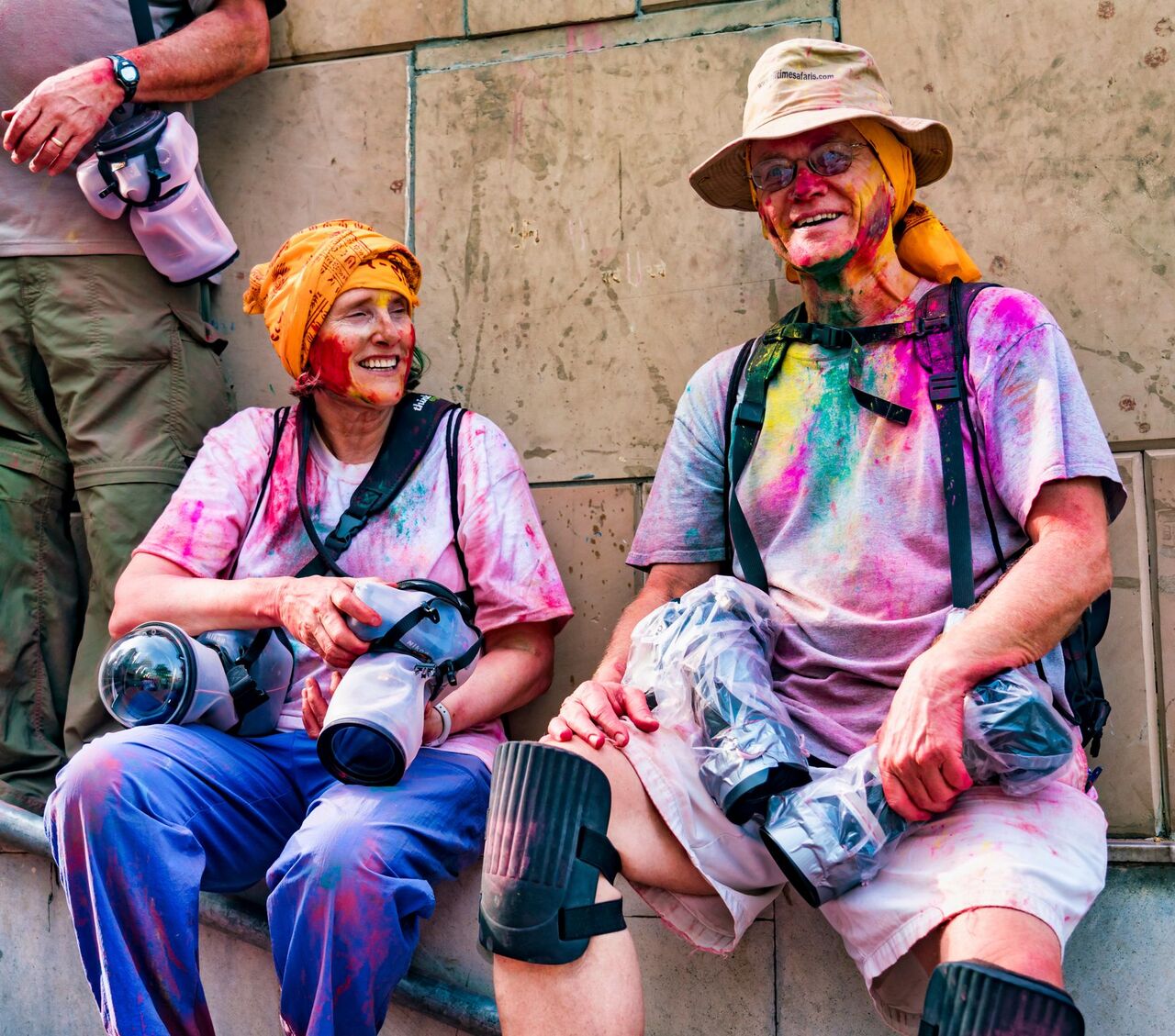
Capturing the chaos safely. These travelers wrapped their cameras in waterproof, powder-proof covers so they could photograph the Holi action up close without damaging their gear. © MindStorm / Shutterstock
Can Holi Celebrations Be Dangerous?
Holi is meant to be a joyful whirlwind of color—but like any large public festival, it does come with a few challenges visitors should be aware of. With the right precautions, though, you can enjoy the celebrations safely and comfortably.
Crowds, Colors, and a Little Too Much Enthusiasm
While most people join Holi with pure fun in mind, crowds can quickly become chaotic. Some individuals get overly enthusiastic—especially after consuming alcohol or bhang, a cannabis-infused drink traditionally enjoyed during the festival. This can occasionally lead to unruly behavior that might dampen someone else’s celebration.
Even without intoxication, crowded streets can be tricky. Children may dart around unpredictably or try to climb onto your shoulders for a better view. The energy is lively, but it can sometimes feel overwhelming.
Chemical Colors and Health Concerns
Another potential risk comes from the chemical-based powders used in many places. These can irritate the skin, eyes, or throat, especially when thrown in large amounts. Natural, herbal colors are much safer, but they’re not always what you encounter in the streets.
Wearing sunglasses, keeping your face protected, and choosing events that use natural colors can go a long way in keeping you comfortable.
How to Celebrate Safely and Happily
If you prefer a relaxed, family-friendly environment, consider celebrating in smaller towns rather than the big urban centers. Places like Vrindavan, Pushkar, or Mathura often offer a more welcoming vibe, with traditions rooted in culture rather than chaos.
And one of the best choices you can make?
Join an experienced tour guide or group.
They know the safest places, the best times to visit, and how to navigate the celebrations without stress—so all you need to do is soak in the joy, the color, and the magic of Holi.
Women Take Special Care to Stay Safe
Holi is a beautiful celebration of joy and togetherness—but like any crowded festival, it can also create moments where boundaries aren’t respected. Unfortunately, there have been instances of harassment or inappropriate behavior toward women during Holi, especially in large, unsupervised gatherings.
That doesn’t mean women shouldn’t enjoy Holi. It simply means that smart planning and a few precautions can help you celebrate confidently and safely.
Travel in Groups—Never Alone
If you’re a woman traveling during Holi, avoid going out by yourself, especially into unfamiliar neighborhoods.
Stick closely with your tour group, trusted friends, or travel companions. Staying together ensures you’re less likely to get separated and better able to navigate busy streets.
Choose Your Environment Wisely
Crowds are part of Holi’s charm—but extremely packed areas can become uncomfortable. Some people may consume alcohol or bhang, especially later in the day, which can sometimes lead to unwanted behavior.
For a safer and more relaxed experience:
-
Celebrate during the morning hours, when the atmosphere is fresher and calmer.
-
Avoid the densest crowds, where physical proximity can be misused.
-
Prioritize organized Holi parties—many hotels and travel companies host safe, colorful celebrations designed specifically for tourists and families.
Enjoy the Festival Without Worry
With the right precautions, Holi can be a joyful, empowering experience for women. Many female travelers return saying it was one of the highlights of their journey. By choosing the right environment, staying aware, and surrounding yourself with trustworthy people, you can immerse yourself fully in the magic—without compromising your comfort or safety.
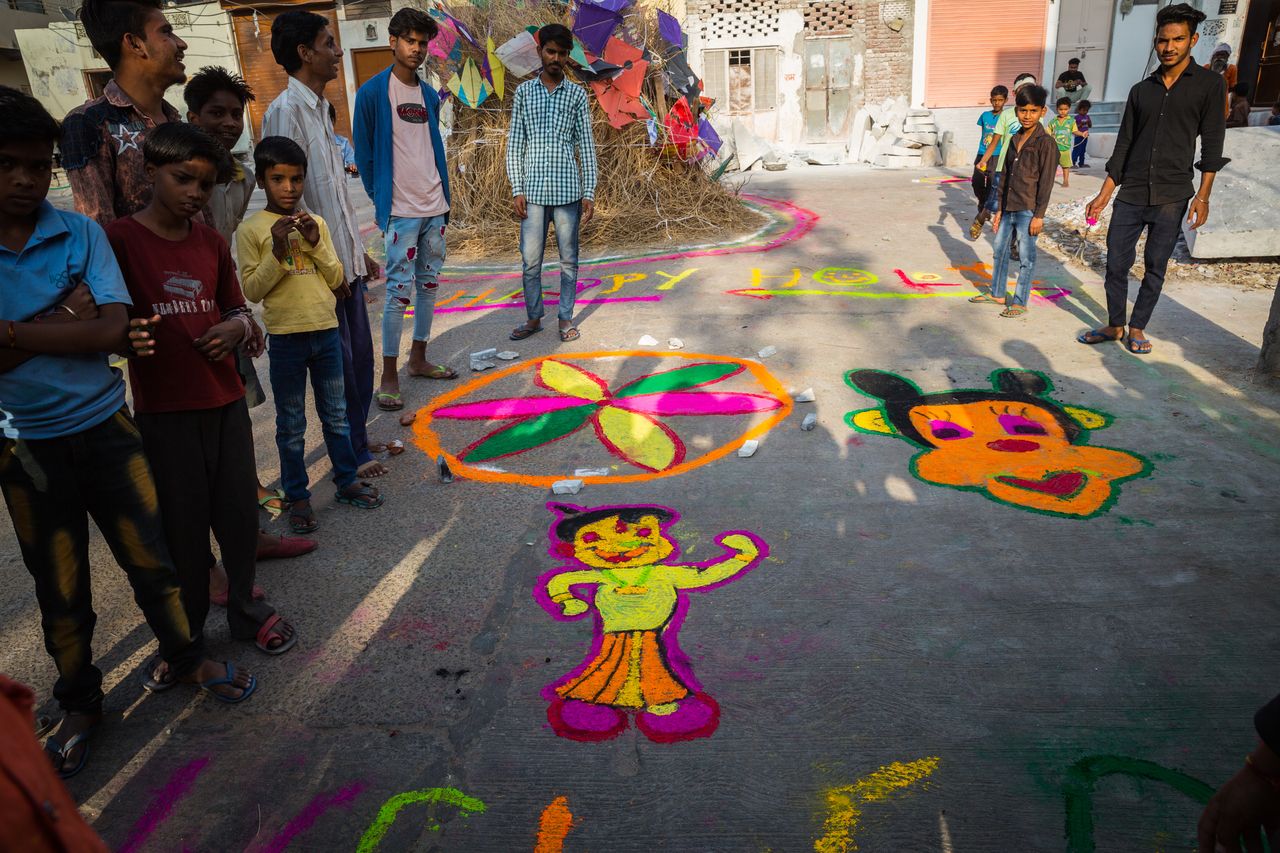
The streets come alive with children’s art. Before the Holi festivities begin, colorful drawings created by young artists brighten up local walls, adding even more charm to the celebration. Image by Seregmi
What to Pack for the Holi Celebrations
Packing smart is the secret to enjoying Holi to the fullest. With the right gear, you can dive into the colors, dance freely in the streets, and clean up afterward without stress. Here’s your essential Holi checklist:
✔ Old Clothes You Don’t Mind Losing
Wear comfortable clothing that covers most of your skin—long pants for women are highly recommended. Think of this outfit as your “Holi uniform”: it will carry the bright memories long after the stains refuse to wash out!
✔ A Secure Hat, Bandanna, or Scarf
Your hair will thank you. Choose something that fits snugly and can’t be pulled off easily in the excitement.
✔ Light Oil for Hair, Nails & Skin
A thin layer of oil (coconut, almond, or baby oil) acts as your best defense against stubborn color. Rub it into your hair, around your fingernails, and even lightly onto your skin.
✔ Optional Eye & Face Protection
• Safety glasses or goggles help keep powder out of your eyes.
• A paper dust mask or medical mask can prevent you from inhaling too much powder—especially useful in big crowds.
✔ A Properly Protected Camera
If you want to capture the magic, bring a camera or phone only if it’s protected in a waterproof or dustproof case. Holi colors can be surprisingly camera-destroying!
✔ Extra Soap & Body Scrub
You’ll want these afterward. Trust us.
Ready for the Most Colorful Day of Your Life?
With this Holi guide in hand and your bags packed just right, you’re prepared for an experience like nowhere else on Earth.
Step outside, embrace the colors, and get ready to celebrate India’s festival of joy!














![Golden Triangle Tour with Goa [Culture + Beach Vacation] (12 days)](https://www.vacationindia.com/wp-content/uploads/2022/06/golden-triangle-tour-with-beach-vacation-270x160.jpg "Golden Triangle Tour with Goa [Culture + Beach Vacation] (12 days)")