

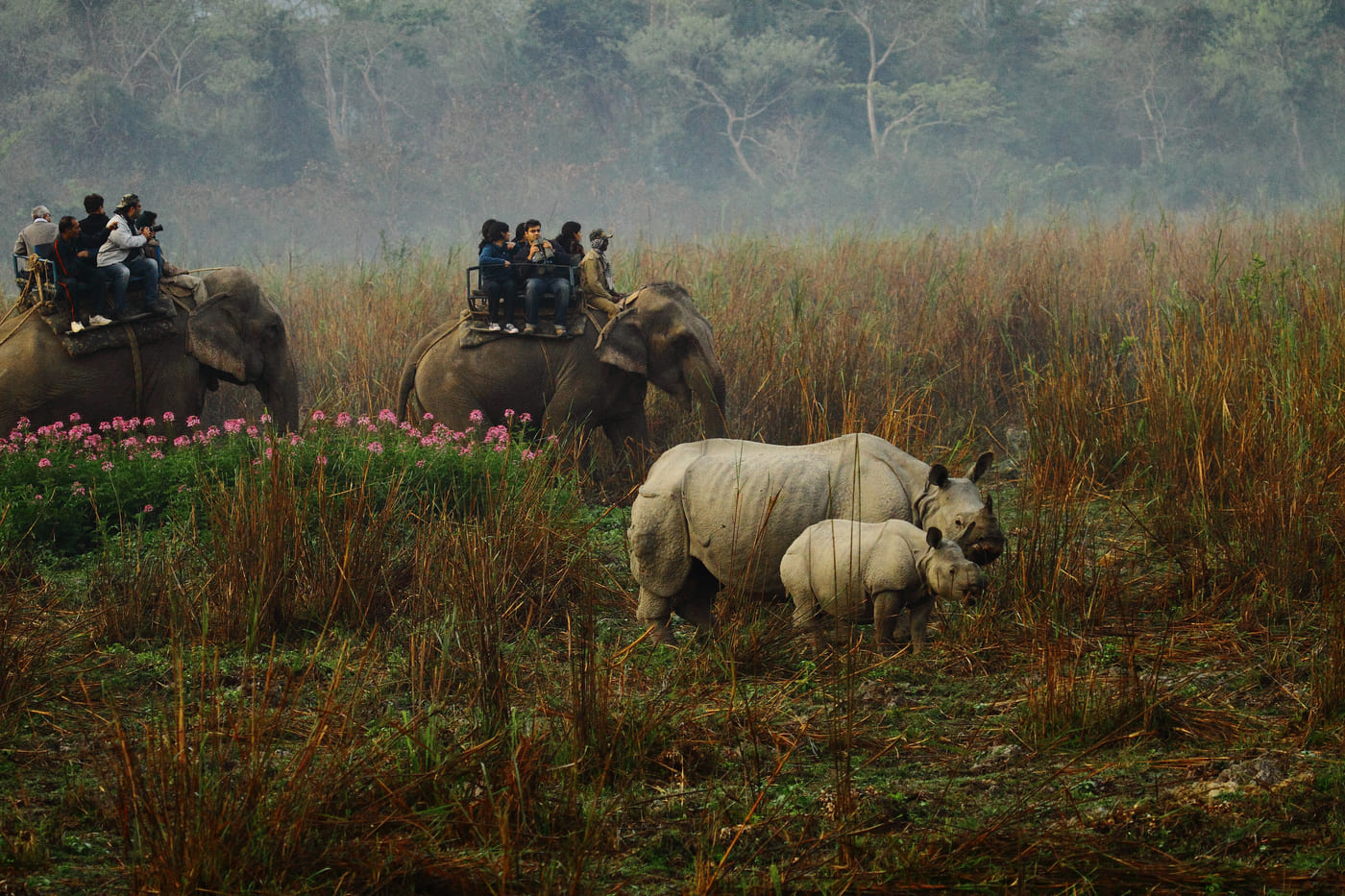
Saving the Rhinos in Kaziranga National Park, Assam
Saving the Rhinos of Kaziranga: A Battle for Survival
The Unsung Heroes of Kaziranga: Rangers on the Frontline
Taking the Rhino by Its Horns: India’s Fierce Fight to Protect Kaziranga’s Giants
Conclusion: Protecting Kaziranga’s Pride
Saving the Rhinos of Kaziranga: A Battle for Survival
In the wild heart of Assam lies Kaziranga National Park, home to one of the world’s rarest treasures—the great one-horned rhinoceros. These gentle giants, symbols of strength and resilience, are tragically among the most endangered species on Earth.
For decades, rhinos have been hunted relentlessly for their horn—illegally sold for nearly INR 8 million on the black market. Driven by the booming demand of traditional medicine in China and Southeast Asia—where rhino horn made of simple keratin is wrongly believed to cure everything from ailments to impotence—poachers continue to risk everything for this deadly trade. Their greed fuels underground networks so vast and ruthless that the rhinos stand little chance without constant protection.
Kaziranga’s population, once thriving, is now painfully fragile. The 2019 Assam floods brought a dark reminder of this vulnerability—when rising waters pushed animals out of safe zones, poachers seized the chaos, killing three rhinos. And even though rhino hunting was outlawed way back in 1910, the menace of poaching has stubbornly persisted for over a century.
Amid this struggle, the forest department wages an unending war—patrolling day and night, battling poachers, monitoring habitats, and fighting to give these magnificent creatures a future. Their work is tireless, courageous, and often dangerous.
Each rhino saved is a victory.
Each calf born is a beacon of hope.
And every visitor who understands their plight becomes a voice for their survival.
Kaziranga’s rhinos deserve not just admiration—but protection. Their story isn’t just about a species at risk… it’s about a battle humanity must win.
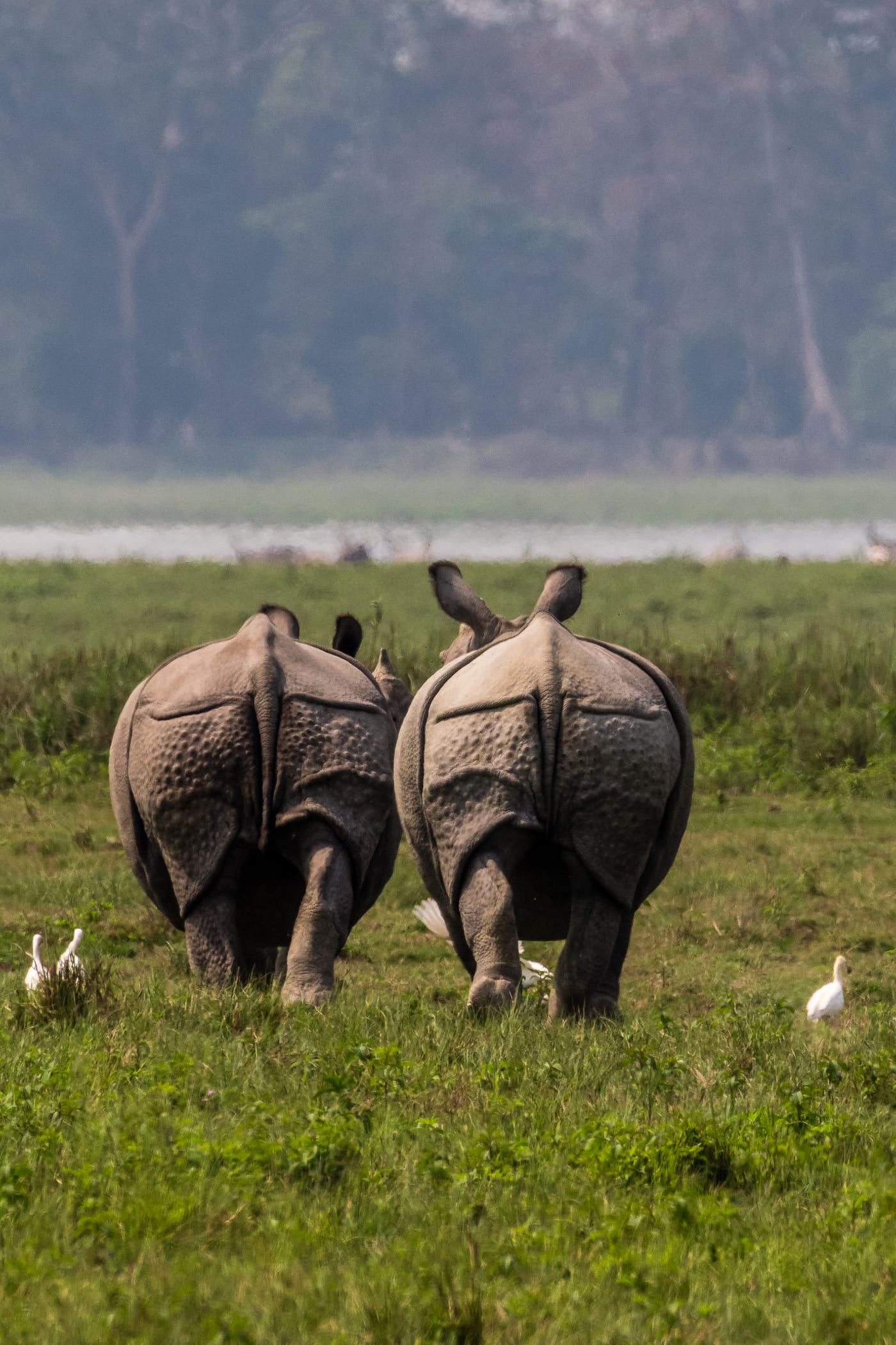
A majestic Greater One-Horned Rhinoceros stands proudly in the wild grasslands of Kaziranga National Park—its armored skin and solitary horn reflecting the ancient strength of India’s rarest giant ©️ Nilesh Shah
The Unsung Heroes of Kaziranga: Rangers on the Frontline
In Kaziranga National Park, the battle to protect the one-horned rhino is fought every single day—and the brave rangers are its frontline warriors. Their job is relentless. While rhinos hide in tall elephant grass or move toward the park’s edges for safety, poachers slip in under the cover of darkness, ready to exploit every vulnerable moment.
There is no pause, no off-duty hour. Rangers must be alert at all times, prepared to race into action at the slightest hint of danger. They track footprints, listen for unusual sounds, and patrol miles of forest and swamp—often with nothing more than their instincts and courage to guide them.
During Assam’s brutal floods, when large parts of Kaziranga go underwater, their work becomes even more heroic. Moving in coordinated groups, they wade through waist-deep waters or paddle across flooded plains in small boats, rescuing stranded wildlife and guiding rhinos to higher ground. Every rescue is a race against both poachers and the rising river.
These rangers are the silent guardians of Kaziranga—risking their lives daily so that the majestic rhino may continue to roam freely for generations to come.
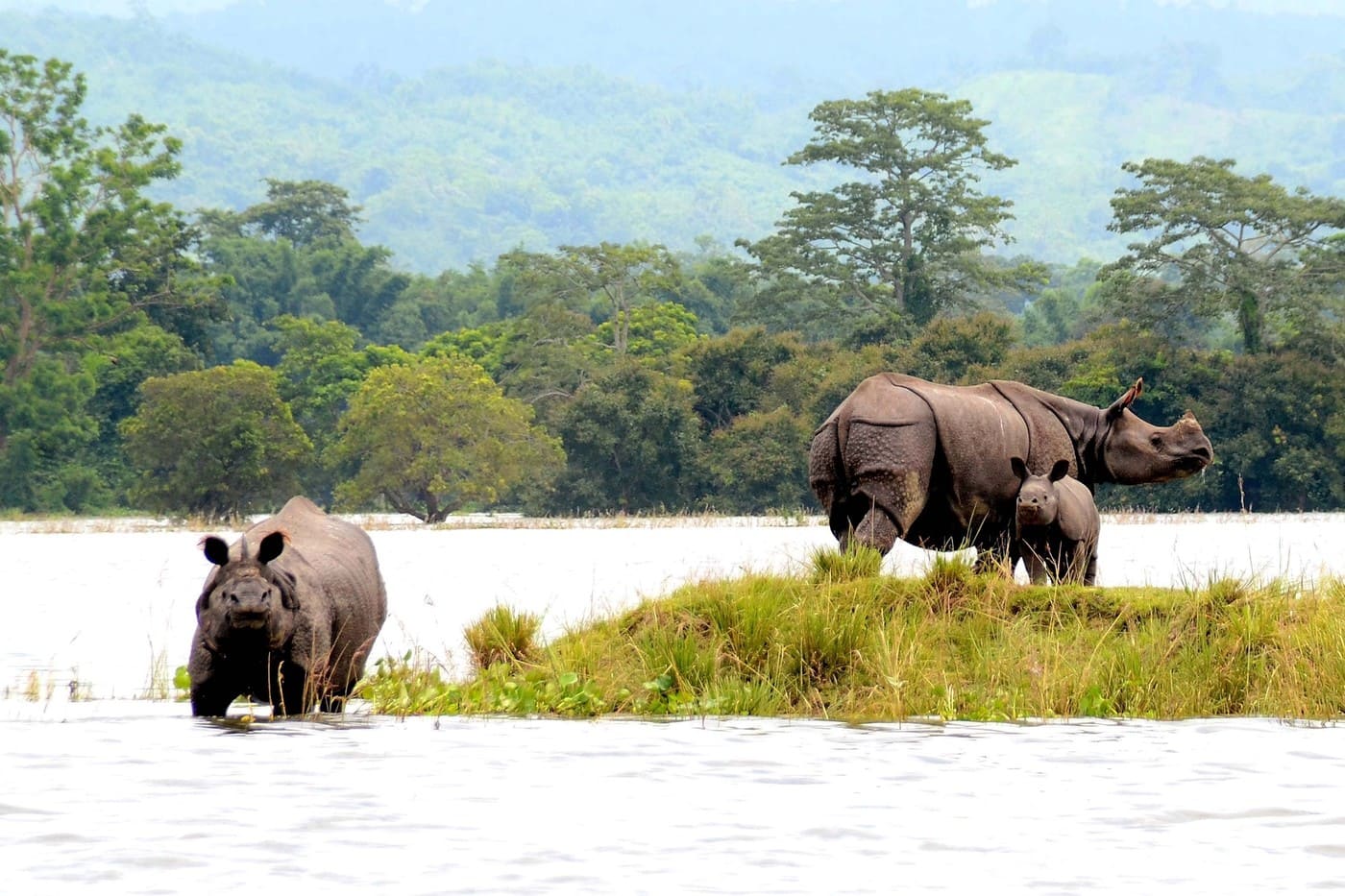
As monsoon floods sweep through Kaziranga, one-horned rhinos gather safely on highlands—quiet silhouettes standing strong against the rising waters in Assam’s Bagori range ©️ Diganta Talukdar
Taking the Rhino by Its Horns: India’s Fierce Fight to Protect Kaziranga’s Giants
India is taking bold, unwavering steps to safeguard its precious one-horned rhinos—and Kaziranga is at the heart of this mission. To strengthen protection, the government has deployed an elite 82-member Special Rhino Protection Force (SRPF), specially trained to outsmart and overpower poaching networks. These armed personnel are strategically posted across the park, turning Kaziranga into a fortress where poachers think twice before stepping foot.
The floods of July 2019 tested this courage like never before. As swirling waters engulfed vast stretches of the park, forest officials worked around the clock to save wildlife. In one unforgettable incident, a young three-year-old rhino, confused and scared, swam through the flooded plains and emerged onto the highway. Rangers followed closely, guiding traffic, monitoring its every move, and ensuring it didn’t stray toward villages. Only when the little rhino turned back and swam toward higher ground did the entire team finally breathe easy.
Protection goes beyond confronting poachers—it extends to the safety of rhinos amid human activity. To prevent speeding vehicles from endangering wildlife, officials introduced electronic time cards, forcing cars to stick to a strict 40 km/h limit inside the park. It’s a simple but life-saving measure in a place where rhinos often cross roads and have tragically been hit before.
Every rescue, every patrol, every regulation is a powerful testament to the nation’s commitment.
Kaziranga is not merely a sanctuary—it’s a battleground of hope, where humans fight fiercely to ensure that the majestic rhino survives and thrives.
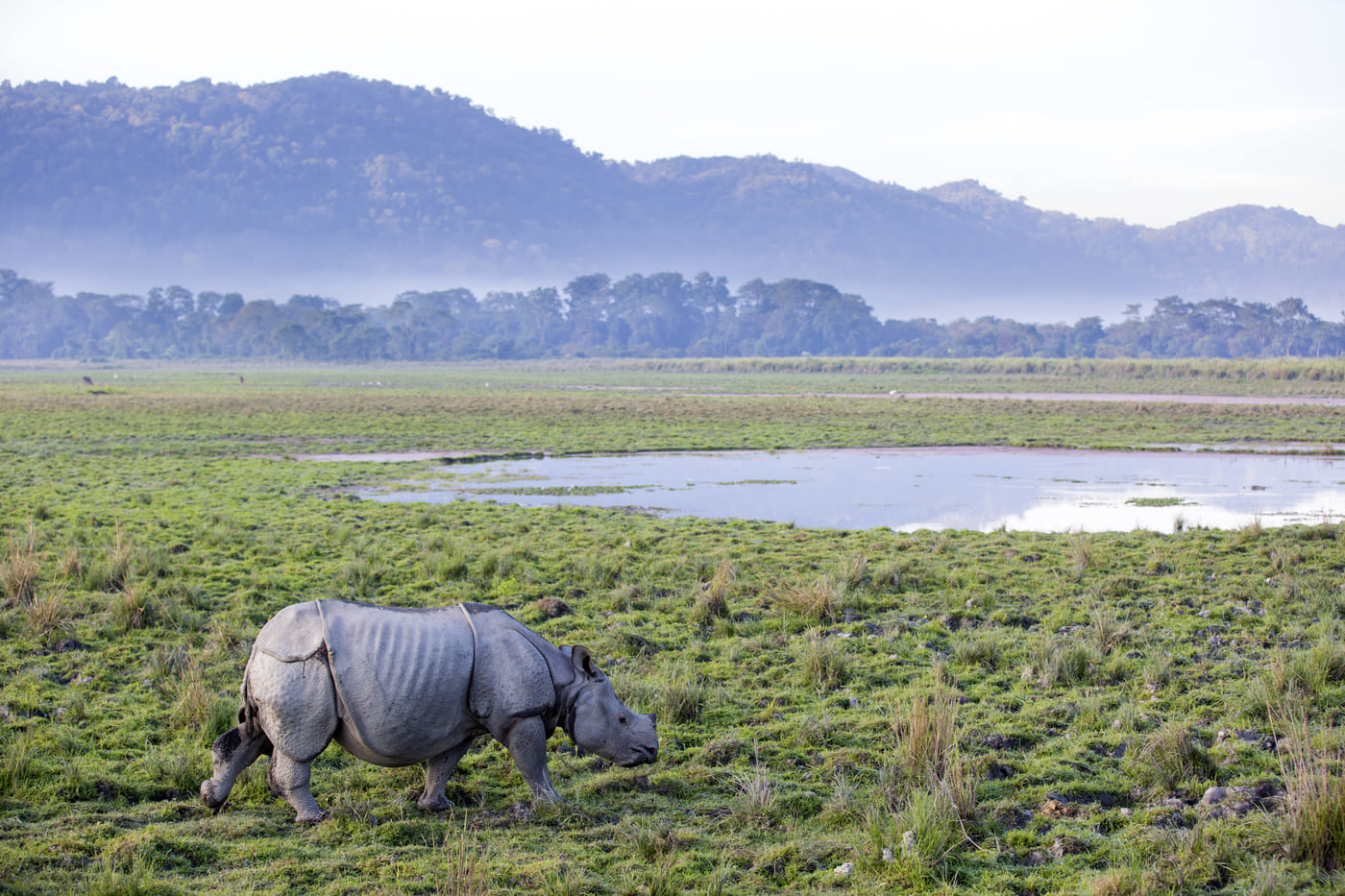
A lone one-horned rhinoceros grazes peacefully in the misty wilderness of Kaziranga, offering a powerful glimpse into the raw beauty of Assam’s iconic national park ©️ David Evison
Conclusion: Protecting Kaziranga’s Pride
For the forest officials of Kaziranga, the monsoon brings not only rising waters but rising dangers. One of the most critical challenges is the race against poachers when a rhino dies naturally. If word reaches poachers first, they can strike within minutes—snatching the horn and vanishing before authorities even arrive. This is why every alert, every patrol, and every moment counts. The horn must be secured before it falls into the wrong hands.
Kaziranga’s rhinos are more than wildlife—they are the beating heart of the park, its most treasured guardians of the land. Protecting them is not just a duty; it is a responsibility toward history, heritage, and the future of India’s natural world.
With the deployment of the dedicated Special Rhino Protection Force (SRPF) and the tireless, round-the-clock vigilance of forest rangers, hope shines brighter than ever. Each brave effort brings us closer to a future where these magnificent giants can graze, wander, and thrive freely across Kaziranga’s emerald plains—safe from harm, and safe for generations to come.
Kaziranga’s rhinos deserve nothing less.


















![Golden Triangle Tour with Goa [Culture + Beach Vacation] (12 days)](https://www.vacationindia.com/wp-content/uploads/2022/06/golden-triangle-tour-with-beach-vacation-270x160.jpg "Golden Triangle Tour with Goa [Culture + Beach Vacation] (12 days)")