
The Royal Enclave Group of Monuments, Mandu
The Jahaz Mahal
The Hindola Mahal
The Royal Enclave
The Dilwar Khan Mosque
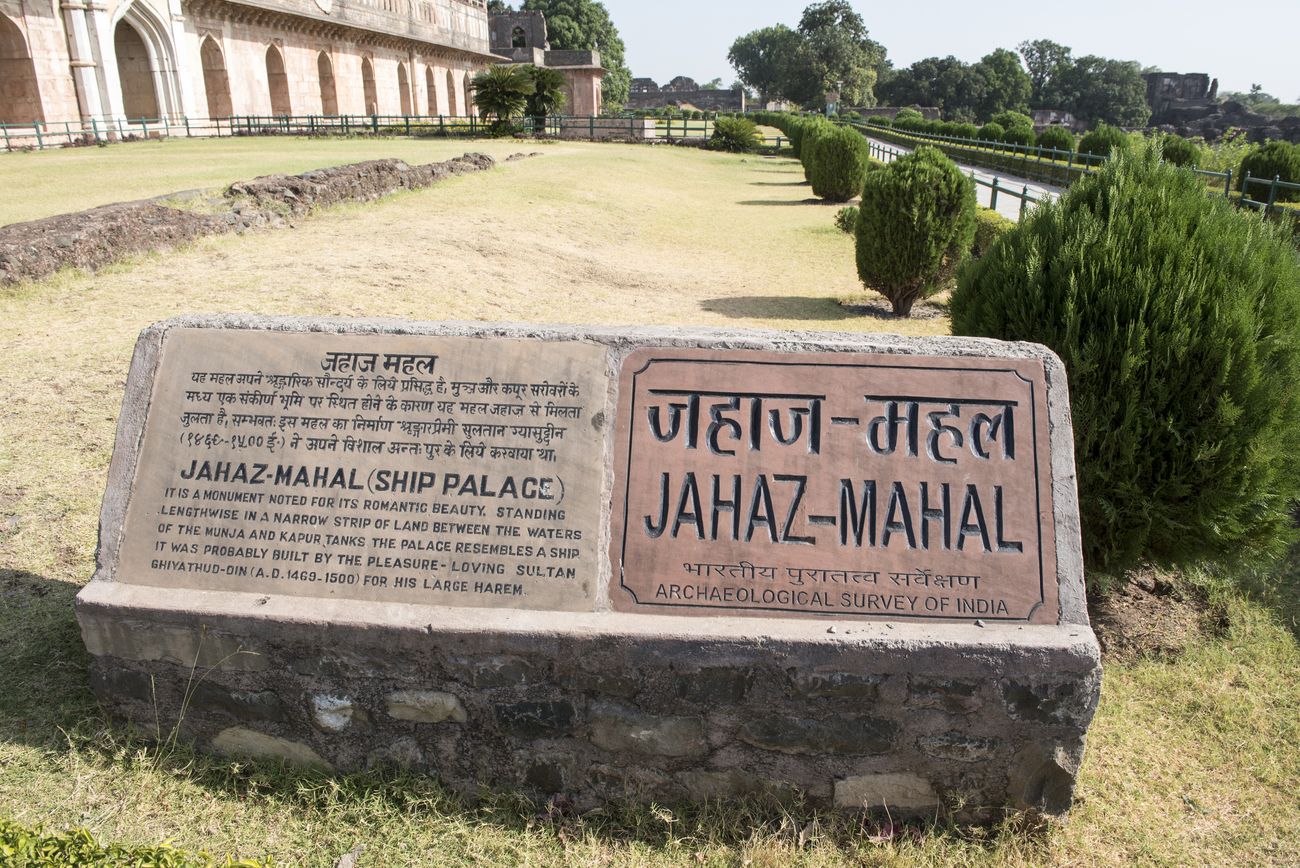
The Jahaz Mahal
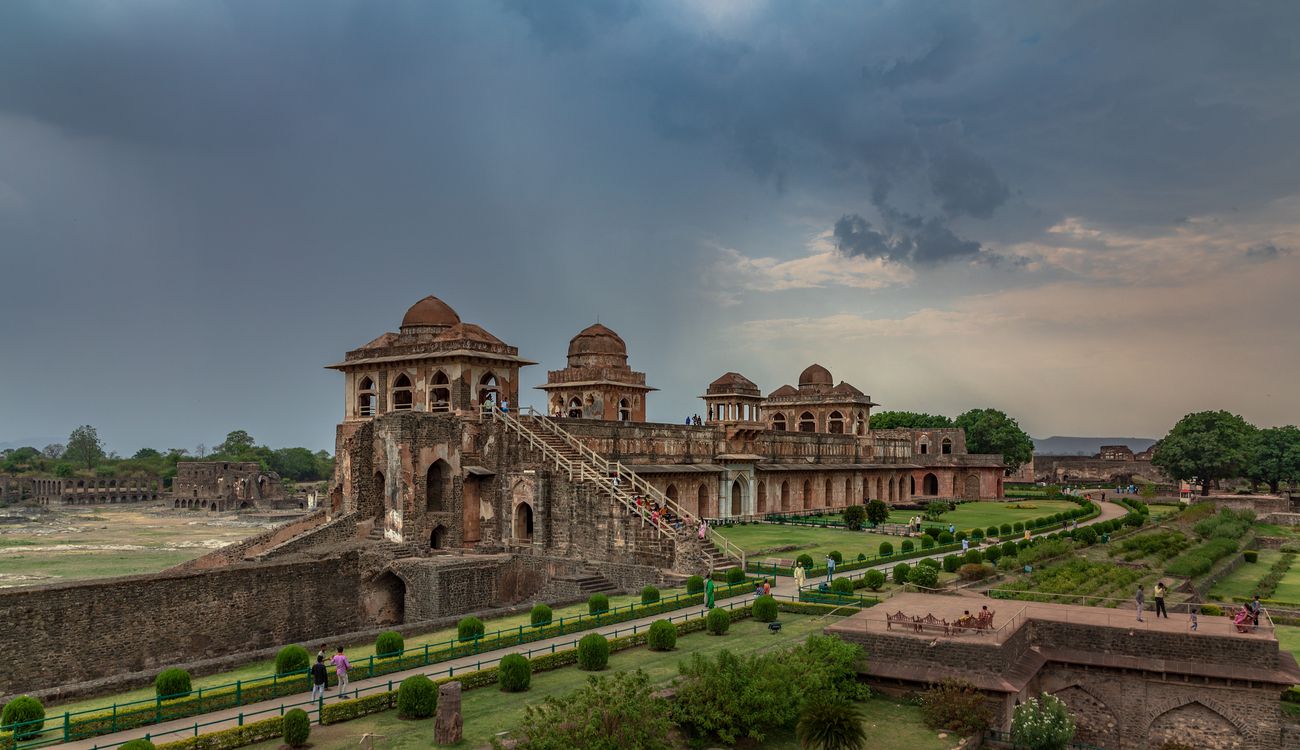
If there is one structure that perfectly captures the medieval magic of Mandu, it is the breathtaking Jahaz Mahal—the legendary “Ship Palace.” Built, it is believed, by Sultan Ghiyathuddin Khalji toward the end of the 1400s, this extraordinary residence was designed to house his vast royal seraglio. The renowned art historian Percy Brown describes it as the crowning achievement of Mandu’s classical architectural style, a masterpiece that embodies the refinement of the era.
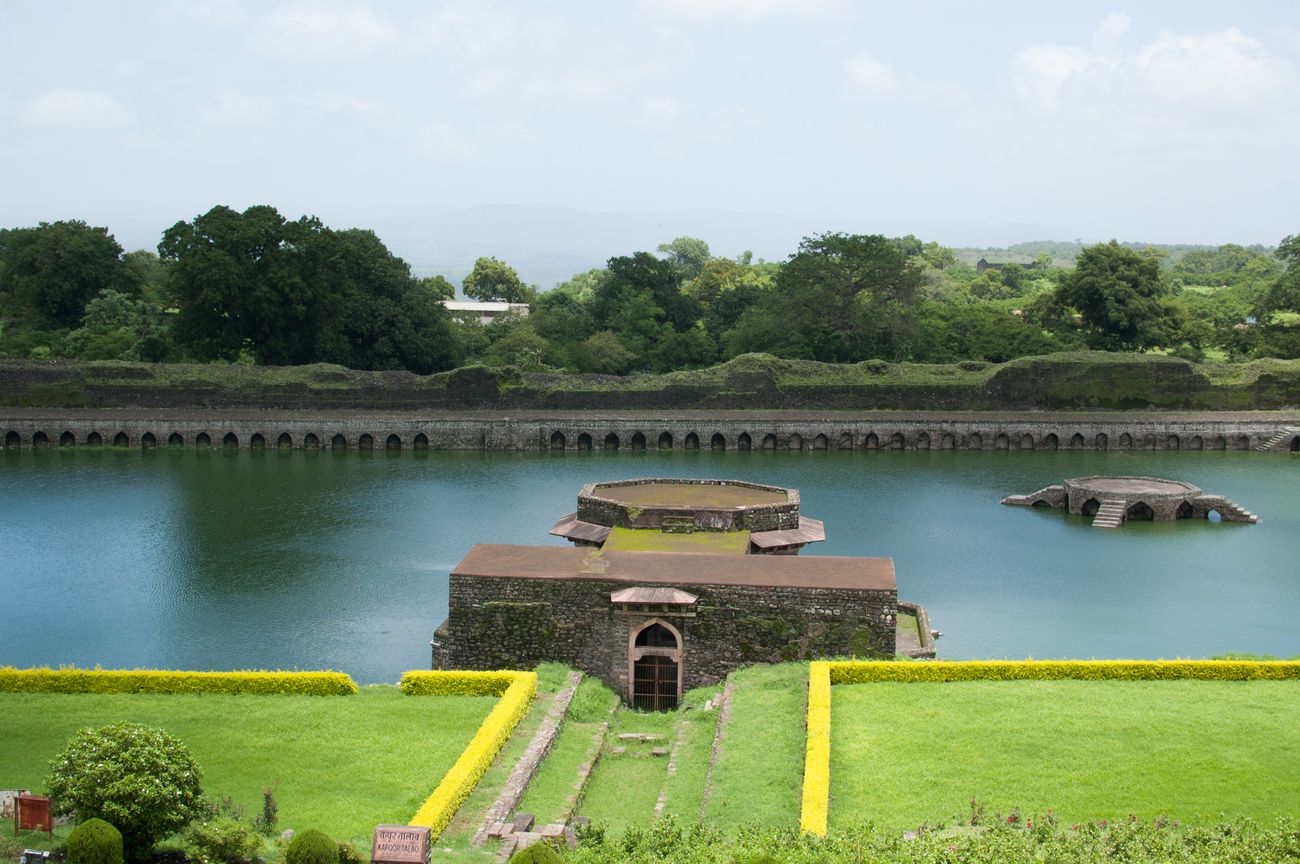
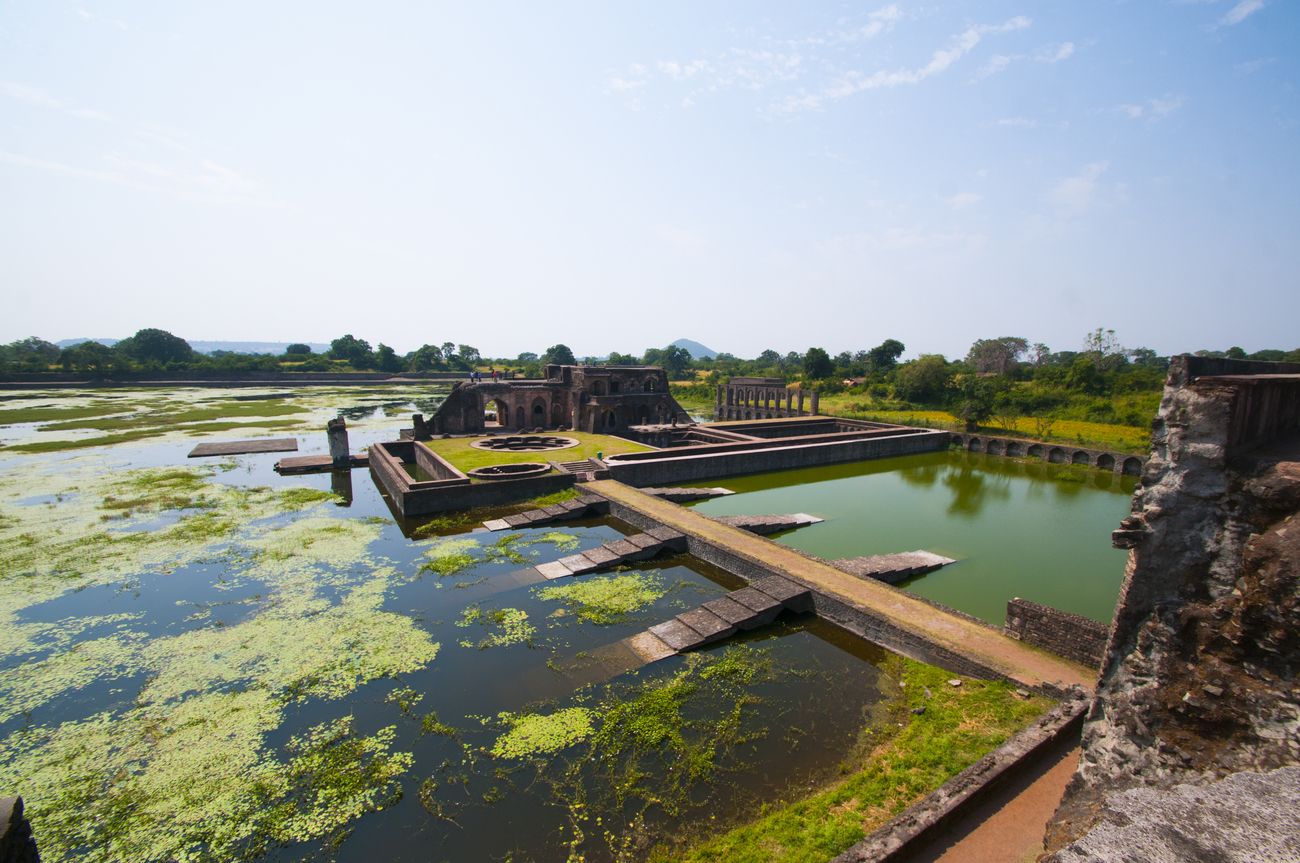
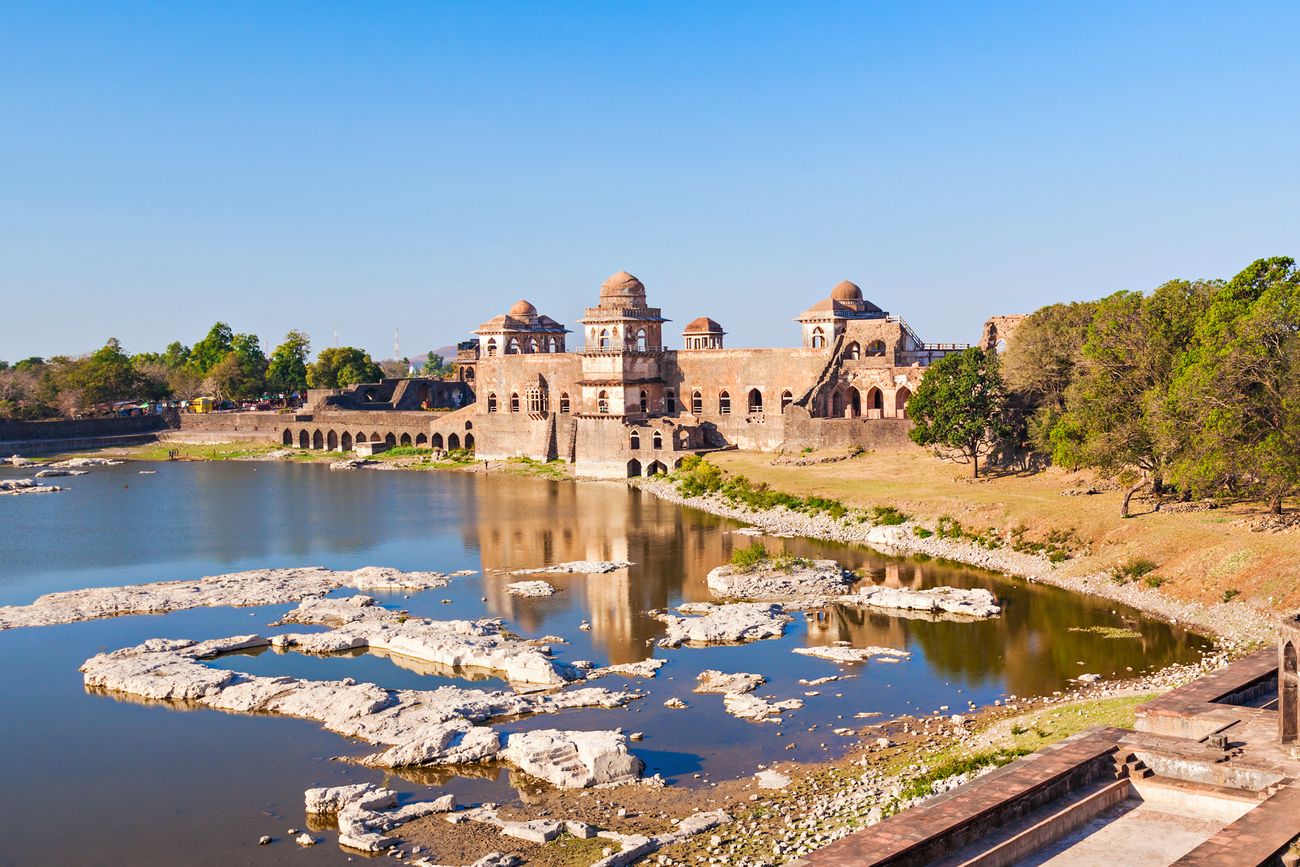
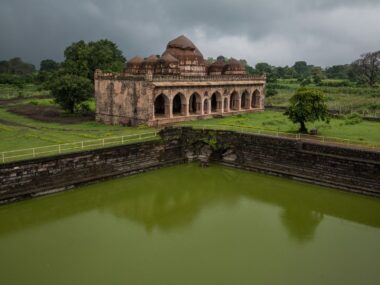
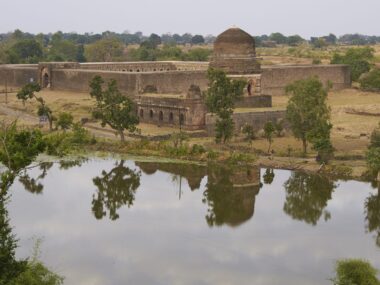
Stretching an impressive 360 feet in length and 50 feet in width, the two-storied palace sits on a narrow strip of land between Kapur Talao and Munj Talao, two shimmering artificial lakes. Seen from a distance, the palace appears to float like a magnificent barge on the water—an illusion so striking that it seems almost magical at sunrise or sunset.
The Mughal emperor Jahangir, in his famous memoir Tuzuk-i-Jahangiri, wrote with astonishment about the scale of Sultan Ghiyathuddin’s harem:
“They say that Sultan Ghiyathuddin had collected 15,000 women in his harem. He had a whole city of them and had made it up of all castes, kinds, and descriptions—artificers, magistrates, qazis, kotwals, and whatever else is needed for the administration of a town. Whenever he heard of a virgin possessed of beauty, he would not desist until he possessed her. He taught the girls all kinds of arts and crafts and was much given to hunting.”
Whether all details are fact or legend, the grandeur of Jahaz Mahal stands undeniable. Its ethereal setting, vast proportions, and dramatic silhouette make it one of Mandu’s most unforgettable monuments—an architectural poem floating between two lakes, filled with whispers of royal intrigue and opulence.
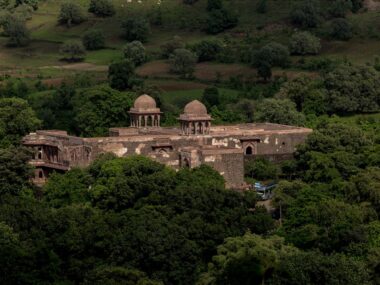
The majestic Jahaz Mahal rises over Mandu’s ruins—its long, graceful form still evoking the magic of a ship floating on water. © Bodom / Shutterstock
Jahangir, who adored Mandu, wrote fondly of the moments he and his beloved queen Noor Jahan spent at the Jahaz Mahal. In his memoirs, he records that the palace served as her guest residence during their stay in the citadel. One of his most vivid recollections is of the Shab-i-Barat celebration held within these walls. As twilight deepened, thousands of lamps and lanterns were lit across the palace and along the water tanks. Their shimmering reflections on the dark lake created the illusion of vast fields of fire. Jahangir marveled that he had never witnessed anything so enchanting. The festivities were lavish, the music intoxicating, and the guests indulged well into the night.
The palace itself reveals its magnificence the moment you approach from the east. The main entrance features a grand niched arch, flanked on either side by six smaller arches. A long stone cornice, supported by strong carved brackets, extends above them—adding both grace and grandeur.
Inside, the lower level unfolds like a maze of elegance. Narrow rooms occupy the far ends, while long corridors link the three central galleries. At the northern end sits a quiet architectural jewel: a cistern framed by a delicate colonnade on three sides. Water once flowed into this tank through a channel originating in a southern chamber, ensuring coolness and serenity throughout the palace.
Walking through these spaces today, it isn’t hard to imagine the echoes of celebrations, the glow of lantern flames on the water, and the regal presence of Noor Jahan herself moving through this floating palace of light.
Jahaz Mahal, the legendary “Ship Palace,” stands as one of Mandu’s most unique Mughal-era wonders—serene, slender, and stunning. © Getty Images
Each of the palace halls opens into its own airy pavilion overlooking the shimmering waters of Munj Talao. During the days of the royal seraglio, delicate drapes would have hung between these arches, giving the women privacy as they relaxed, sang, and enjoyed the cool lake breezes. These spaces likely served as their living quarters and entertainment areas—graceful retreats suspended between water and sky.
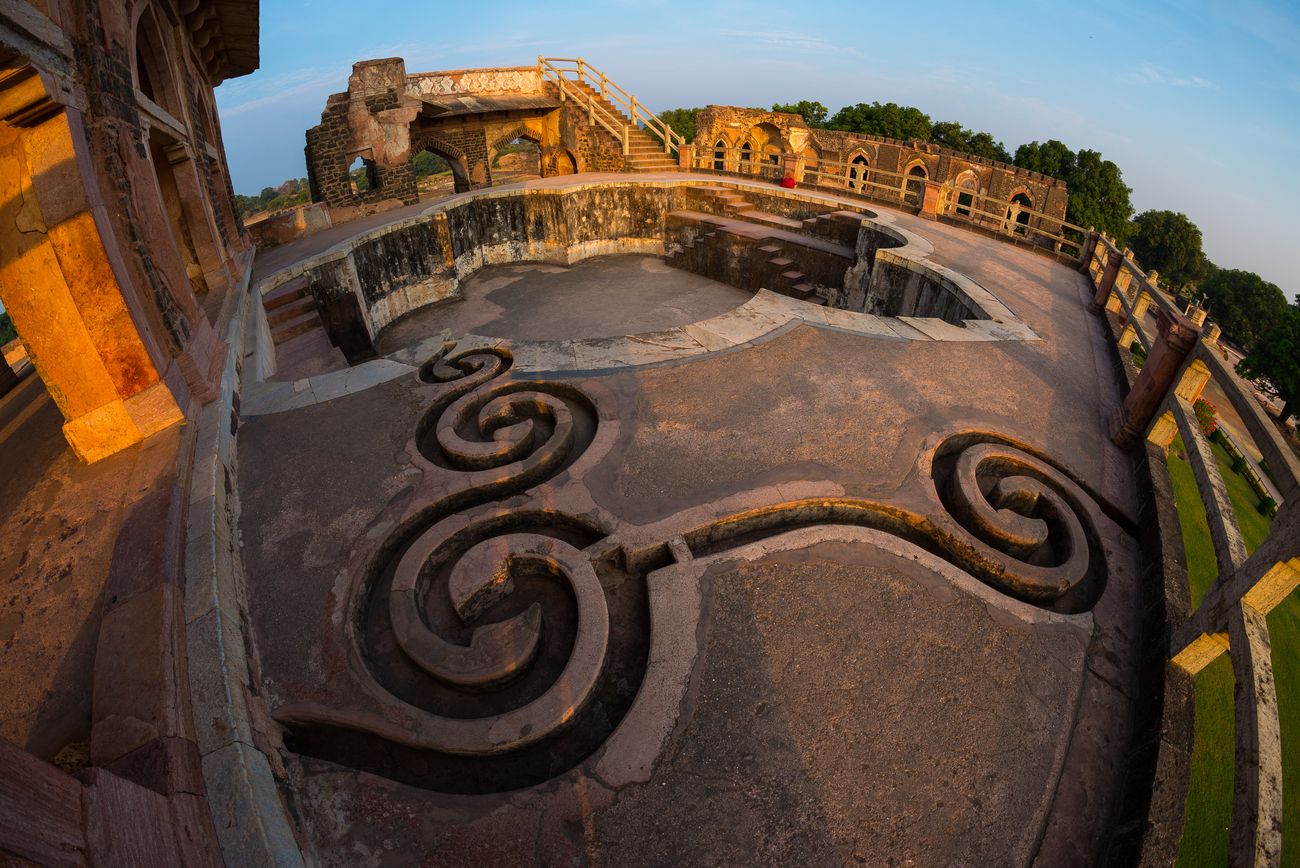
Climb up to the expansive terrace, and the magic of Jahaz Mahal truly unfolds. Here, you’ll find several pavilions, including a striking central one adorned with rows of yellow and blue tiles, their surfaces still bearing faint traces of painted floral patterns—whispers of a richly decorated past.
At both ends of the terrace stand two rectangular side pavilions, perfectly balanced, with a charming domed kiosk positioned between them. This thoughtful arrangement gives the entire façade a beautiful, harmonious symmetry, like the composed lines of a royal poem.
The renowned archaeologist Yazdani captured the enchantment of this terrace beautifully:
“In the crimson glow of an Indian sunset, the wild beauty of the natural scenery and the panorama of domes and turrets present a spectacle perhaps not less charming than that seen from the Propylaeum, when the venerable piles of Greek architecture are bathed in a golden light, the hills of Athens blaze with color, and the distant sea glistens like molten ore.”
Stand here at sunset, and you’ll instantly understand why Jahaz Mahal is often called the jewel of Mandu—a place where architecture, landscape, and legend merge into pure magic.
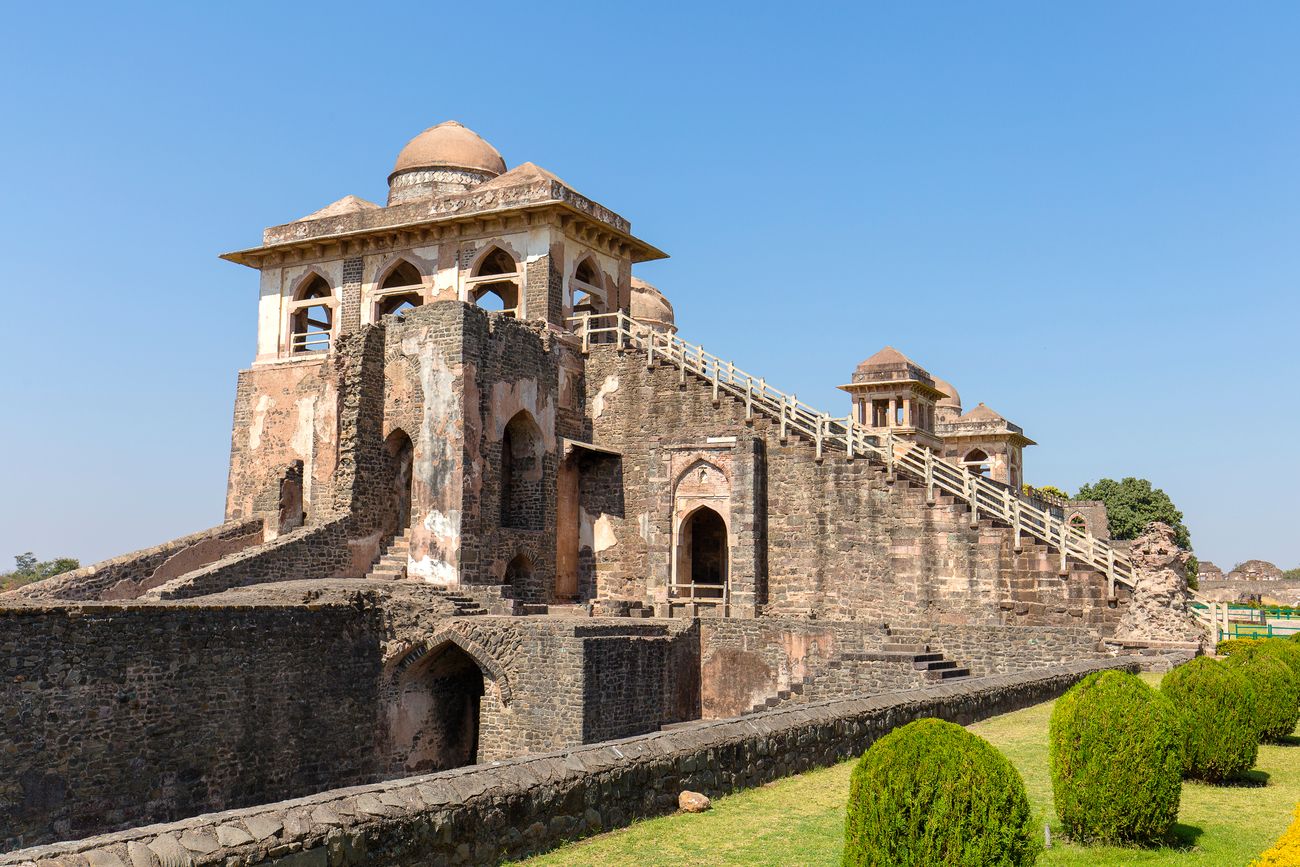
Steps lead up to the broad terrace of Jahaz Mahal, inviting visitors to explore its grand pavilions and lakeside views. © OlegD / Shutterstock
The Hindola Mahal
The Hindola Mahal, or “Swinging Palace,” earns its poetic name from its striking sloping walls, which create the illusion that the entire structure is gently swaying like a giant stone swing. Built in the latter half of the 1400s—toward the end of Sultan Ghiyathuddin’s reign—this extraordinary building served as a grand audience hall. Its floor plan forms a T-shape, with the long vertical arm housing the main hall and the shorter transverse arm believed to be a later architectural addition.
Unlike the ornate palaces elsewhere in Mandu, the Hindola Mahal stands out for its minimalism. Its clean lines, sweeping angles, and powerful simplicity give it a sculptural presence that has fascinated scholars, architects, and travelers for centuries. Many consider it one of the most unique and unmatched monuments in all of India.
Step inside the audience hall and its impressive proportions immediately command attention:
– 88.5 feet long
– 26 feet wide
– 36 feet high
The side walls feature six arched doorways on each side, each crowned by deep arches and topped by exquisite pierced stone windows that once filled the hall with filtered light. The sheer engineering might is astounding—each long wall is 8.8 feet thick, not including the enormous slanting buttresses that give the palace its iconic look.
A second story once rose above the transverse section, reserved exclusively for the royal women. These private upper rooms were reached not by stairs but by sloping passageways, designed so that queens and princesses could be carried up gracefully on palanquins—or even elephants.
With its soaring hall, swinging walls, and ethereal play of light and shadow, the Hindola Mahal remains one of Mandu’s most unforgettable architectural wonders—simple in form, yet endlessly mesmerizing.
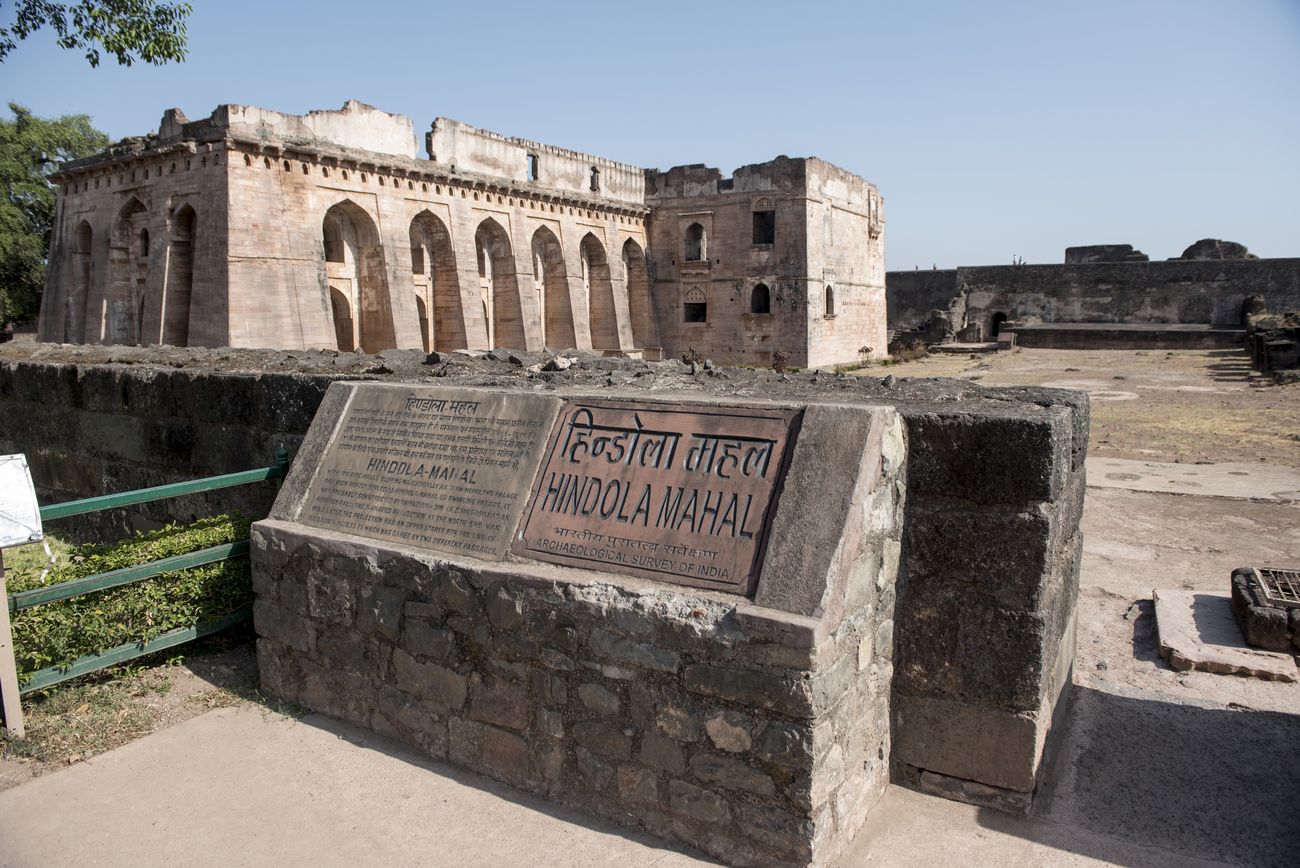
The iconic slanting walls of Hindola Mahal—Mandu’s “Swinging Palace”—lean dramatically from the southeastern corner, showcasing 15th-century brilliance. © clicksabhi / Shutterstock
Inside the Hindola Mahal, graceful bay windows once filtered soft light into the grand hall, adding a touch of refinement to the vast space. Yet from the outside, the structure appears almost stark—a powerful contrast that heightens its architectural drama. The stonework is impeccably executed: cleanly chiseled masonry, perfectly aligned corner joints, and only the faintest touches of ornamentation in the form of slender sculpted moldings. Its beauty lies not in lavish decoration, but in the quiet confidence of pure form.
Just north of Munj Talao, a cluster of scattered ruins spreads across the landscape. Though they appear irregularly arranged today, together they paint a magnificent picture of Mandu’s past. These were once the pleasure retreats of the Malwa Sultans, where kings relaxed amidst poetry, music, and the arts. Travelers of old fondly described this area as showcasing “the lighter side of court life,” where rulers momentarily set aside political burdens to revel in culture and refinement.
Among these remnants stands the Tabeli Mahal, another intriguing relic of the complex. As its name suggests—tabeli meaning “stable”—the lower level likely housed royal horses, while the upper floor provided apartments for guards. Today, the restored structure serves as a charming ASI guest house. Its terrace offers sweeping views of the surrounding ruins and rolling countryside, allowing visitors to soak in the romance and mystery of Mandu from a truly privileged vantage point.
In this quiet corner of the citadel, where art once mingled with royal leisure, the echoes of music and poetry still seem to drift through the air.
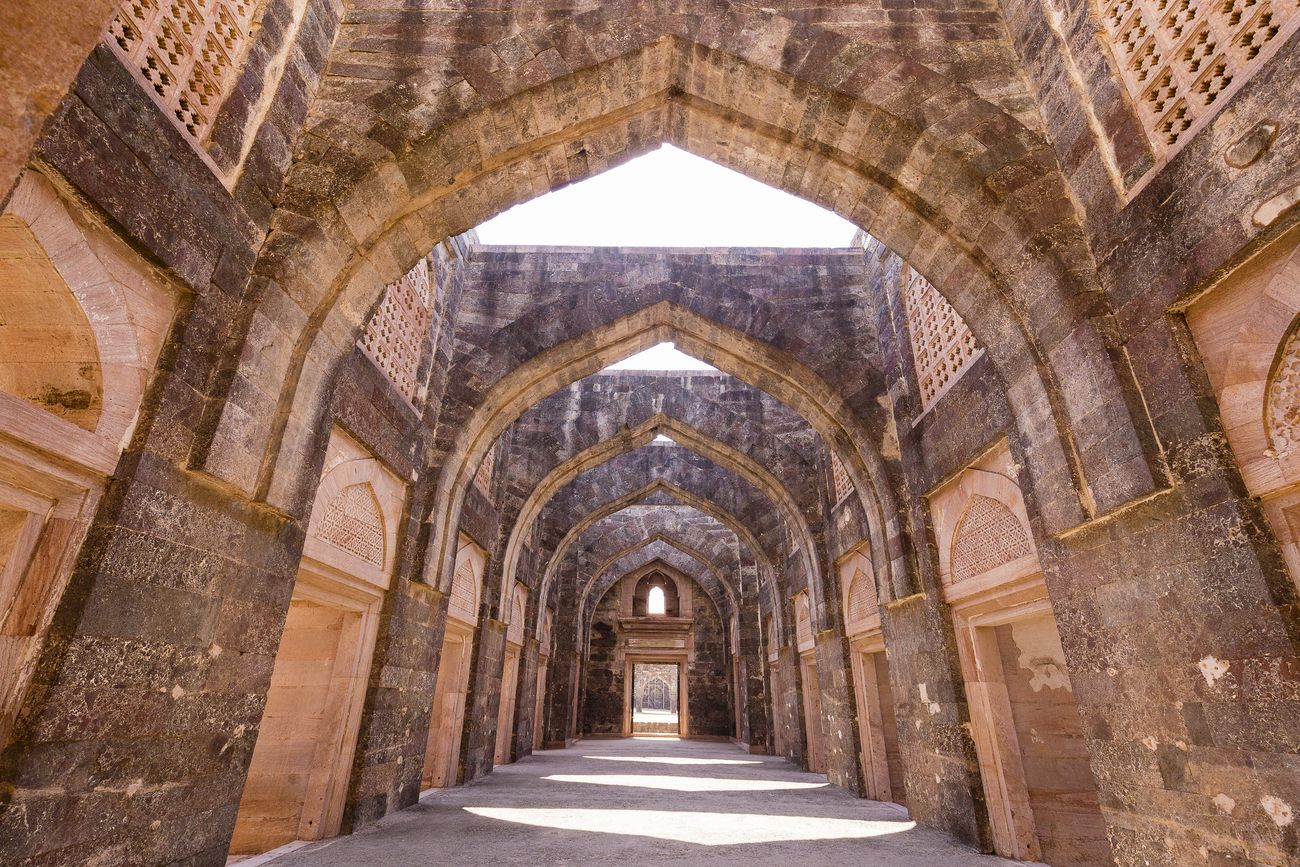
Soaring pointed arches dominate the main hall of Hindola Mahal, creating an awe-inspiring play of rhythm and symmetry. © OlegD / Shutterstock
Another captivating element of this complex is the Tiger Balcony, or Nahar Jharokha. Its name comes from the fierce tiger figure that once supported the projecting balcony—a striking symbol of royal power. This type of ceremonial window, known as a darshan jharokha, was traditionally used by kings to appear before their subjects. While such balconies are more commonly associated with the forts of Agra, this one in Mandu is believed to have been added during one of Jahangir’s extended stays in the citadel. Historians note that it was actually Akbar who pioneered this royal tradition, which later became a hallmark of Mughal kingship.
Within the same enclosure lies the enchanting Champa Baoli, a well famed for water said to carry the fragrance of champak blossoms. The base of the well connects to a tahkhana—a cooling labyrinth of arched underground rooms. These chambers, in turn, link directly to a pavilion on the western bank of Munj Talao, allowing the circulating water to naturally cool the interiors during the sweltering summer heat.
Close by stands a beautifully crafted hammam (royal bath). Its ceilings are punctuated with star-shaped openings that scatter delicate patterns of light across the floor, creating a soft, celestial glow.
Together, these features—royal jharokhas, fragrant wells, hidden chambers, and sunlit baths—reveal a world where luxury, innovation, and artistry intertwined seamlessly in Mandu’s golden age.
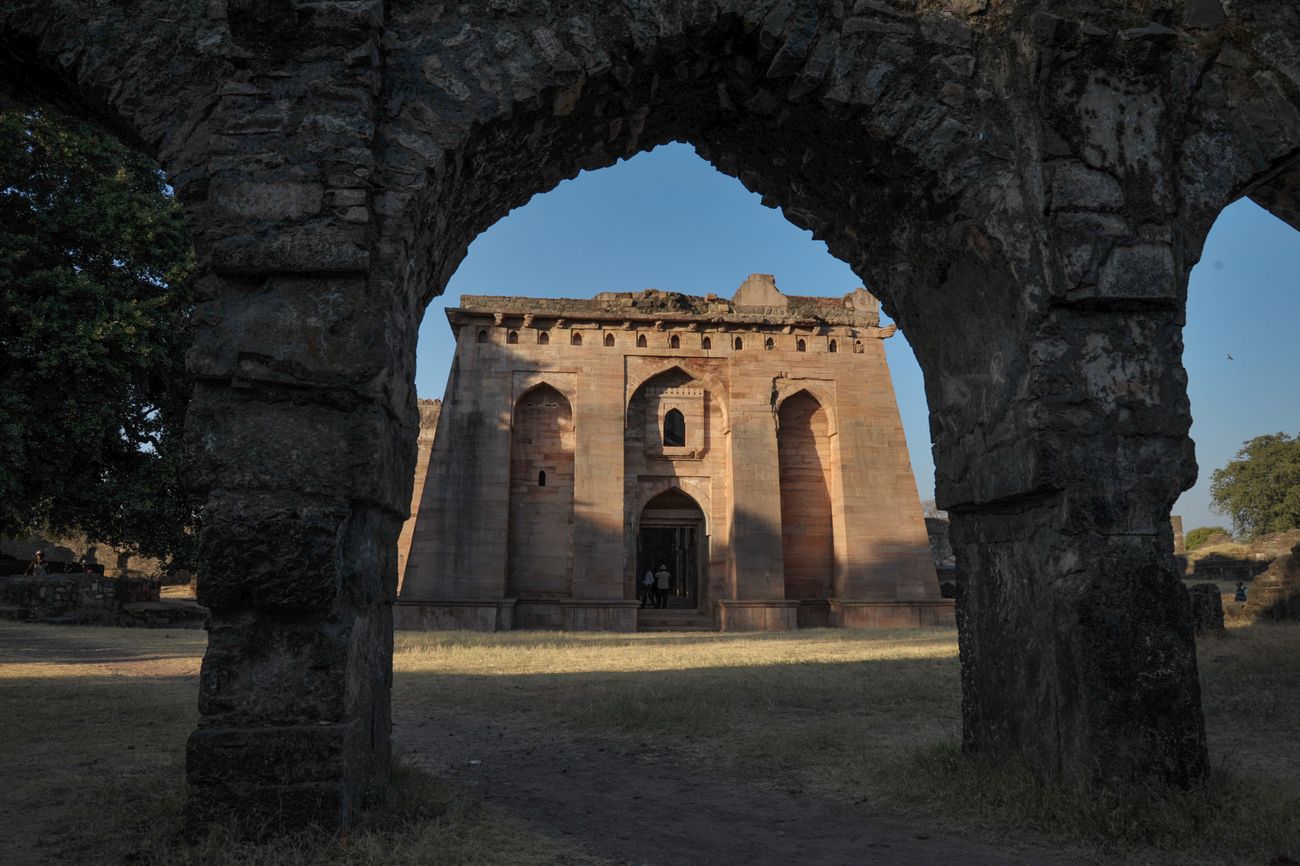
Hindola Mahal stands tall in Mandu, a masterpiece of angled walls and elegant simplicity. © Chetan Soni / Shutterstock
The Royal Enclave
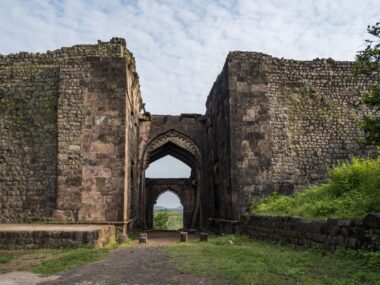
The grand entrance to Mandu’s Royal Enclave is through the imposing Hathi Pol, the “Elephant Gate,” once flanked by massive stone elephants—now weathered, but still unmistakably regal. The presence of bastions on either side, built to mount cannons, suggests that this gateway was constructed during the time of Jahangir, for earlier Mandu sultans did not use gunpowder weaponry. Even in ruin, Hathi Pol announces the power and prestige of the citadel within.
Stepping inside, you encounter two ancient stepwells—the Ujala Baoli and the Andheri Baoli.
• Ujala Baoli, as its name suggests, is open to the sky and suffused with natural light.
• Andheri Baoli, its companion, is covered, darker, deeper, and more mysterious. Its domed roof and twin staircases that descend toward the cool water give it a quiet, cathedral-like atmosphere.
Among the most intriguing figures associated with this enclave is Gada Shah, known locally as the “beggar master.” Despite his humble title, he wielded significant influence. Many believe he was none other than Medini Ray, a powerful Rajput chief who served under Sultan Mahmud II. He occupied two impressive buildings, now sadly reduced to ruins.
One building functioned as his residence, a two-storied structure with airy rooms and halls on the upper floor, and apartments adjoining an arched hall below. The second building, referred to as his “shop,” was not a marketplace at all—it likely served as his public audience hall, where he met citizens and dealt with everyday affairs. Distinguished visitors, however, were received in the more sophisticated environs of Hindola Mahal.
Even in decay, these structures reveal a fascinating glimpse into Mandu’s layered social world—where nobles, warriors, poets, and kings all left their marks on the stones now softened by time.
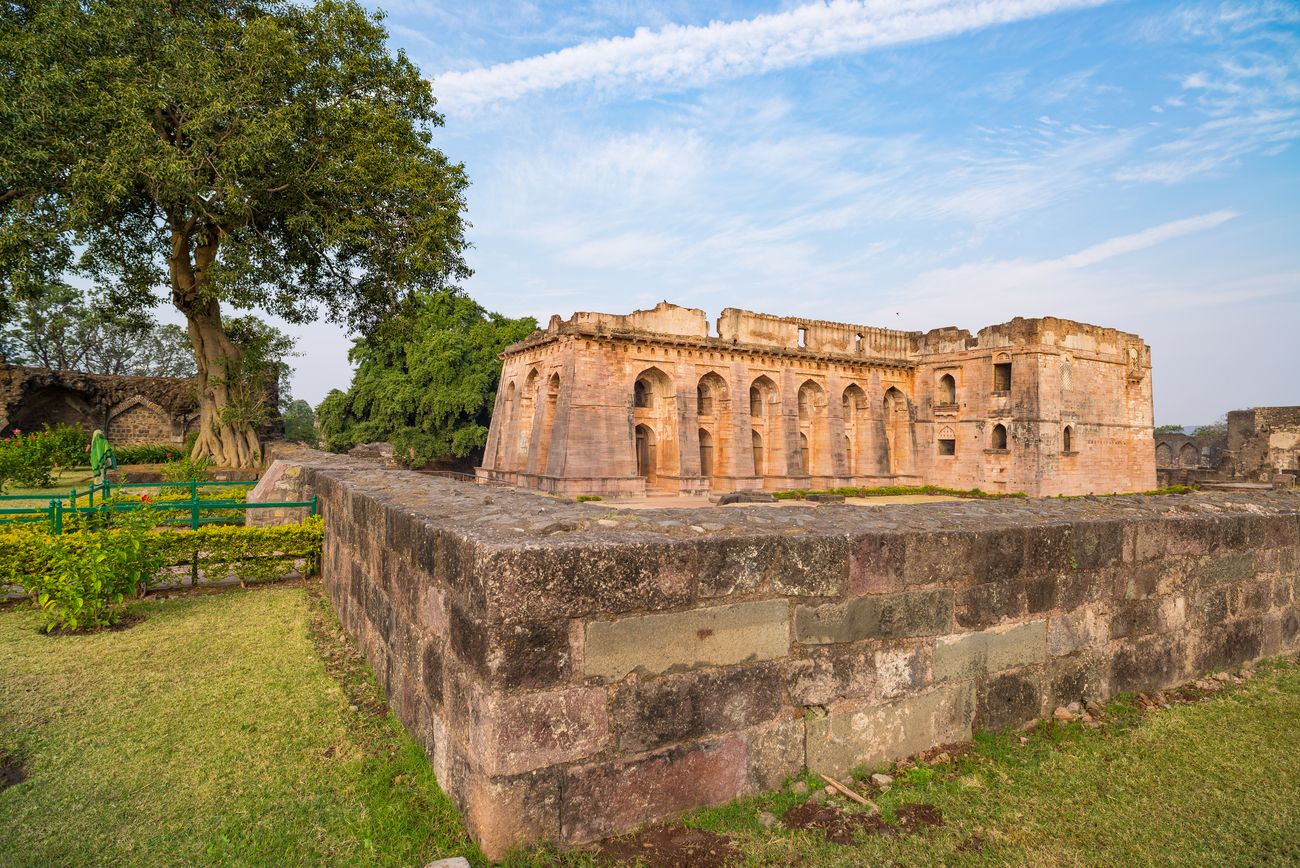
Ancient Afghan-era mausoleums and mosque monuments rise from Mandu’s landscape, remnants of a once-powerful Islamic kingdom. © Fabio Lamanna / Shutterstock
The Dilwar Khan Mosque
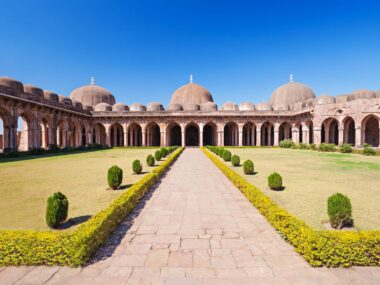
The Dilwar Khan Mosque holds a place of great distinction—it is the oldest Indo-Islamic monument in Mandu. An inscription dated 1405 within the structure marks the early rule of Malwa’s first Muslim king, Dilwar Khan. This mosque was reserved exclusively for the royal family, giving it an aura of intimacy and sanctity.
At its heart lies a serene central courtyard, encircled by graceful arcades. On the western side stands an especially exquisite mihrab, carved with such delicacy that it immediately draws the eye. Step into the prayer hall and you’ll notice something intriguing—the ceiling, pillars, and many architectural elements echo the motifs of Hindu craftsmanship.
Scholars agree that this mosque reflects the earliest phase of Islamic architecture in Mandu, a time when temples were dismantled and their materials repurposed—yet with great effort taken to conceal this transformation. Builders introduced pointed arches between the reused pillars to give the structure the appearance of a proper mosque, blending old and new with remarkable ingenuity.
Among the highlights are the richly ornamented western niches and the intricately carved main doorway, both showcasing a fusion of artistic traditions. The Dilwar Khan Mosque is more than a monument—it is a fascinating architectural dialogue between two worlds, marking the dawn of Islam in Mandu’s storied landscape.
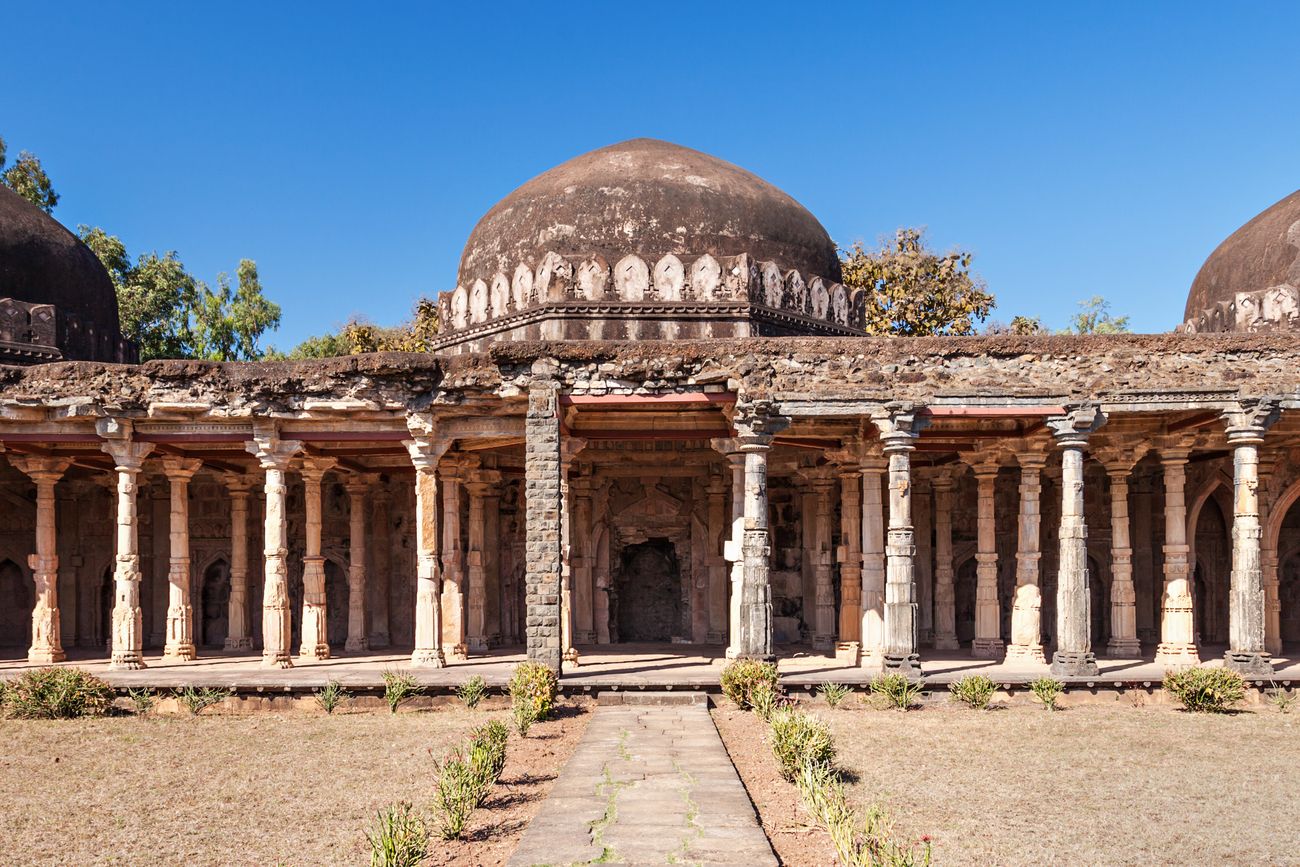
An ancient mosque in Mandu stands quietly against the sky, its arches recalling centuries of devotion. © saiko3p / Shutterstock
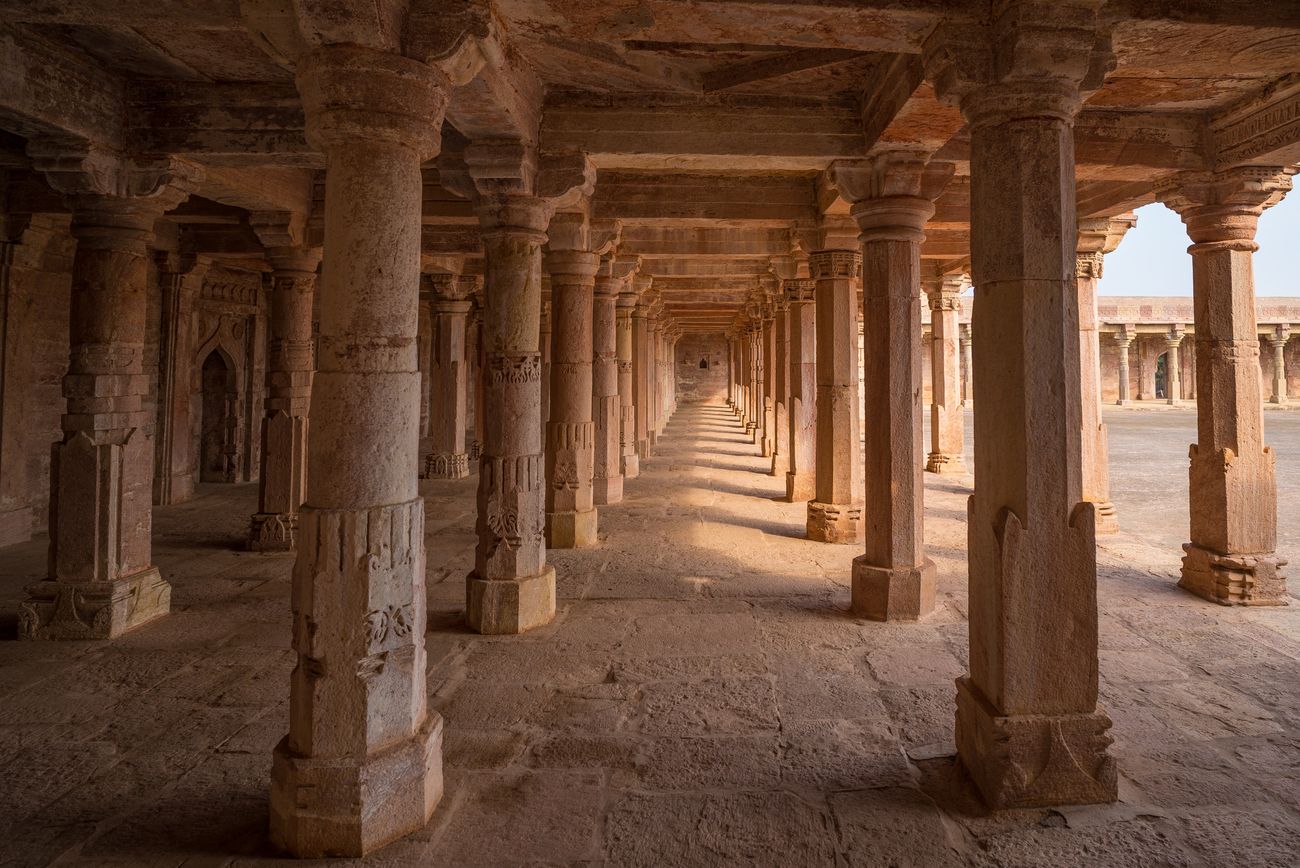
Mandu’s Afghan relics—solemn mausoleums and mosque structures—still echo the architectural language of a lost Islamic empire. © Fabio Lamanna / Shutterstock
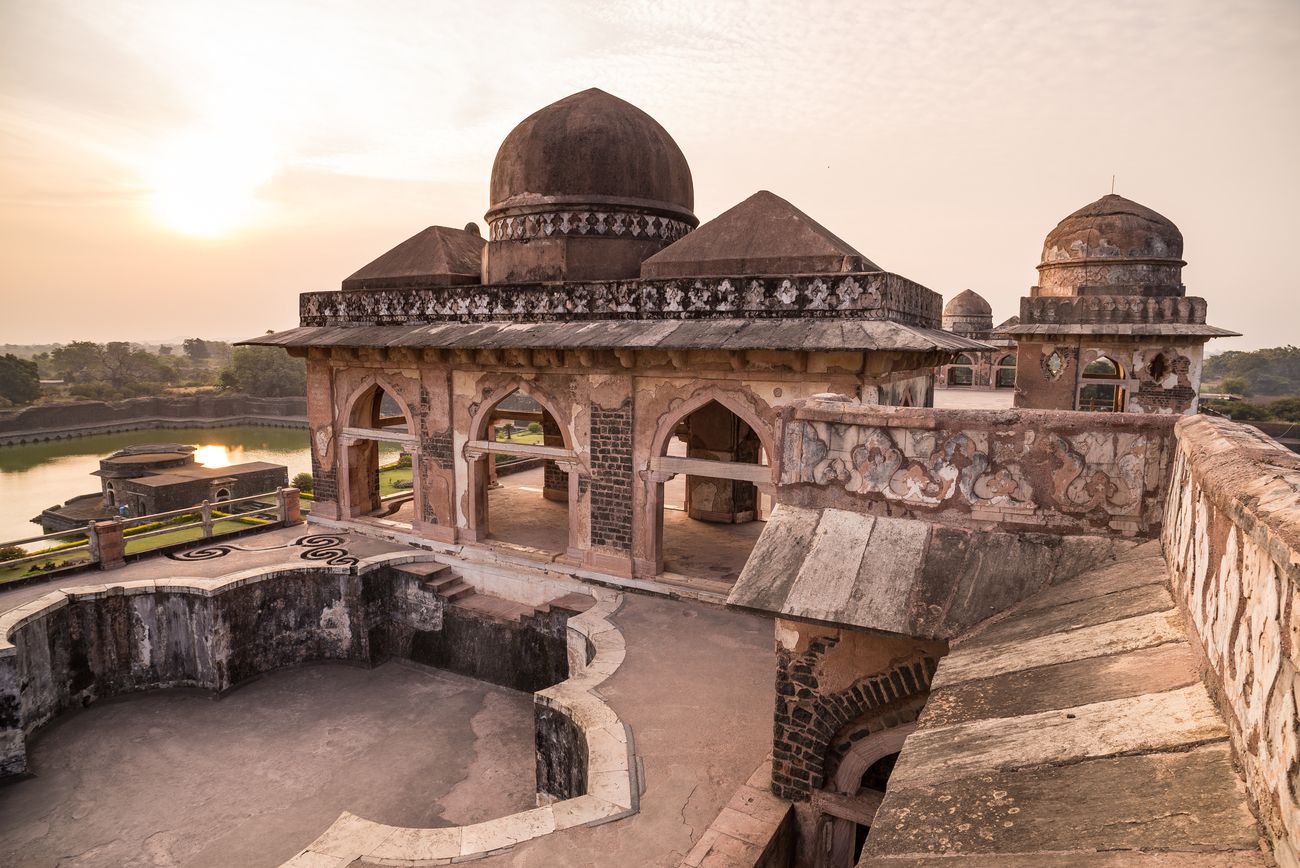
Intricate Afghan design details adorn Mandu’s old mausoleums—arched facades and chiselled stonework capturing a rich architectural legacy. © Fabio Lamanna / Shutterstock
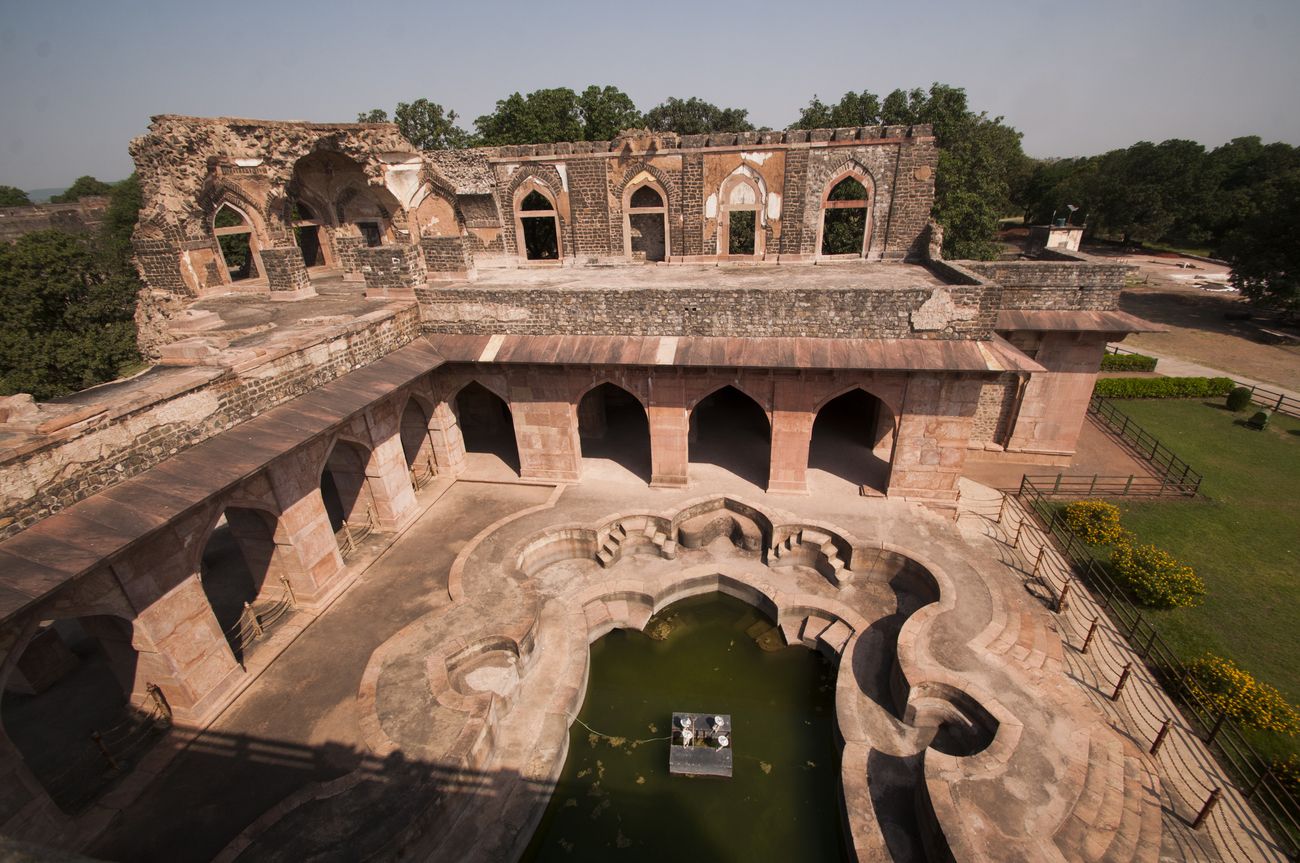
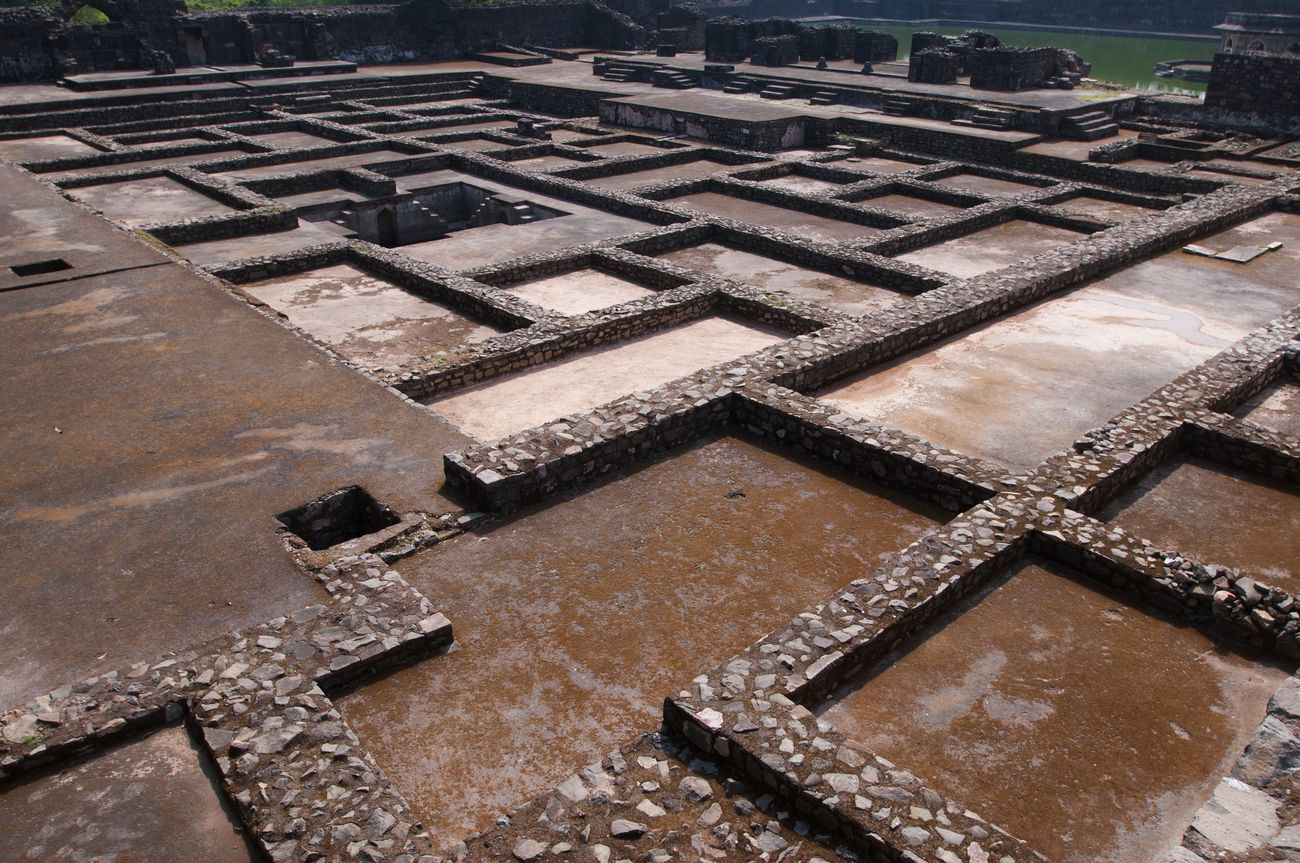
Beautifully patterned cisterns and carved water channels adorn the terrace of Jahaz Mahal, slowing the water’s flow for long, luxurious royal baths. © CRS PHOTO / Shutterstock
Pools and water channels shimmer around Jahaz Mahal—silent reminders of Mandu’s refined Afghan-era engineering. © Fabio Lamanna / Shutterstock
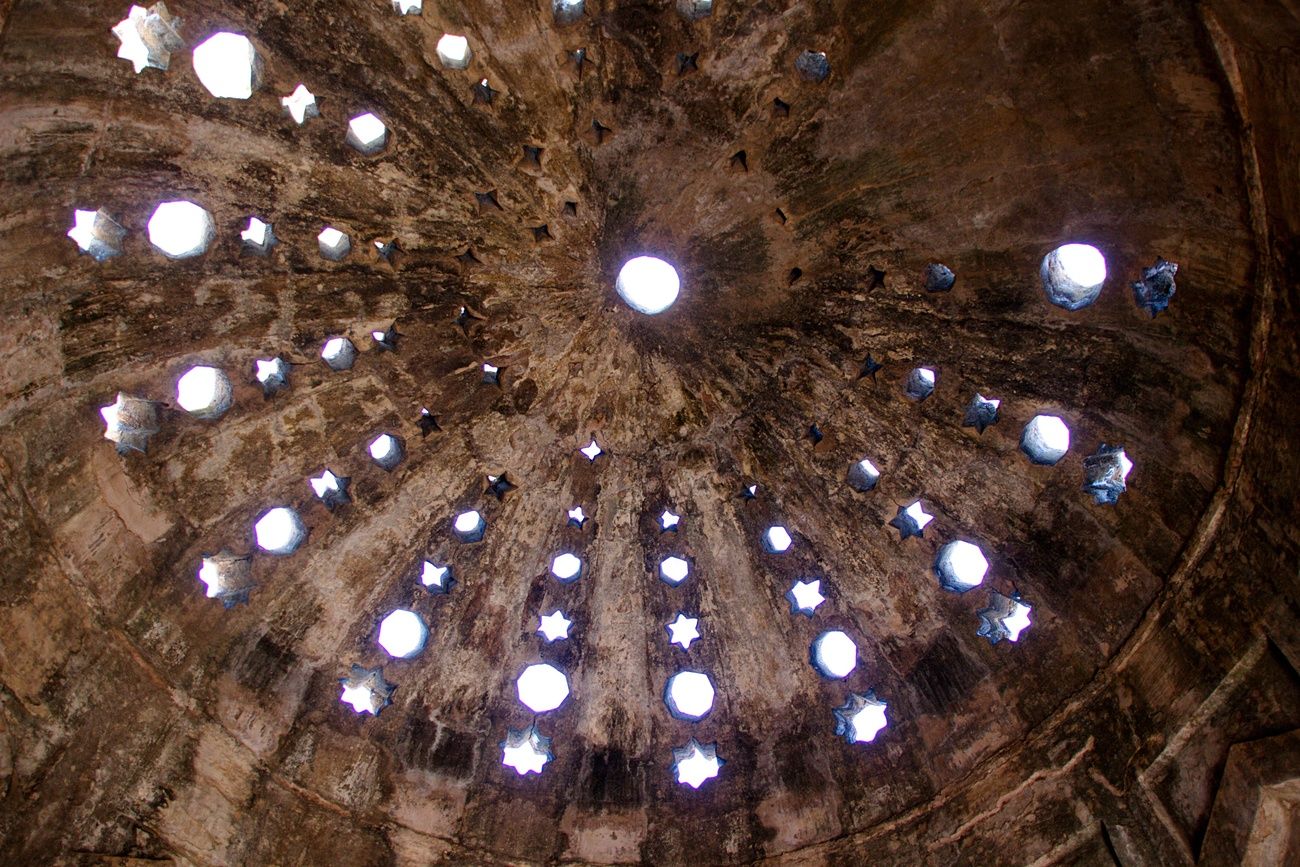
Star-shaped ceiling openings fill the hammam with soft, celestial light—an exquisite touch in Mandu’s royal bath complex. © Getty Images
Jahaz Mahal—Mandu’s iconic Ship Palace—glows softly in the heart of the Royal Enclave. © Shailendra Sood / Shutterstock
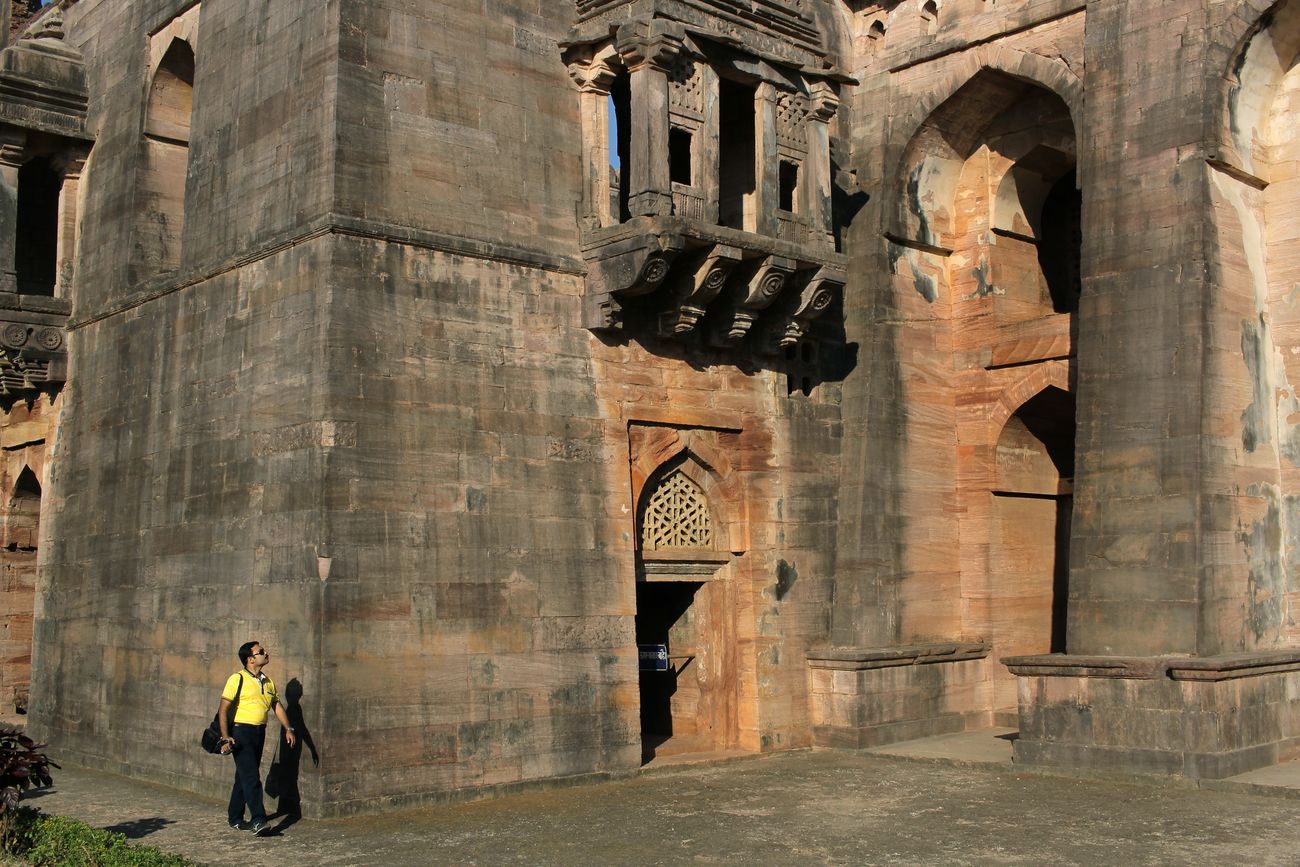
A visitor admires the elegant arched doorway and window carvings of Jahaz Mahal’s west wall—living art from Mandu’s golden age. © Sitaramdham / Shutterstock
Ancient underground channels still link Kapur Talao with Munj Talao—Mandu’s brilliant water system at work centuries later. © saiko3p / Shutterstock
Ruins of Afghan-era architecture rise from Mandu’s old city, their silent walls rich with history. © CRS PHOTO / Shutterstock
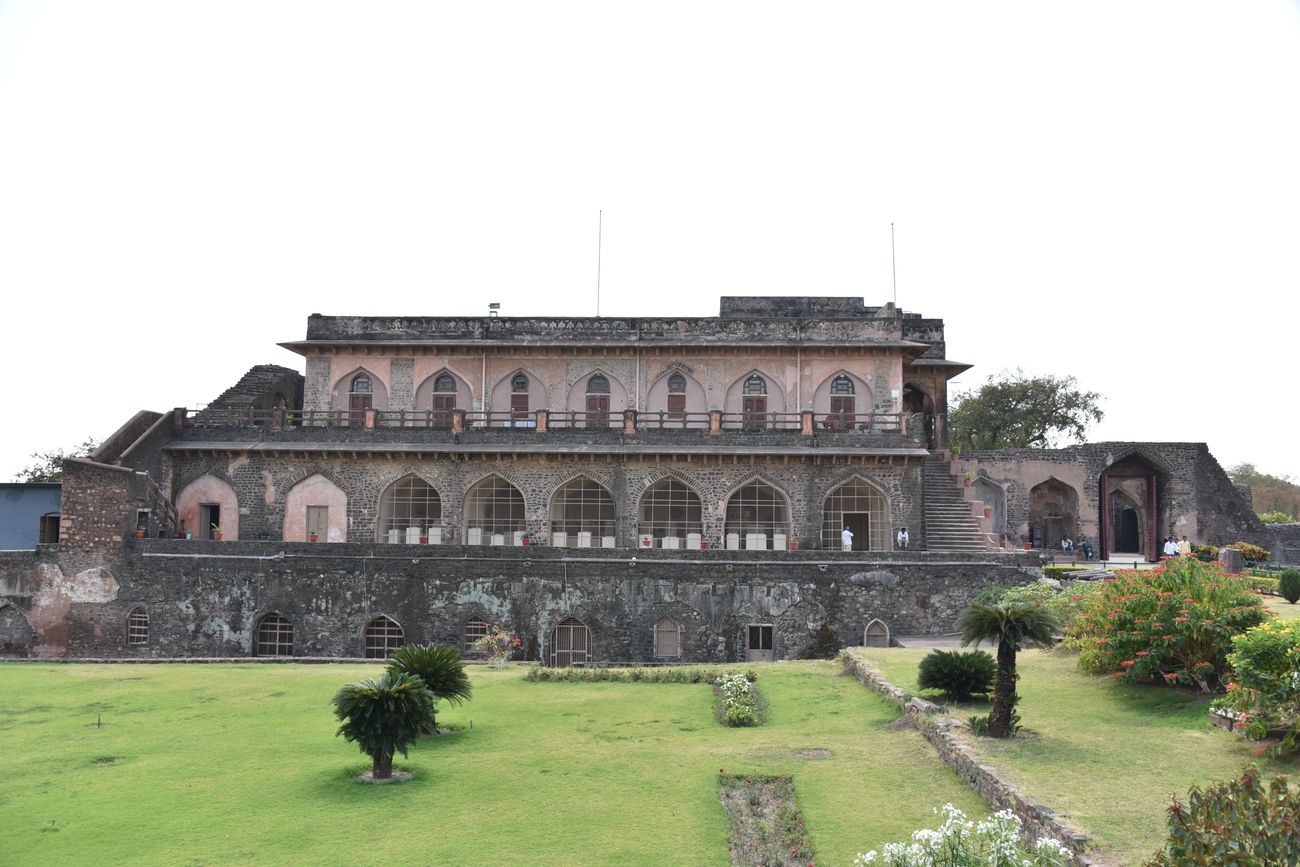
Jahaz Mahal—the floating palace of Mandu—continues to mesmerize with its long, ship-like silhouette. © Shailendra Sood / Shutterstock
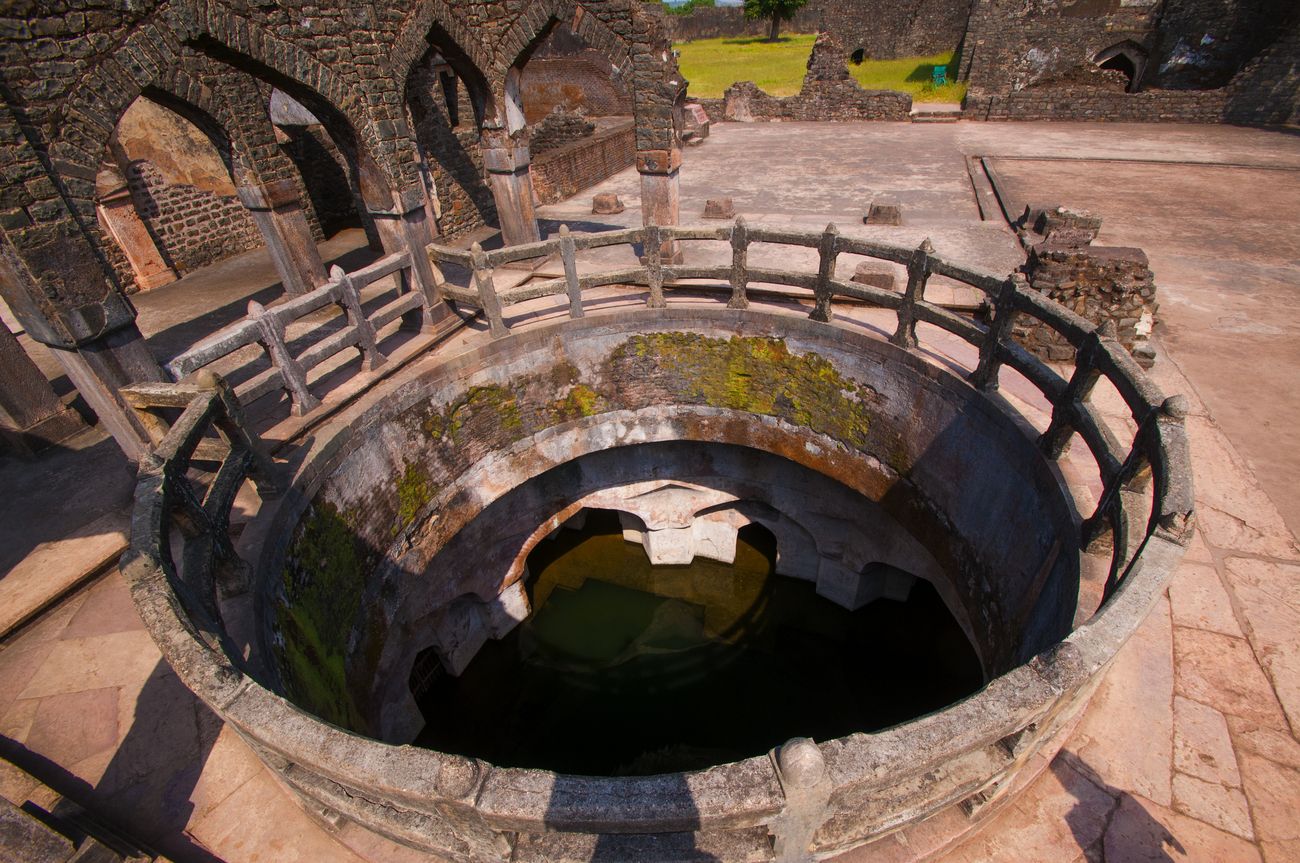
Weathered Afghan architectural remnants dot Mandu’s ruined citadel, preserving the artistry of centuries past. © CRS PHOTO / Shutterstock
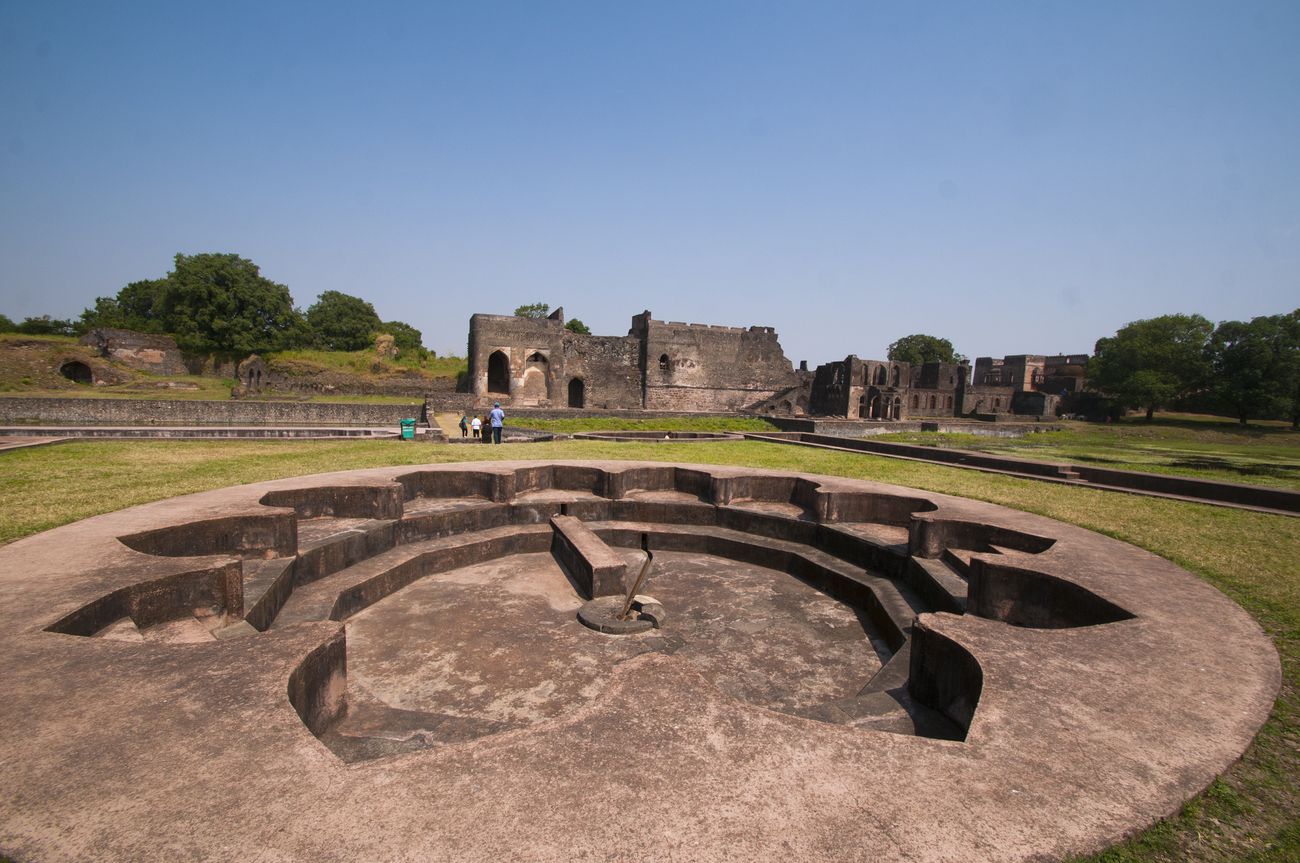
Majestic and ethereal, Jahaz Mahal stands as the crown jewel of Mandu’s Royal Enclave. © Shailendra Sood / Shutterstock
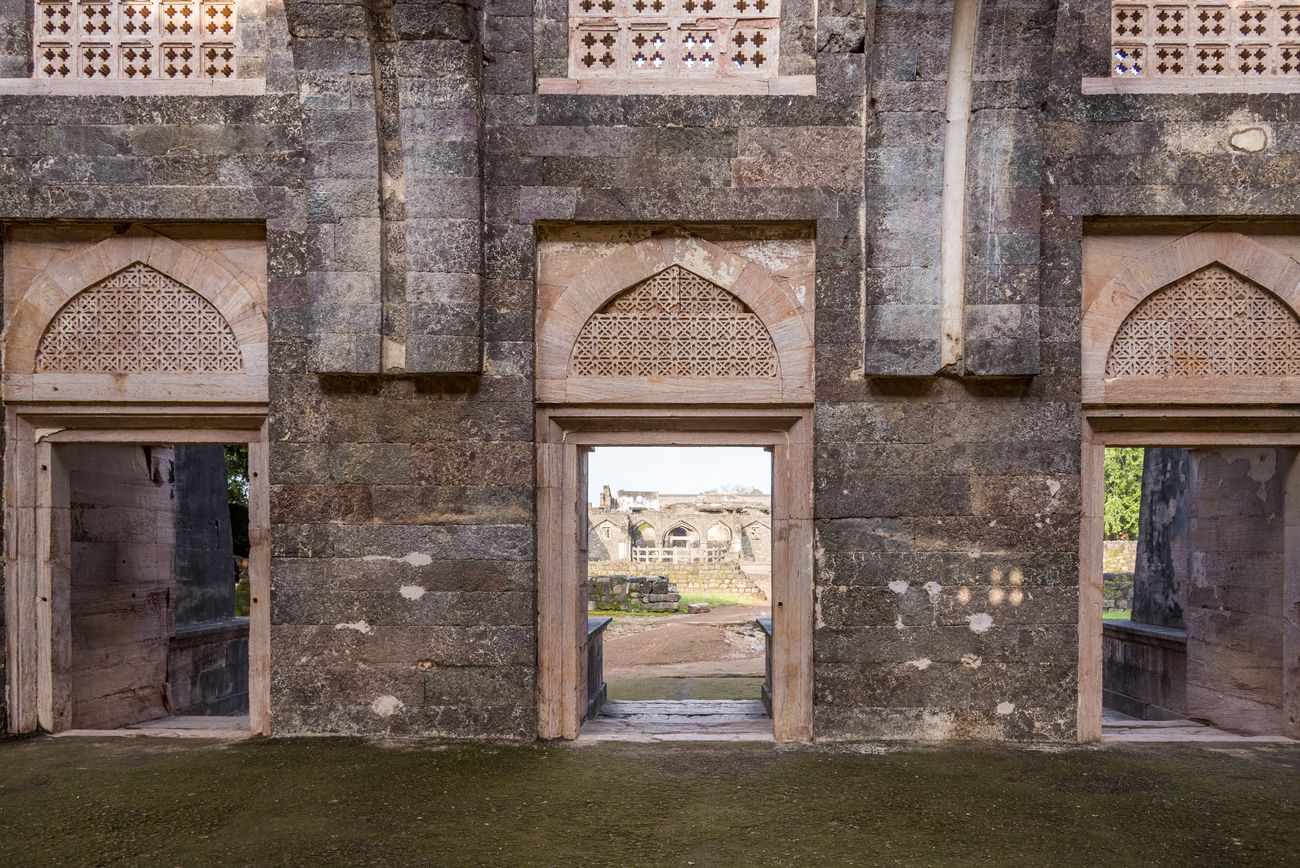
The lovely arches of Jahaz Mahal reveal why it’s called the Ship Palace—this 15th-century marvel appears to glide between two shimmering lakes. © Clicksabhi / Shutterstock
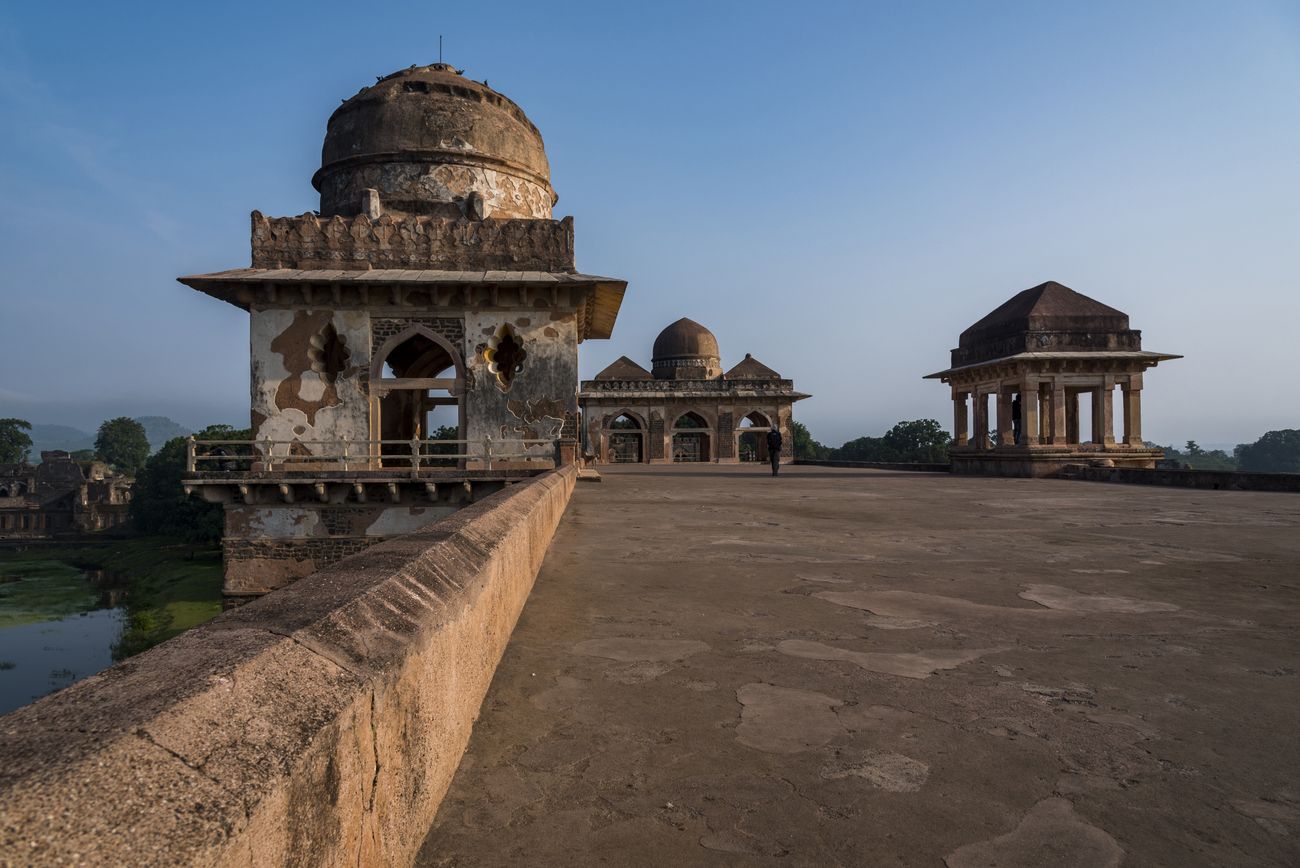
The vast terrace of Jahaz Mahal, lined with pavilions and chattris, opens to spectacular lake views on both sides. © Clicksabhi / Shutterstock
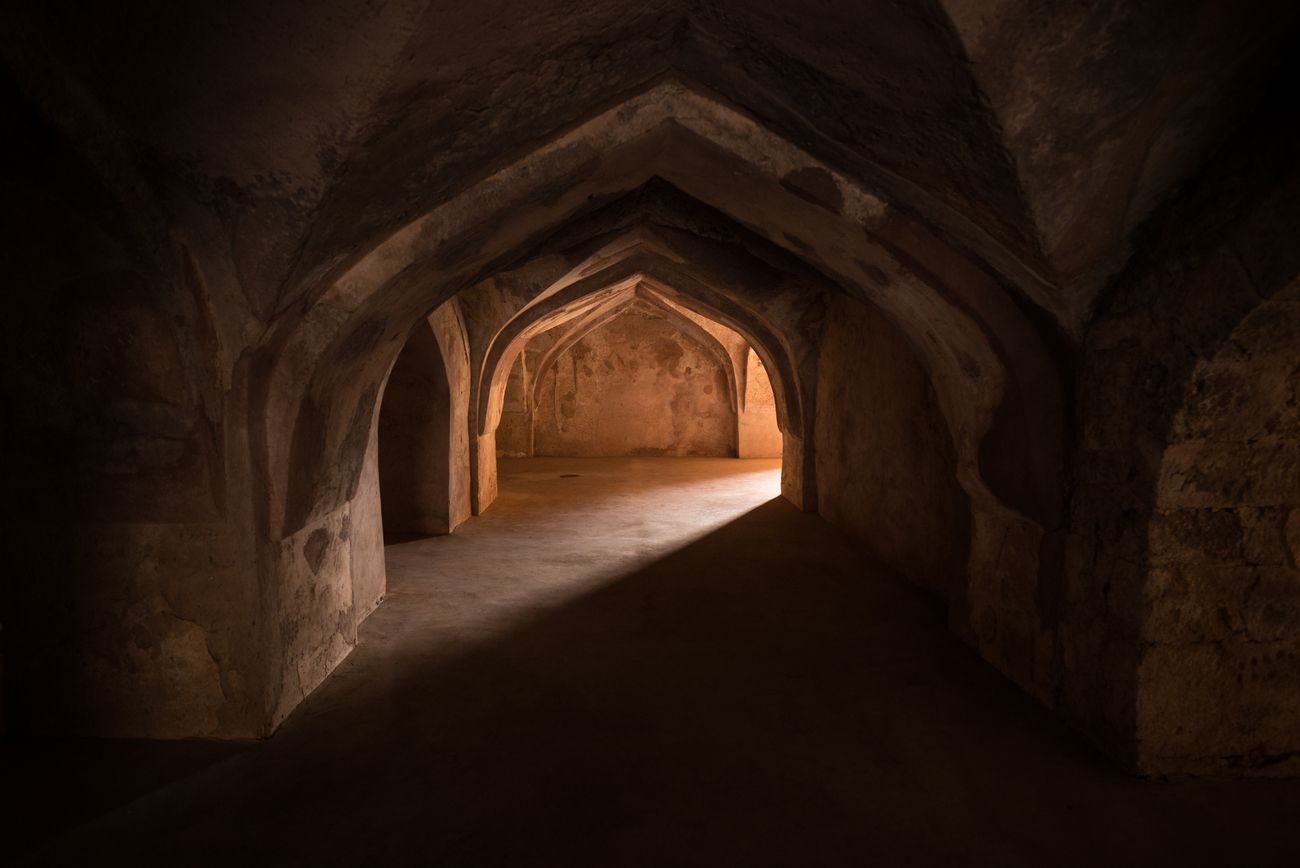
Ruined buildings in Mandu still feature ingenious air vents in their underground corridors—a testament to ancient ventilation design. © Fabio Lamanna / Shutterstock
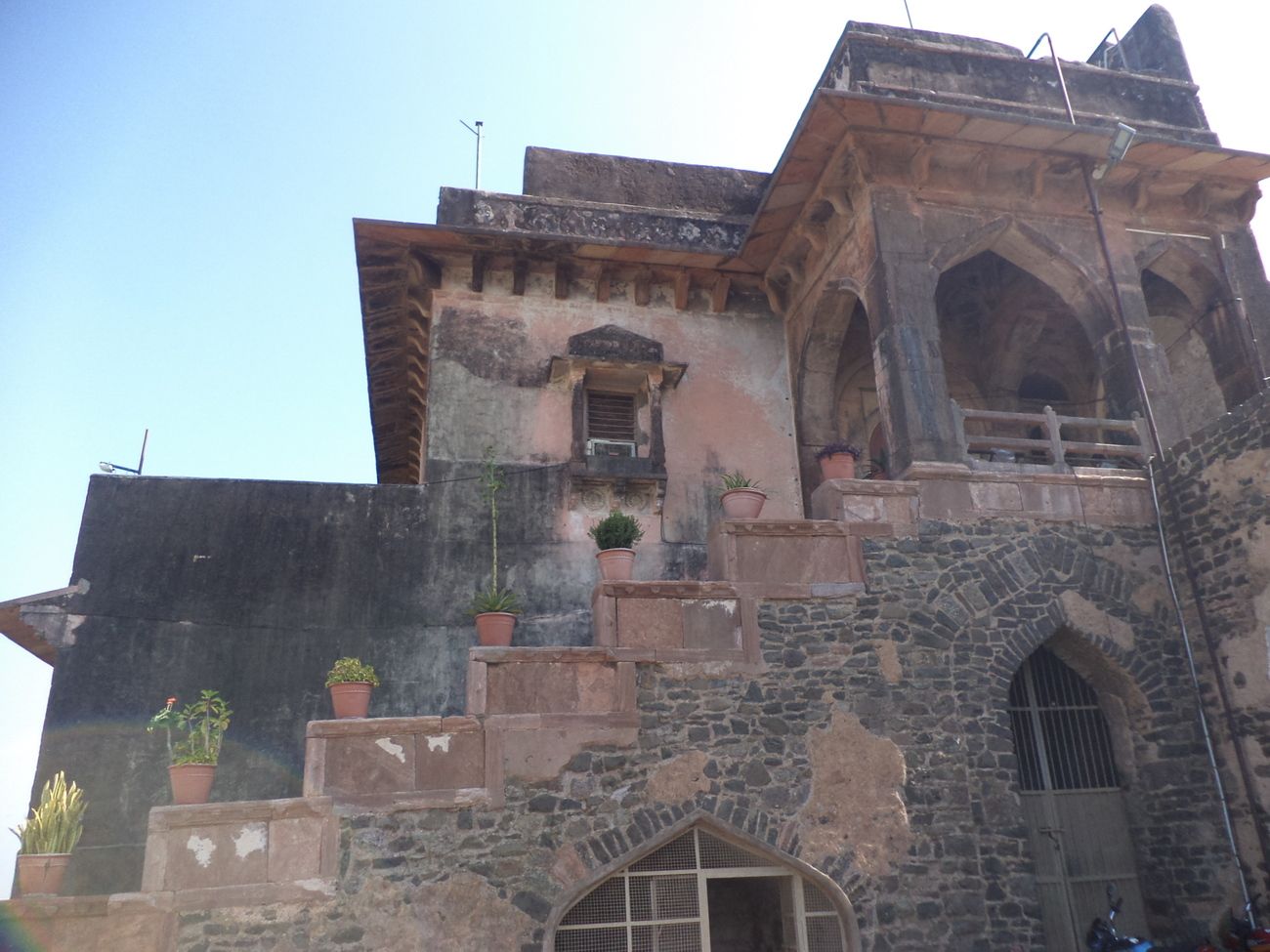
Taveli Mahal, once used as stables during Mughal times, stands quietly just south of Jahaz Mahal in Mandu. © Harshit Trivedi / Shutterstock
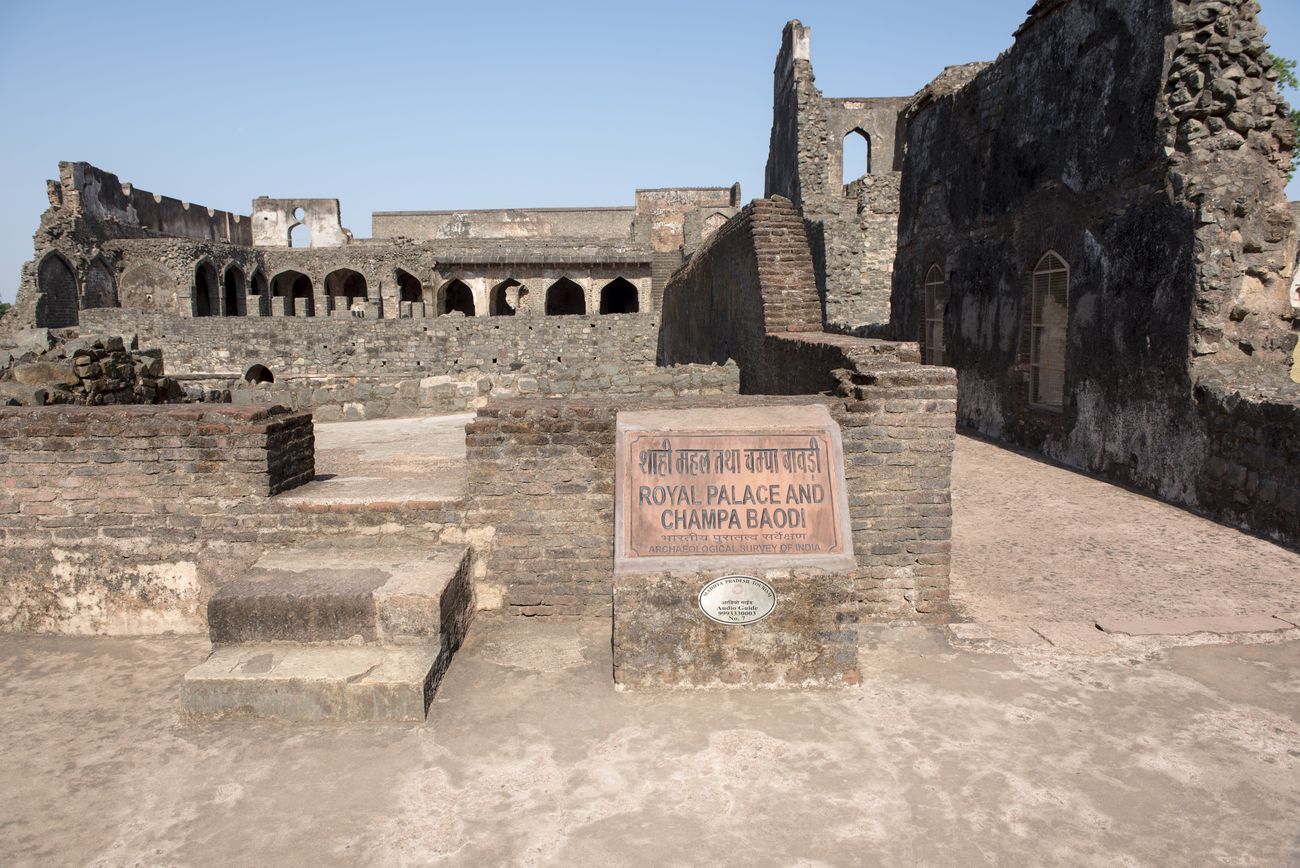
The Royal Palace and Champa Baodi shimmer in Mandu’s sunlight—an evocative pairing of architecture and water heritage. © Bodom / Shutterstock
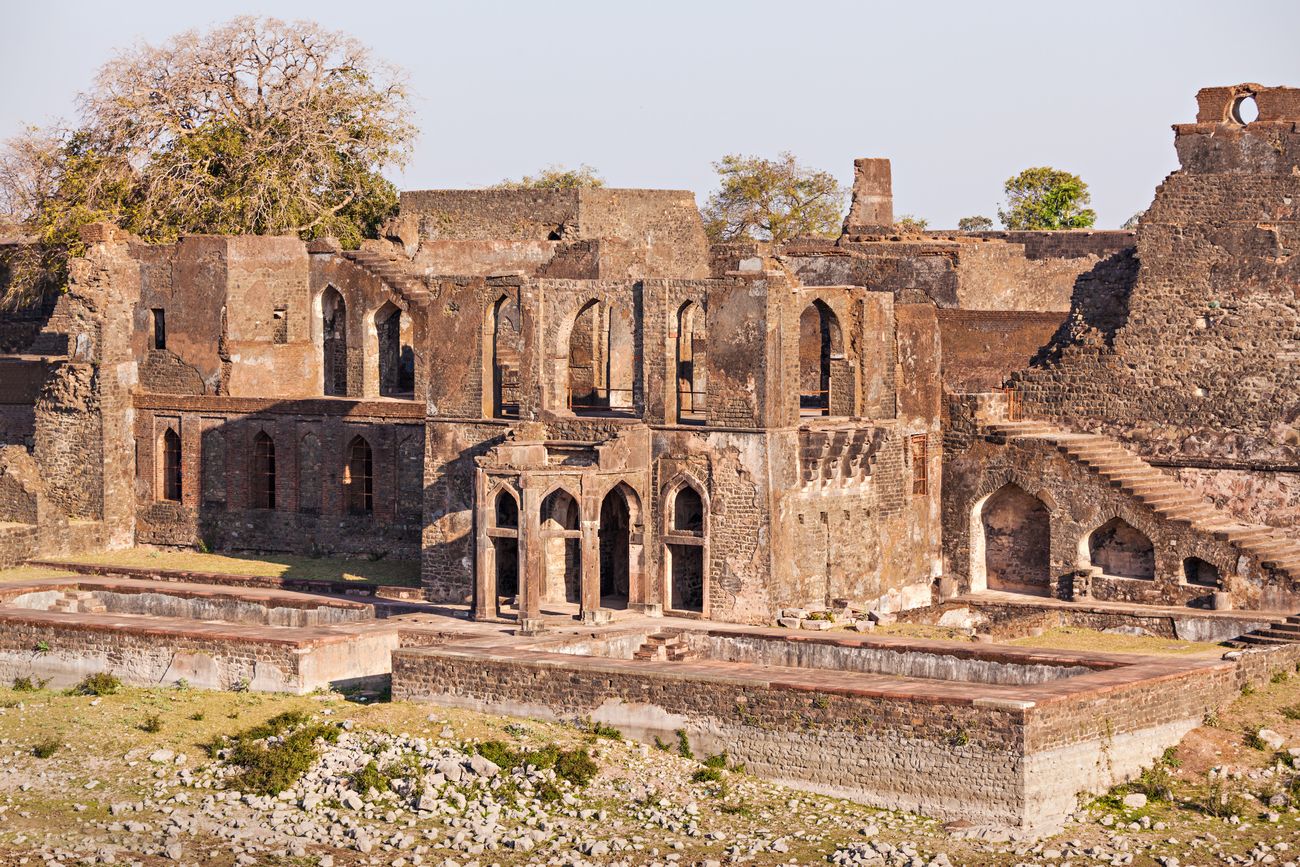
Mandu’s Royal Enclave stretches across the plateau—its palaces, pavilions, and waterworks painting a vivid portrait of medieval grandeur. © saiko3p / Shutterstock







































![Golden Triangle Tour with Goa [Culture + Beach Vacation] (12 days)](https://www.vacationindia.com/wp-content/uploads/2022/06/golden-triangle-tour-with-beach-vacation-270x160.jpg "Golden Triangle Tour with Goa [Culture + Beach Vacation] (12 days)")