
The Sagar Talao Group of Monuments, Mandu
The Mosque of Malik Mughith
Dai ka Mahal
Dai ki Chhoti Behen ka Mahal
The Mosque of Malik Mughith
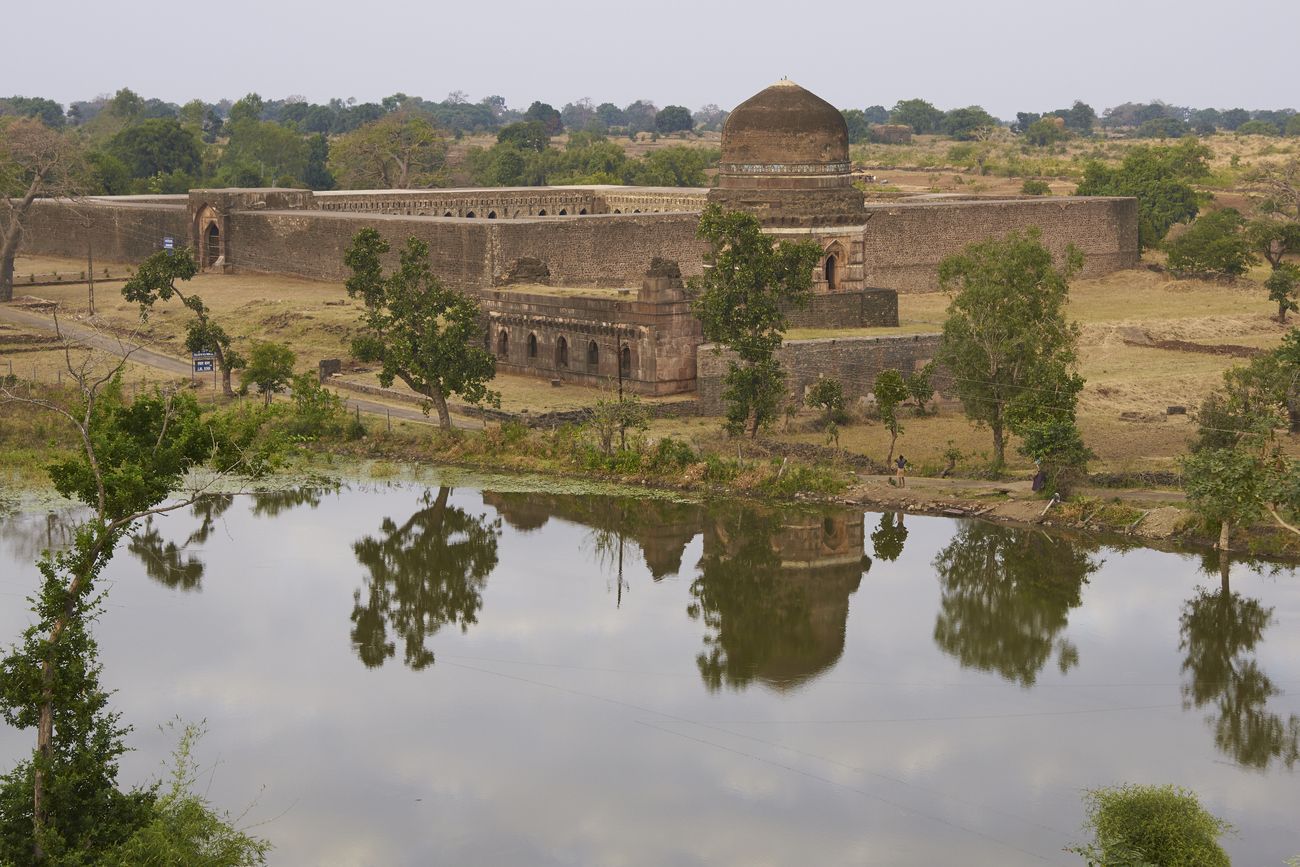
Set beside the tranquil lake that shares its name, the Mosque of Malik Mughith forms the heart of the Sagar Talao Group—an area that comes alive with beauty during the monsoon, when the lake brims with shimmering water and the surrounding landscape turns lush and vibrant.
This group of monuments includes the historic Caravan Serai, Dai ki Chhoti Behen ka Mahal, and Dai ka Mahal, with the Madhya Pradesh Tourism lodge just a short walk away. Yet the most significant structure of all is the mosque itself.
Built in 1432, as confirmed by an inscription over its entrance, the mosque was commissioned by Malik Mughith, father of the powerful ruler Mahmud Khalji. Its layout follows the classic design of early Indo-Islamic architecture: a serene central courtyard surrounded by elegant colonnades, creating a sense of symmetry and calm.
Quietly dignified and steeped in history, the Mosque of Malik Mughith remains one of Mandu’s understated gems—an architectural tribute to Mandu’s early sultans, framed beautifully by the waters of Sagar Talao.
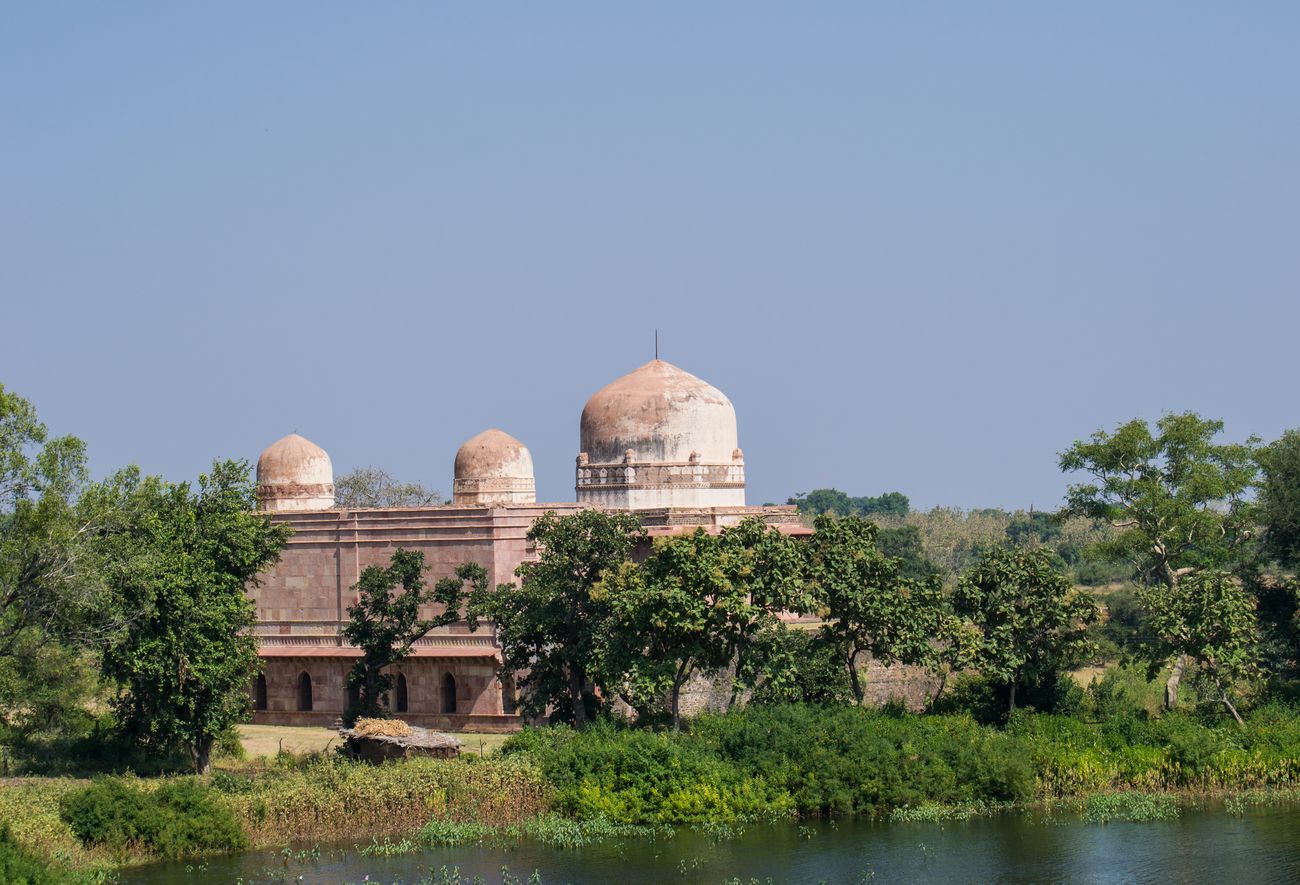
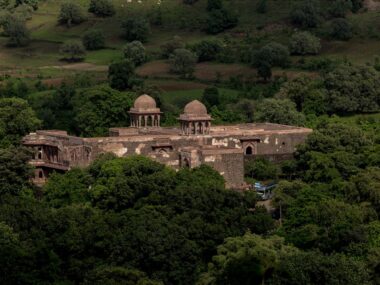
The weathered ruins of the ancient Malik Mughith Mosque rise quietly from Mandu’s landscape—its arches and shadows still echoing prayers from centuries past. © Shariqkhan / Dreamstime
You enter the mosque from the east, stepping through a gateway at the end of a once-grand projecting porch. This porch was more than just an entrance—it housed numerous rooms designed to shelter pilgrims, travelers, and attendants who served the sacred space. Long ago, a majestic dome rested on stout pillars here, but time has worn it away. Even so, the architectural brilliance remains: the porch begins as a square at the base, but through a graceful arrangement of arches spanning each corner, it transforms seamlessly into an octagonal form above.
Directly adjoining the mosque—and built during the same period—is the Caravan Sarai, an inn that welcomed weary travelers. Its large open courtyard, surrounded by serene halls, once provided rest and refuge for merchants and pilgrims alike. These halls feature vaulted ceilings, and clever storage rooms tucked at both ends hint at the bustling movement of goods and people that once filled this space.
Together, the mosque and its Caravan Sarai paint a vivid picture of Mandu’s thriving past—where faith, hospitality, and architectural ingenuity met under the same sky.
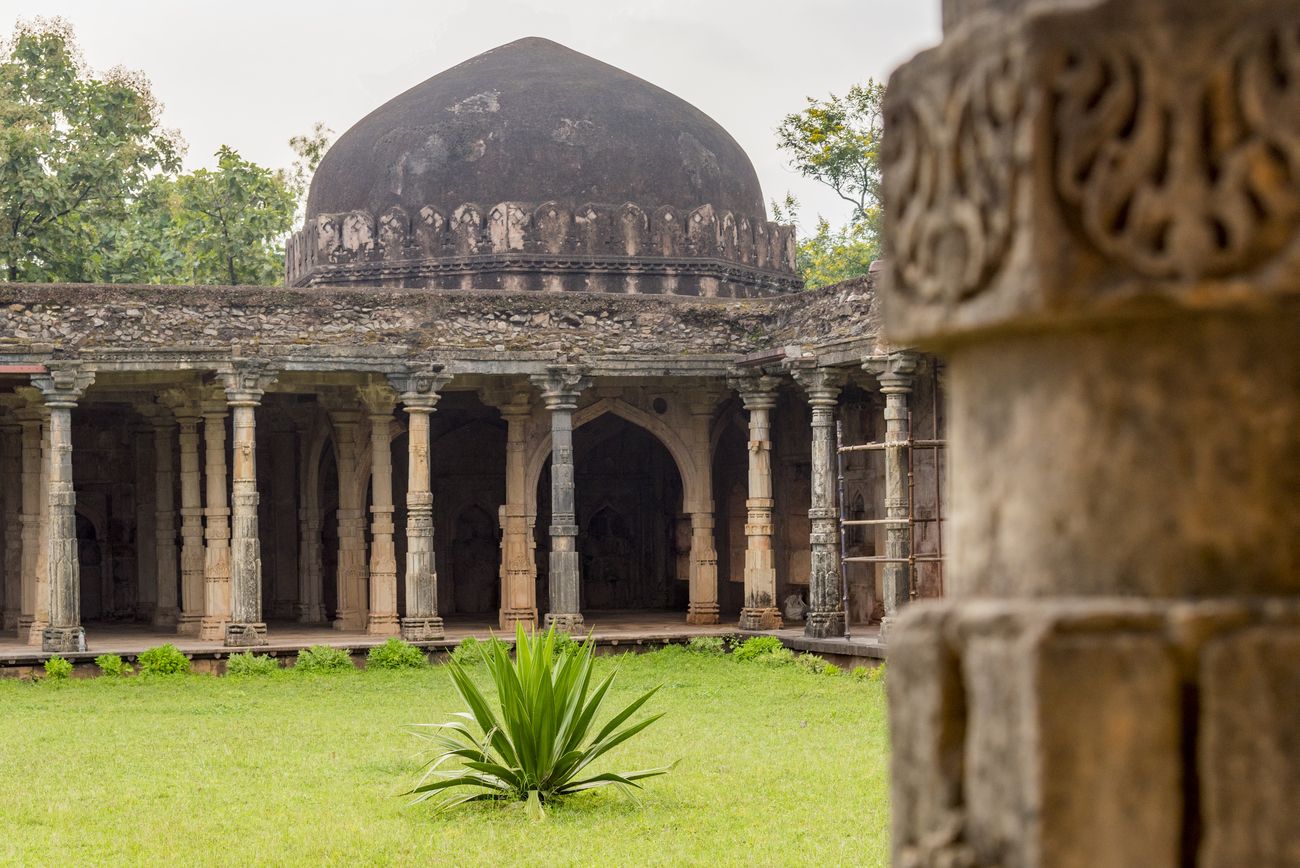
Set against a carpet of lush green fields, the Malik Mughith Mosque stands out beautifully—an island of history in Mandu’s serene countryside. © Shariqkhan / Dreamstime
Dai ka Mahal
Despite its name, Dai ka Mahal was never a palace—it is, in fact, the dignified resting place of a beloved royal wet nurse, a woman who once played a vital role in the palace’s inner world. Her tomb rises above a large rectangular platform, whose western face opens into graceful arches. At its corners once stood two round towers—on the northeast and southeast sides—now reduced to haunting ruins that hint at the grandeur they once held. In their time, these towers supported elegant pavilions that overlooked the complex from the same level as the tomb.
The tomb itself is a striking sight: a square chamber crowned by a majestic dome, resting on a beautifully crafted octagonal base. Each wall is pierced with pointed arched openings, delicate and refined, with rows of miniature arches adorning the upper levels like ornamental lace. The elongated octagonal plinth beneath the dome draws particular admiration—its parapet embellished with tiny guldastas (miniature kiosks) encircling the platform. This flourish is typical of Deccan architecture, yet rarely found in Mandu, making Dai ka Mahal uniquely captivating.
To the west lie the remnants of an ancient mosque. Its double hall—lit through simple windows and covered by vaulted ceilings—still carries whispers of its past, its design lightly touched by Hindu artistic influences.
Simple yet sophisticated, Dai ka Mahal stands as a quiet tribute to loyalty, love, and the intertwined architectural cultures of Mandu.
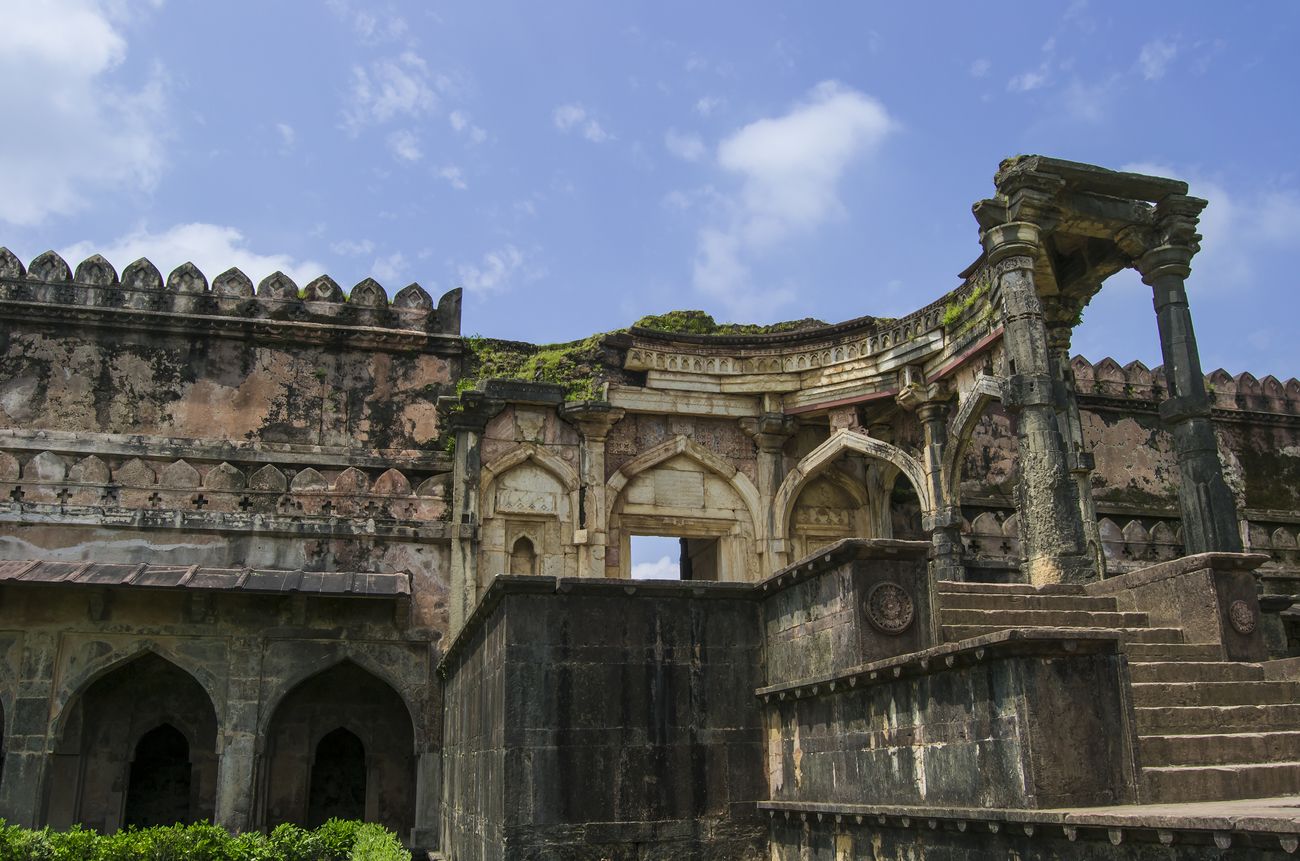
Inside Malik Mughith’s tomb, soft light washes over carved pillars and aged stonework, creating a tranquil space filled with timeless grace. © Clicksabhi / Shutterstock
Dai ki Chhoti Behen ka Mahal
Like its neighboring monument, Dai ki Chhoti Behen ka Mahal is a sixteenth-century tomb, dedicated to the younger sister—the chhoti behen—of a royal wet nurse. It is believed that she may have once lived here, and after her passing, her residence was transformed into her final resting place. This gives the structure an air of intimacy and quiet dignity, as though the walls still hold memories of a gentle domestic life.
Set amidst lush natural surroundings, the site becomes especially picturesque after the monsoon, when the vegetation around it bursts into vibrant green. Located just south of the Caravan Sarai, the tomb enjoys a serene atmosphere, far from the busy clusters of Mandu’s other monuments. Looking south from the structure, one can still spot faint traces of what was once a carefully planned garden, complete with its own small pavilion—an echo of the refined tastes of Mandu’s royal household.
Architecturally, scholars identify this tomb as part of Mandu’s third architectural phase, a time when Islamic construction principles were fully embraced by local artisans. The result is a harmonious blend of simplicity, symmetry, and spiritual grace.
Quiet, elegant, and gently embraced by nature, Dai ki Chhoti Behen ka Mahal stands as a tender tribute to a woman whose life and legacy were woven into the heart of Mandu’s royal world.
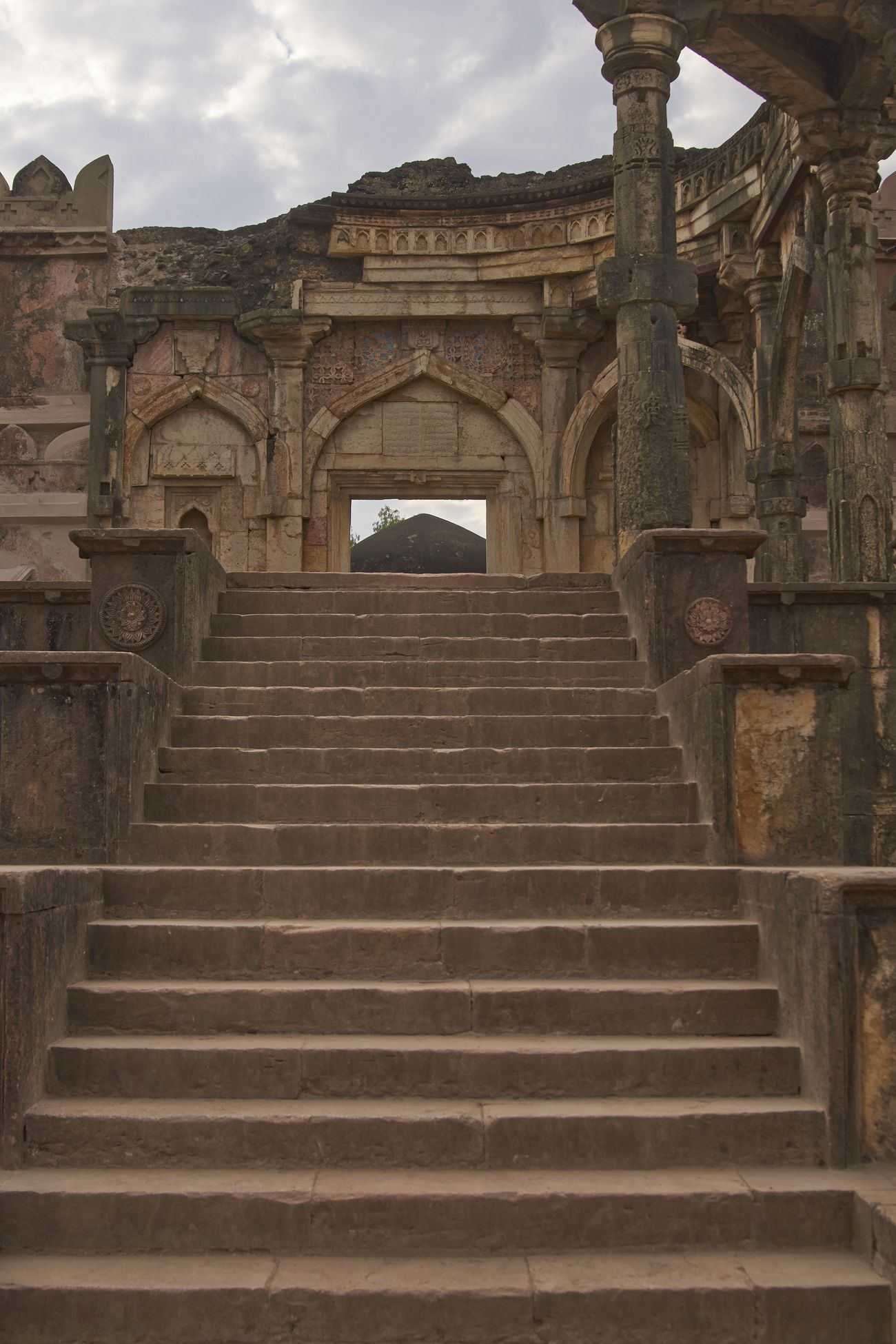
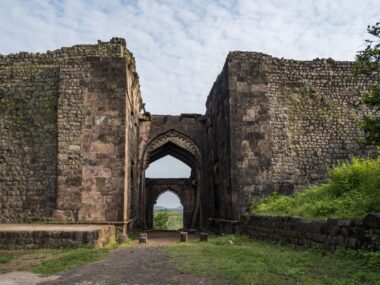
A flight of stone steps leads you toward the historic entrance of the Malik Mughith Mosque—built in 1432, this gateway once welcomed royal footsteps in Mandu’s fortified town. © JeremyRichards / Shutterstock
The tomb is built in a graceful octagonal form, its walls alternating between open arches and decorative blind arches that create a perfect rhythm of symmetry. What makes this structure especially intriguing is the way its exterior walls are divided into geometric sections by broad bands of projecting stonework—a style rarely seen in Mandu and likely the signature of skilled local craftsmen who blended Islamic design with indigenous artistry.
Above it rises a dome that once shimmered with a vivid band of blue tiles, a few fragments of which still cling to the surface, offering a glimpse of its former splendor. Inside, portions of the walls bear delicate carvings, subtle yet elegant reminders of the refined workmanship of Mandu’s artisans.
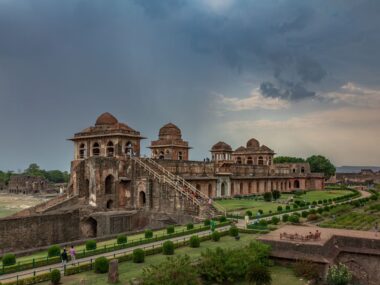
South of Sagar Talao stands another evocative structure—Jali Mahal, the tomb of an unknown nobleman. This square-shaped monument features three arched openings, one on each of its accessible sides. Its southern wall is especially striking, adorned with exquisitely carved stone jaalis, their intricate patterns casting lace-like shadows that dance in the changing light.
Together, these tombs showcase the quiet poetry of Mandu’s architectural heritage—where symmetry, craftsmanship, and mystery beautifully intertwine.
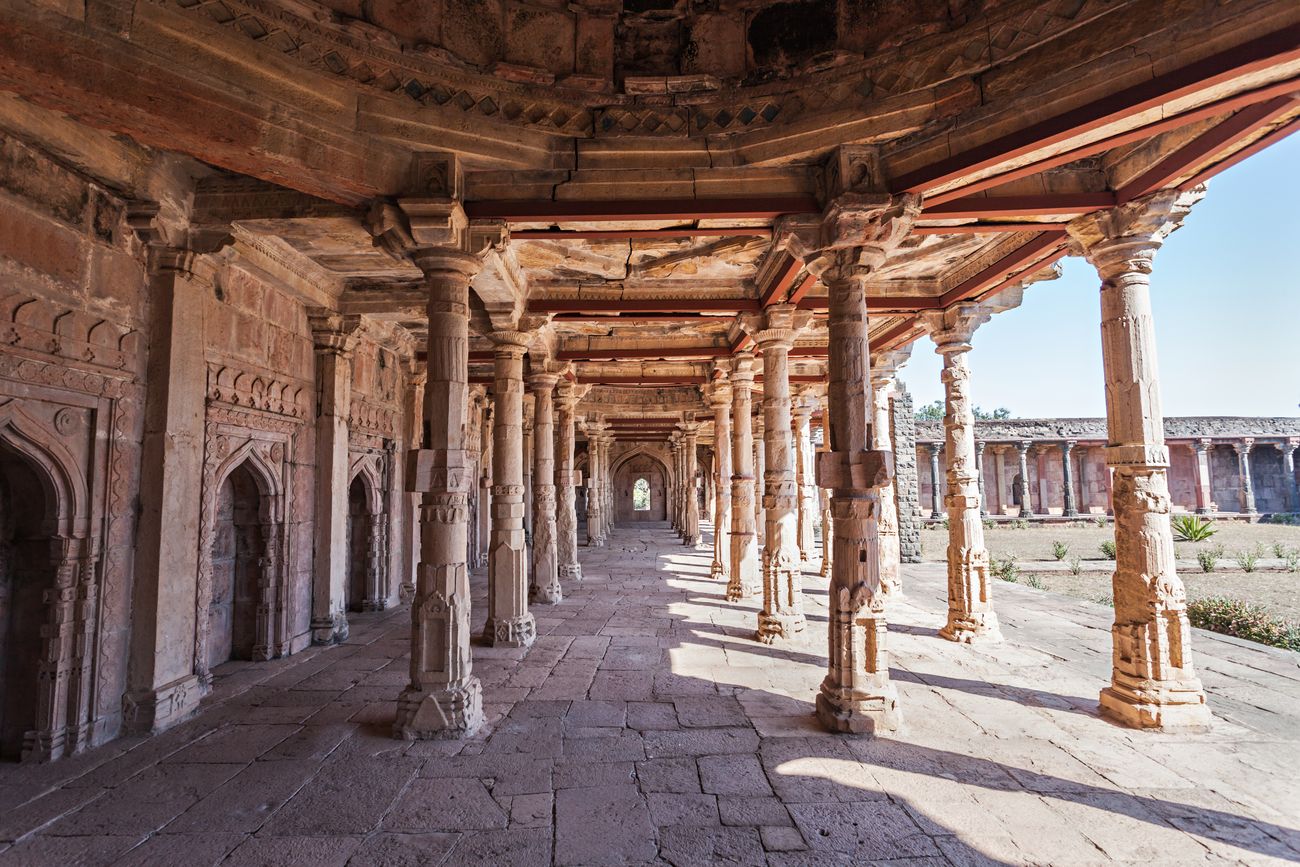
The mosque’s interior pillars rise in quiet rhythm, their delicate carvings revealing the craftsmanship and devotion of Mandu’s early Islamic era. © saiko3p / Shutterstock
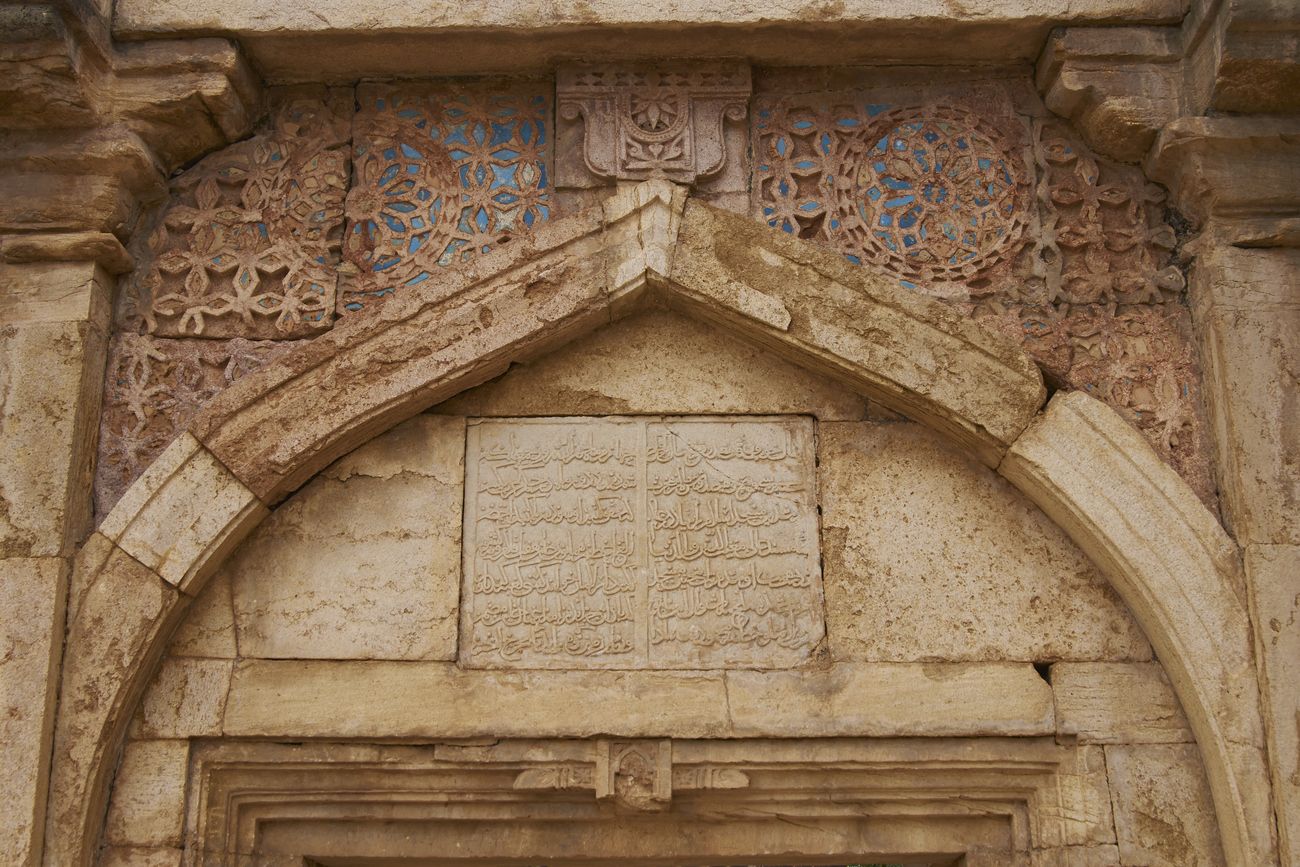
Climbing the worn steps to Malik Mughith’s Mosque feels like stepping back into 15th-century Mandu—where faith, fortifications, and artistry came together. © JeremyRichards / Shutterstock
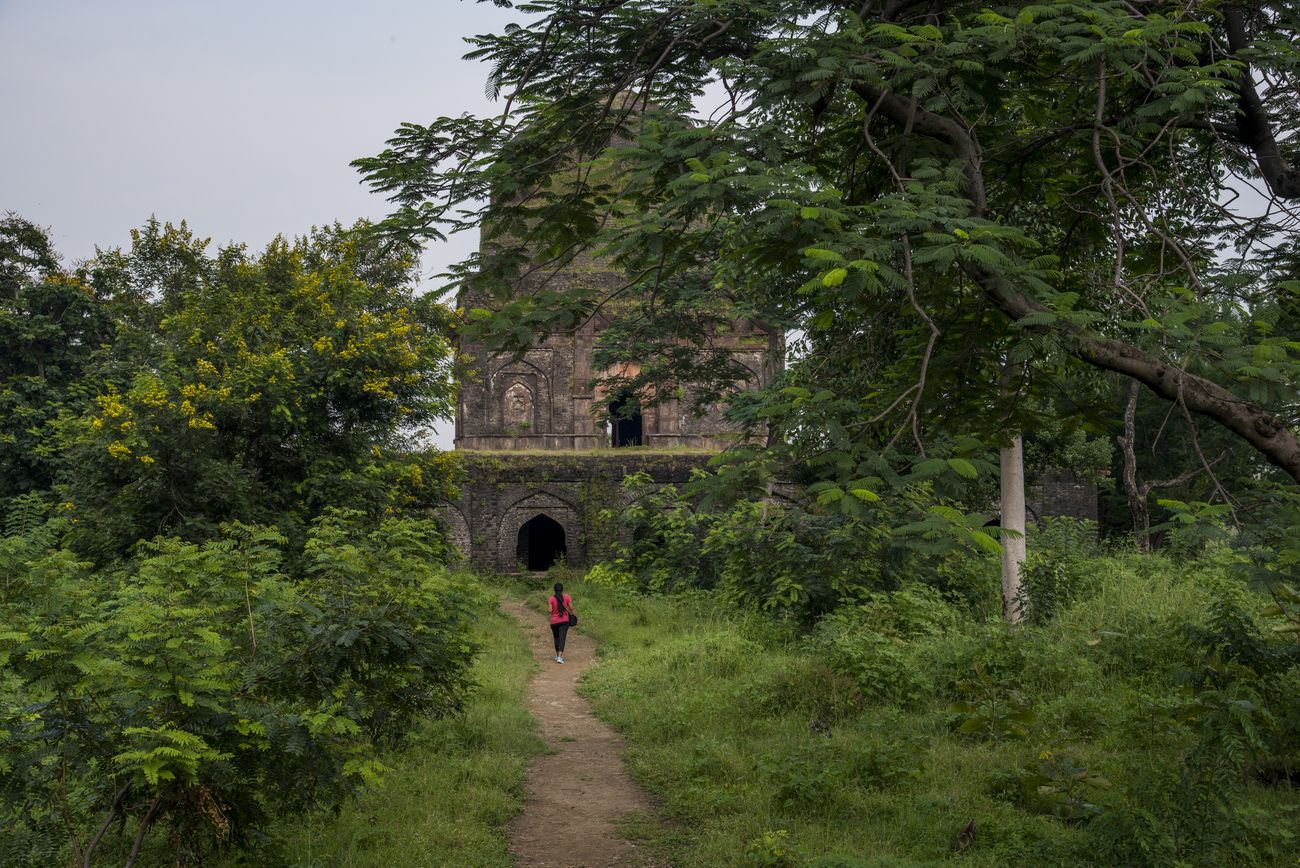
Climbing the worn steps to Malik Mughith’s Mosque feels like stepping back into 15th-century Mandu—where faith, fortifications, and artistry came together. © JeremyRichards / Shutterstock
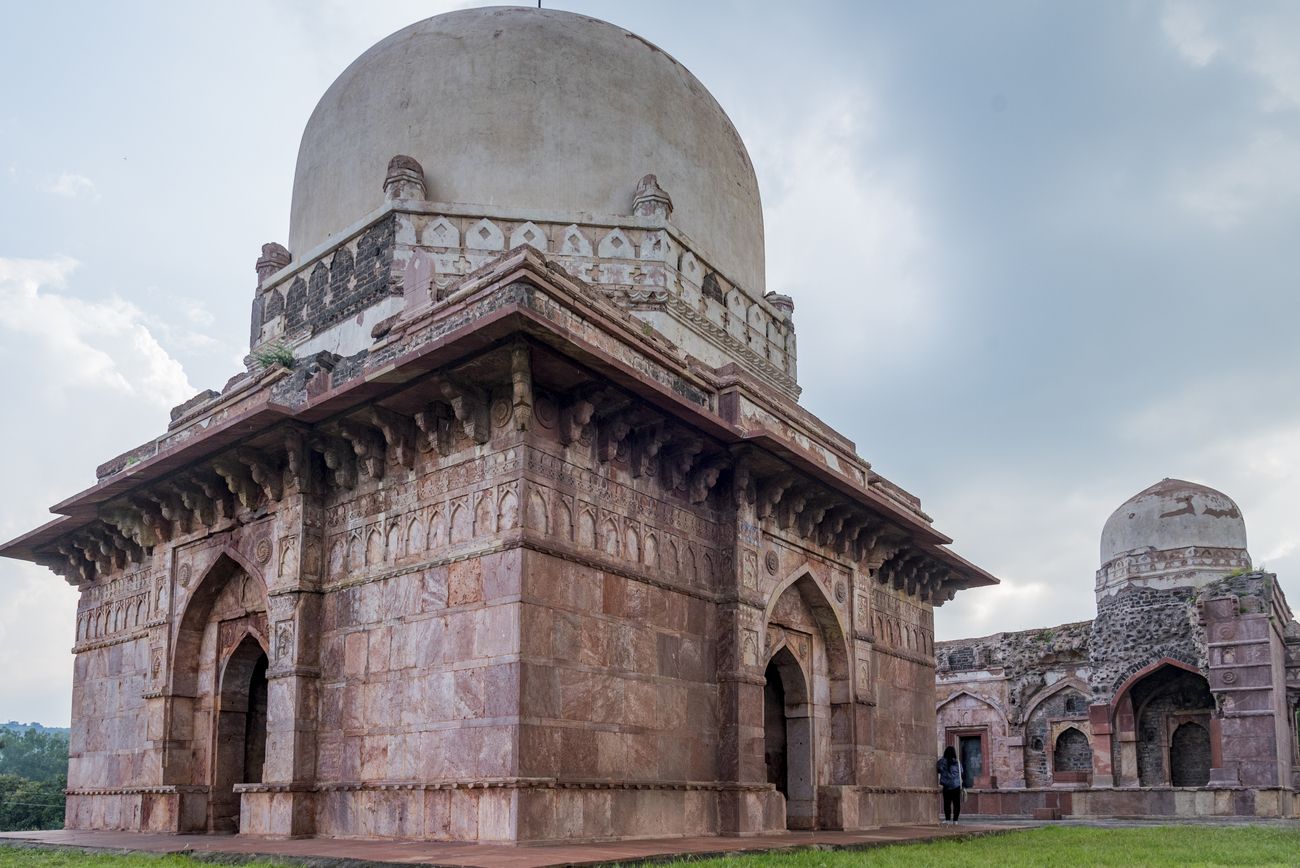
Climbing the worn steps to Malik Mughith’s Mosque feels like stepping back into 15th-century Mandu—where faith, fortifications, and artistry came together. © JeremyRichards / Shutterstock
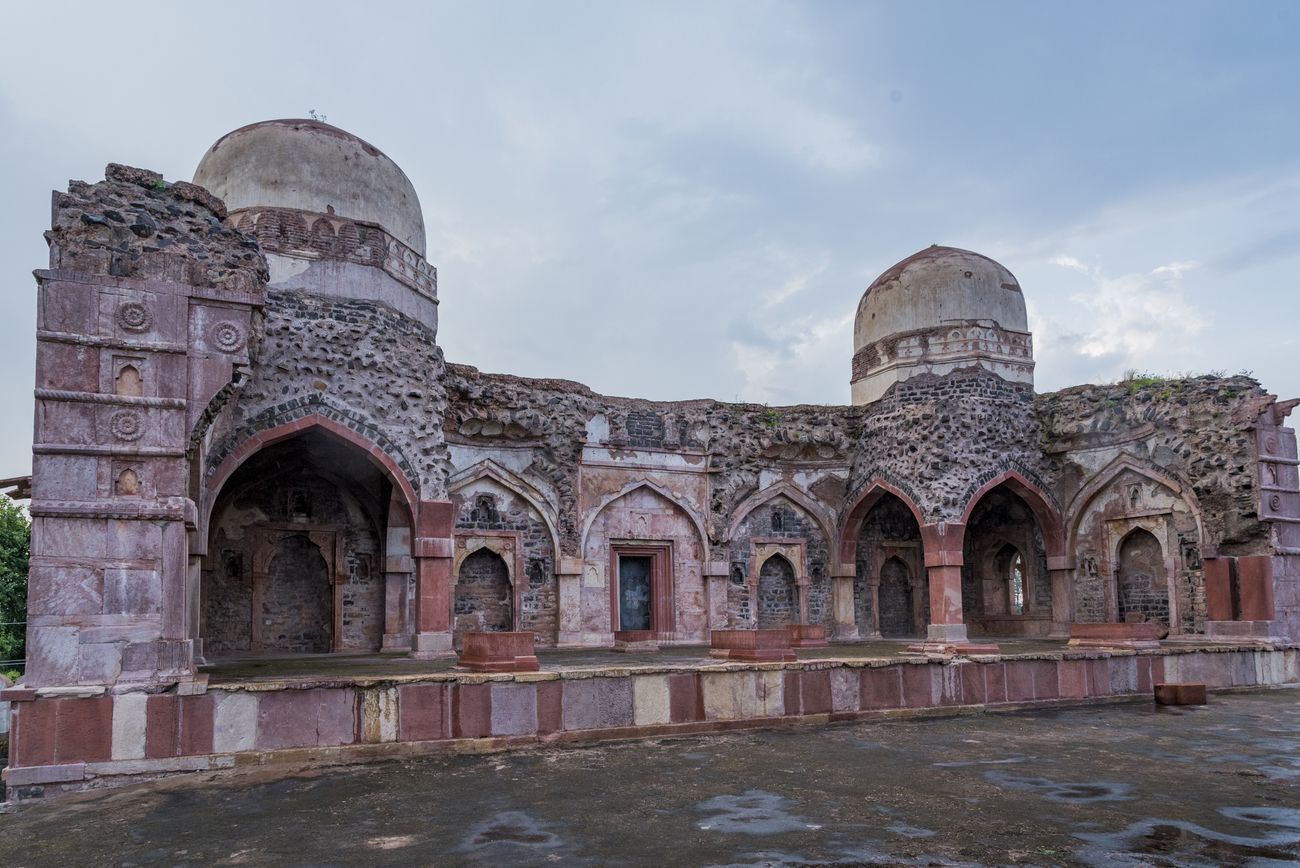
With its serene setting and simple symmetry, Dai Ki Chhoti Behen ka Mahal reflects a quiet elegance that lingers long after you leave. © Clicksabhi / Shutterstock
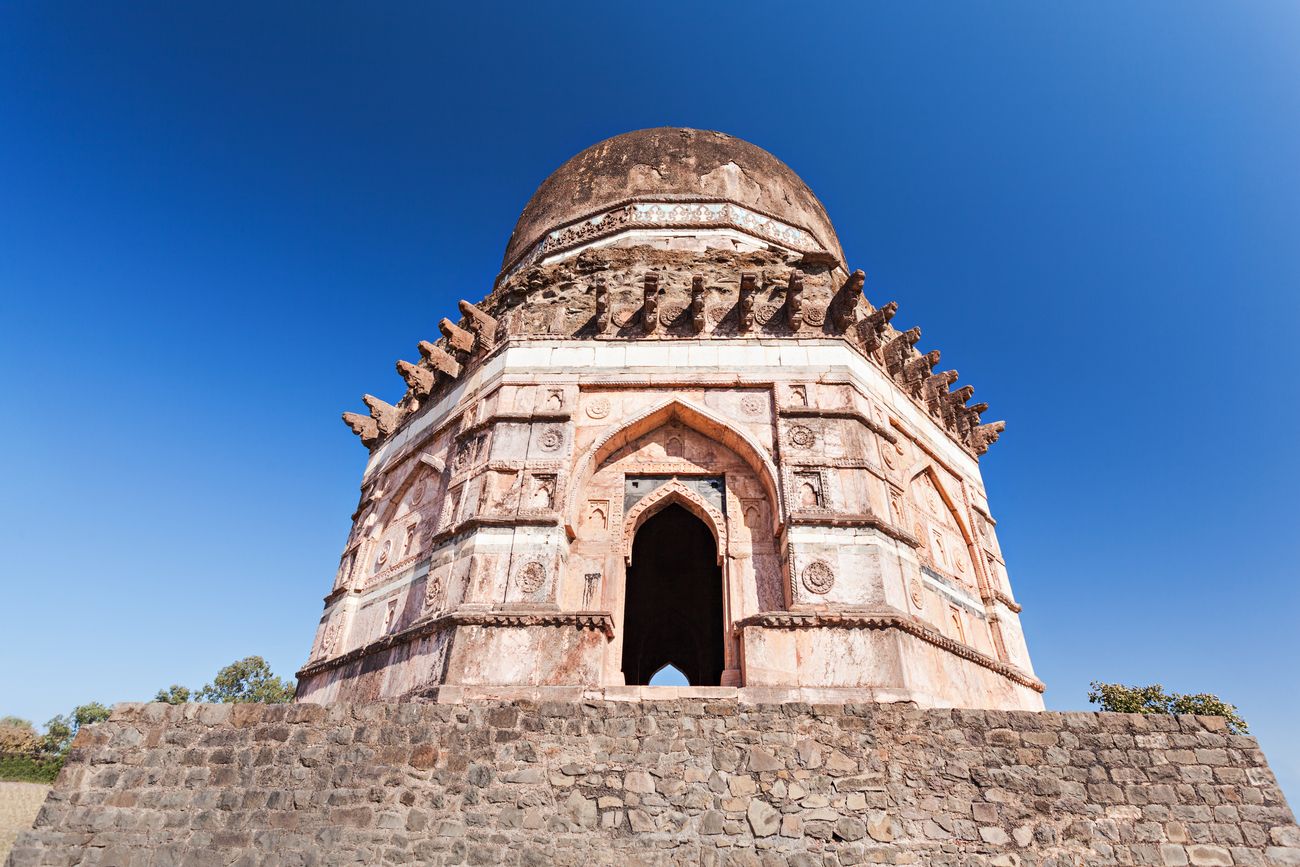
The delicate arches and octagonal form of Dai Ki Chhoti Bahen Ka Mahal make it one of Mandu’s most graceful small tombs—beautiful even in ruin. © saiko3p / Shutterstock




















![Golden Triangle Tour with Goa [Culture + Beach Vacation] (12 days)](https://www.vacationindia.com/wp-content/uploads/2022/06/golden-triangle-tour-with-beach-vacation-270x160.jpg "Golden Triangle Tour with Goa [Culture + Beach Vacation] (12 days)")