
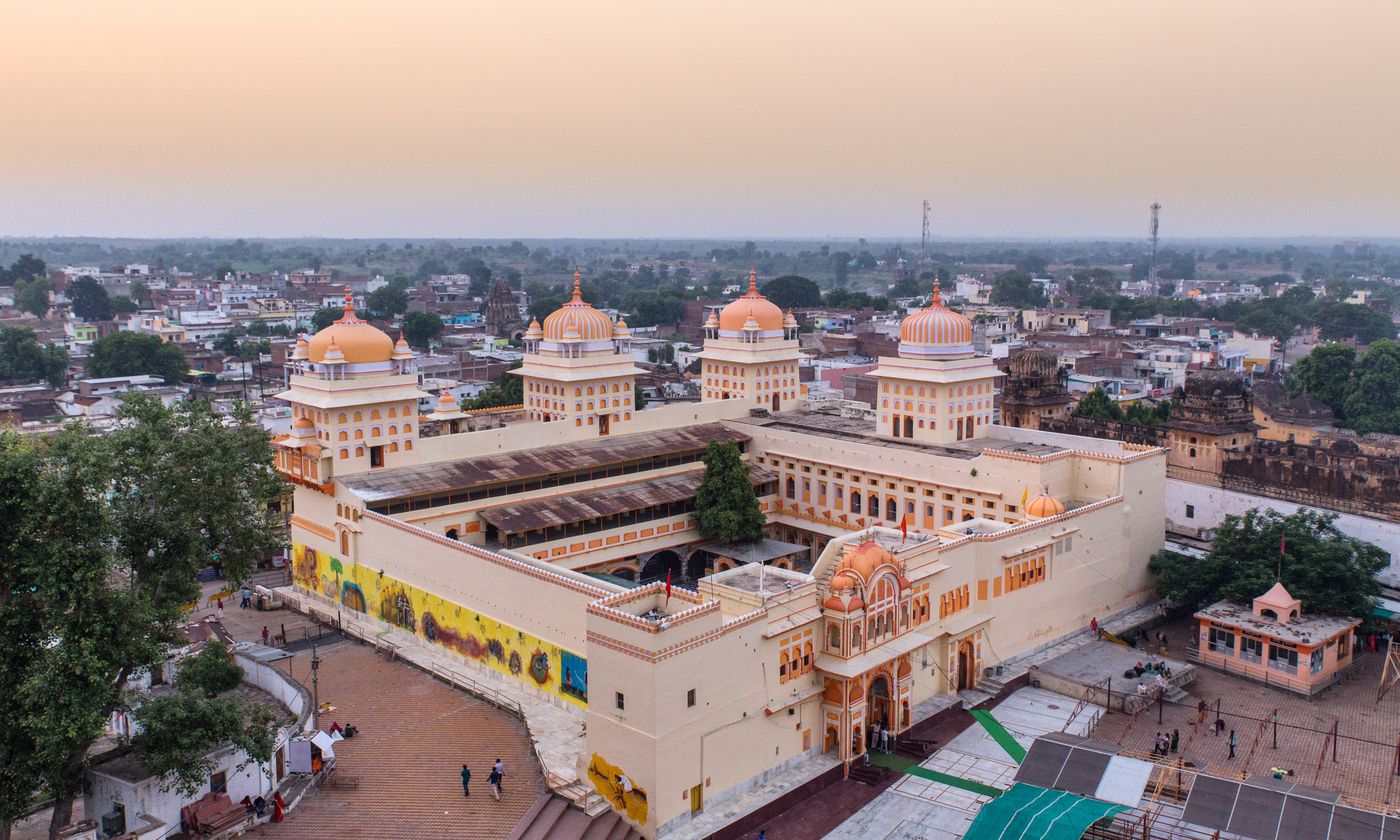
Ram Raja Temple – one of Orchha’s finest historical buildings
Ram Raja’s Fascinating History
The Legend of Ram Raja Temple
King Ram’s Magnificent Temple
The Living Heart of Orchha
Ram Raja’s Fascinating History
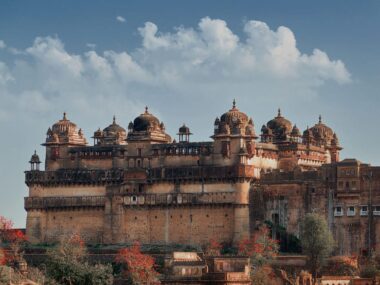
The Ram Raja Temple of Orchha stands apart from all others in India—not just in faith, but in form. Despite its name, this sacred site doesn’t resemble a traditional Hindu temple. Its arches, domes, and spacious chambers hint instead at royal grandeur—and for good reason. It was originally built as a palace, the Rani Mahal, for Queen Ganeshkuwari, wife of Raja Madhukar Shah. According to the Imperial Gazette, it remains one of Orchha’s most splendid historical buildings.
But what makes this monument truly remarkable is the legend woven into its walls. Raja Madhukar Shah was a devout follower of Lord Krishna, while his queen’s heart was devoted to Lord Ram. One fateful day, during a pilgrimage to Ayodhya, the queen went to the river for her ritual bath. As the story goes, Lord Ram himself appeared before her, asking her to build a temple and shrine in his honor. Moved by this divine encounter, she vowed to do so upon her return to Orchha.
Soon, construction began on the Chaturbhuj Temple, just beyond her palace—unaware that destiny had other plans for how Lord Ram would make Orchha his eternal home.
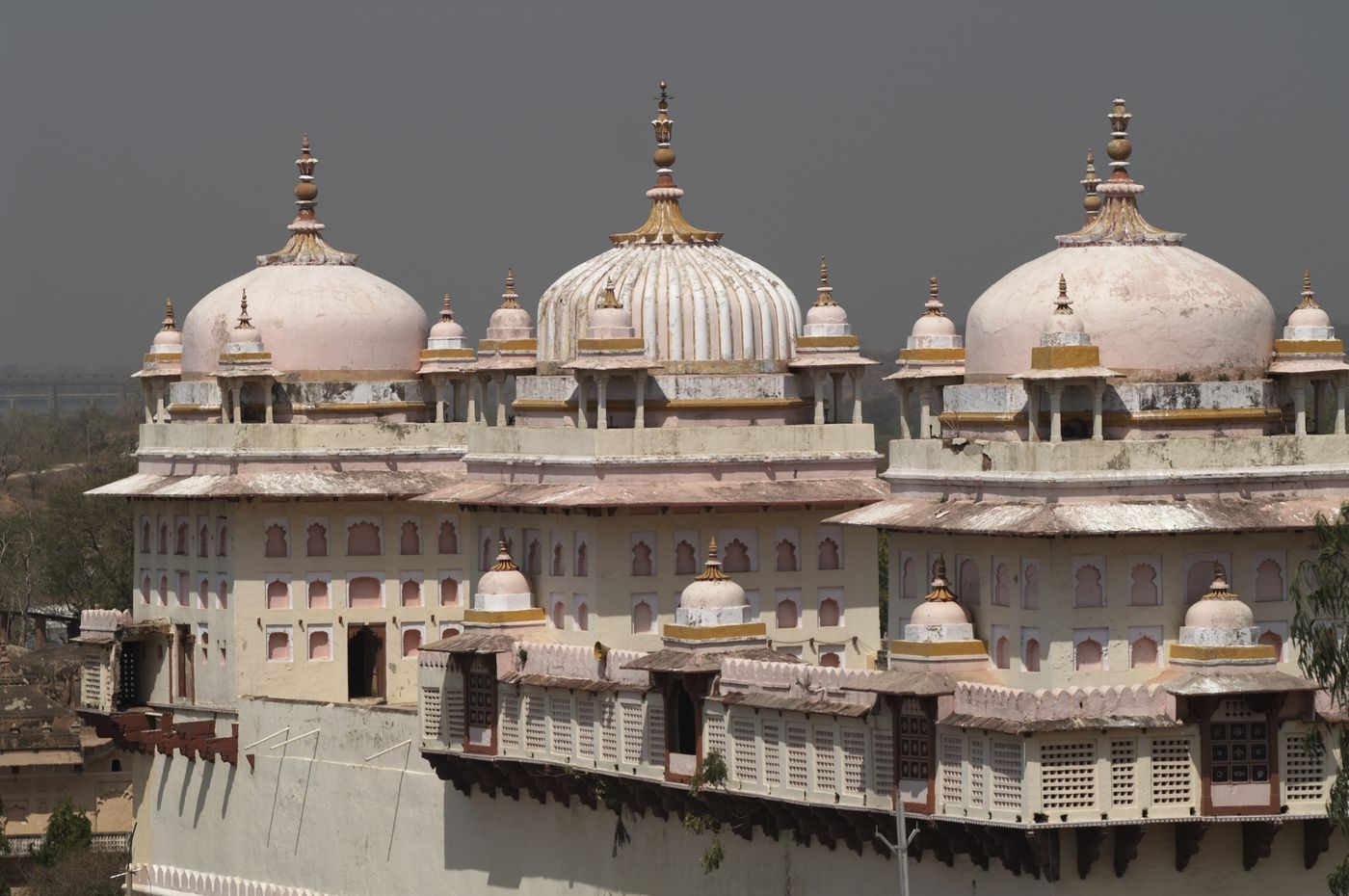
A Palace Turned Temple: The pink and cream domes of the 17th-century Ram Raja Temple glow softly under the sun, a royal residence transformed into a sacred shrine. © Jeremy Richards
The Legend of Ram Raja Temple
Another version of the tale tells of a divine dream. One night, while resting in her palace in Orchha, Queen Ganeshkuwari saw Lord Ram appear before her, asking that a temple be built in his honor. Awakened and filled with devotion, she immediately set out for Ayodhya, determined to bring back an idol of Lord Ram for the shrine she had vowed to create.
And here, the two legends unite. Upon her return to Orchha, the queen discovered that the temple she had commissioned was still unfinished. Not wanting to delay her worship, she placed the idol of Ram in her palace residence for safekeeping—forgetting the divine instruction that the deity must not be set down anywhere but inside his temple.
When the temple was finally ready, attempts to move the idol failed—it would not budge. The Lord had chosen his own abode. From that day, the queen’s palace became the Ram Raja Temple, the only temple in India where Lord Ram is worshipped as a king, complete with royal honors, guards, and daily courtly rituals.
Thus, what began as a queen’s act of devotion became Orchha’s eternal legend—a story of faith, destiny, and divine will that continues to echo through its palace walls.
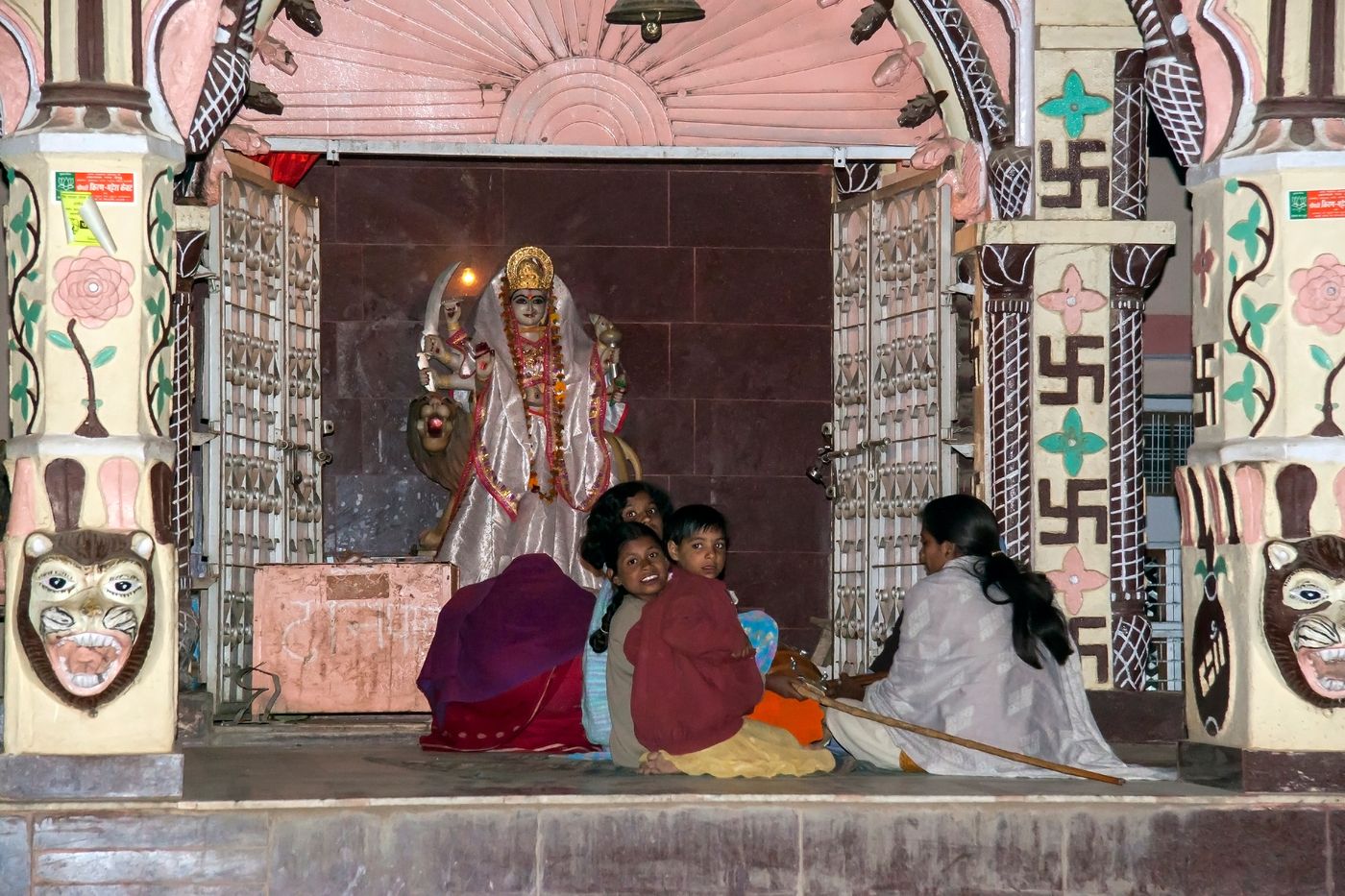
Women in Prayer: Inside the temple courtyard, groups of women in colorful saris bow in unison before Goddess Durga, their devotion weaving a tapestry of faith. © Welman
King Ram’s Magnificent Temple
Nowhere else in India is Lord Ram worshipped quite like this — not merely as a deity, but as a living king. The Ram Raja Temple of Orchha stands alone in this tradition, where devotion and royal protocol blend seamlessly. Every evening, the local police offer a gun salute in his honor, and when dignitaries visit, the atmosphere transforms into a royal durbar. Instead of traditional prasad, visitors are presented with ittar (perfume) and paan (betel leaf) — the elegant tokens of a king’s court.
Painted in soft shades of yellow, pink, and white, the temple exudes a calm, almost modern beauty. In his writings on Indian architecture, Percy Brown compared its design to the Koshak Mahal in Chanderi, built by Mahmood Shah Khalji of Malwa — a fitting reference for a structure that blends regal dignity with divine grace. As dusk falls, the temple comes alive: at 7 p.m. sharp, the aarti and puja fill the air with the sounds of bells, chants, and devotion, as hundreds gather to pay homage to their King.
Outside, the vast courtyard hums with life. Hawkers and artisans line the space, selling colorful jewelry, wooden and stone toys, sacred idols, amulets, and fresh produce. The aroma of street snacks mingles with the fragrance of incense, and a cup of steaming chai from a local stall completes the experience.
In Orchha, the Ram Raja Temple isn’t just a place of worship — it’s a living palace of faith, where every evening feels like a royal celebration in honor of the divine king.
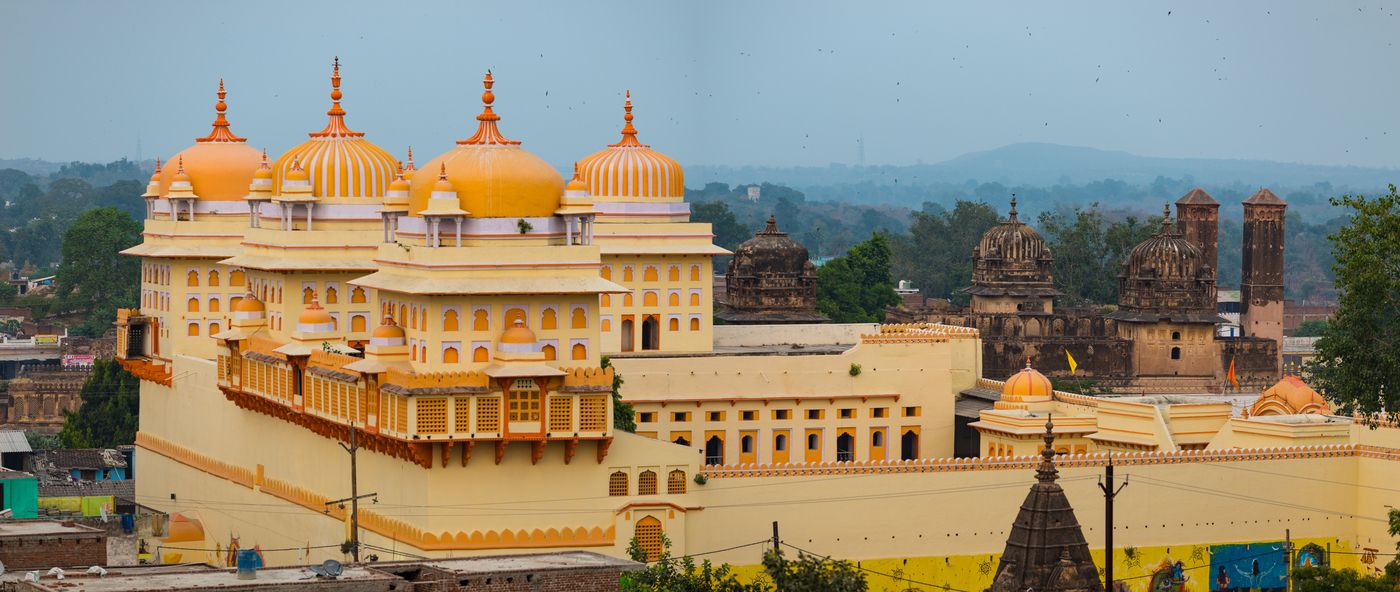
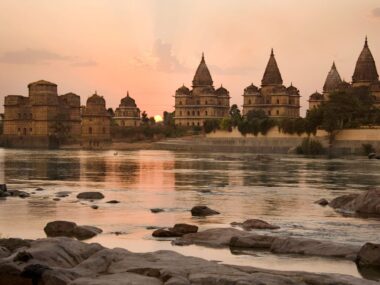
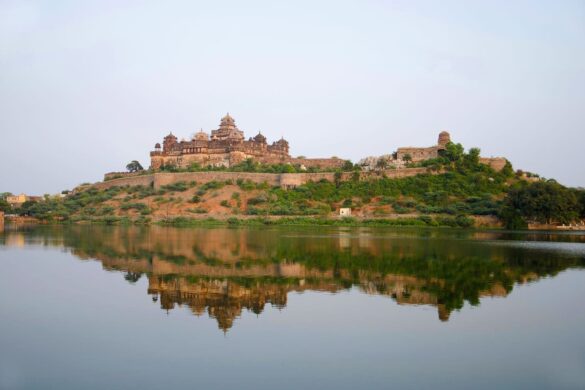
The Sacred Skyline of Orchha: From a distance, the skyline of Orchha shimmers — domes, spires, and palaces from the 17th century rising like a hymn to the Bundela legacy. © Fabio Lamanna
The Living Heart of Orchha
Today, the Ram Raja Temple beats at the very heart of Orchha, encircled by the town’s majestic palaces and timeless monuments. Poet Keshav Das captured its essence beautifully in one of his dohas, comparing the sacred geography of Orchha to its royal heritage:
“The seven streams of the Betwa converge around Orchha, just as the palaces of the nine sons of Bir Singh Deo converge around the Ram Raja Mandir.”
This divine symmetry — of river and stone, devotion and dynasty — perfectly mirrors Orchha’s soul, where history flows seamlessly into faith.
Each November, the temple becomes the stage for one of Orchha’s grandest celebrations — the Ram Vivah Festival, marking the celestial wedding of Lord Ram and Goddess Sita. Thousands of devotees throng the courtyard, their chants rising in unison, while the air fills with music, color, and devotion. The highlight is the magnificent parade of trained horses, their rhythmic steps symbolizing grace, loyalty, and the grandeur of a royal wedding.
In these moments, Orchha comes alive — a place where legend still walks beside the Betwa, and the blessings of King Ram linger in every breeze.
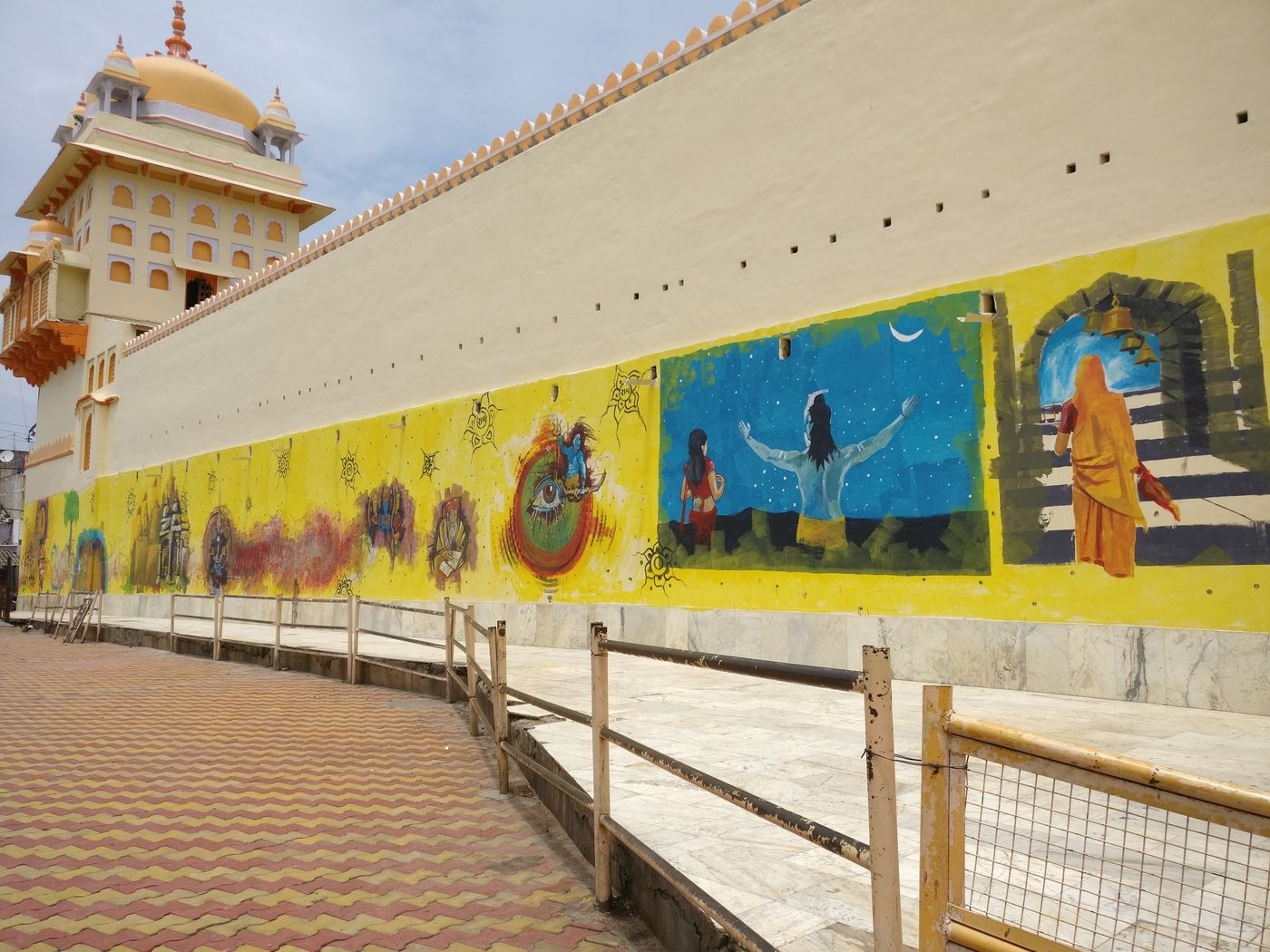
A Wall of Colors: A burst of color greets pilgrims — vibrant graffiti murals outside the Ram Raja Temple, where ancient devotion meets modern expression. © Priyanka Kaushal
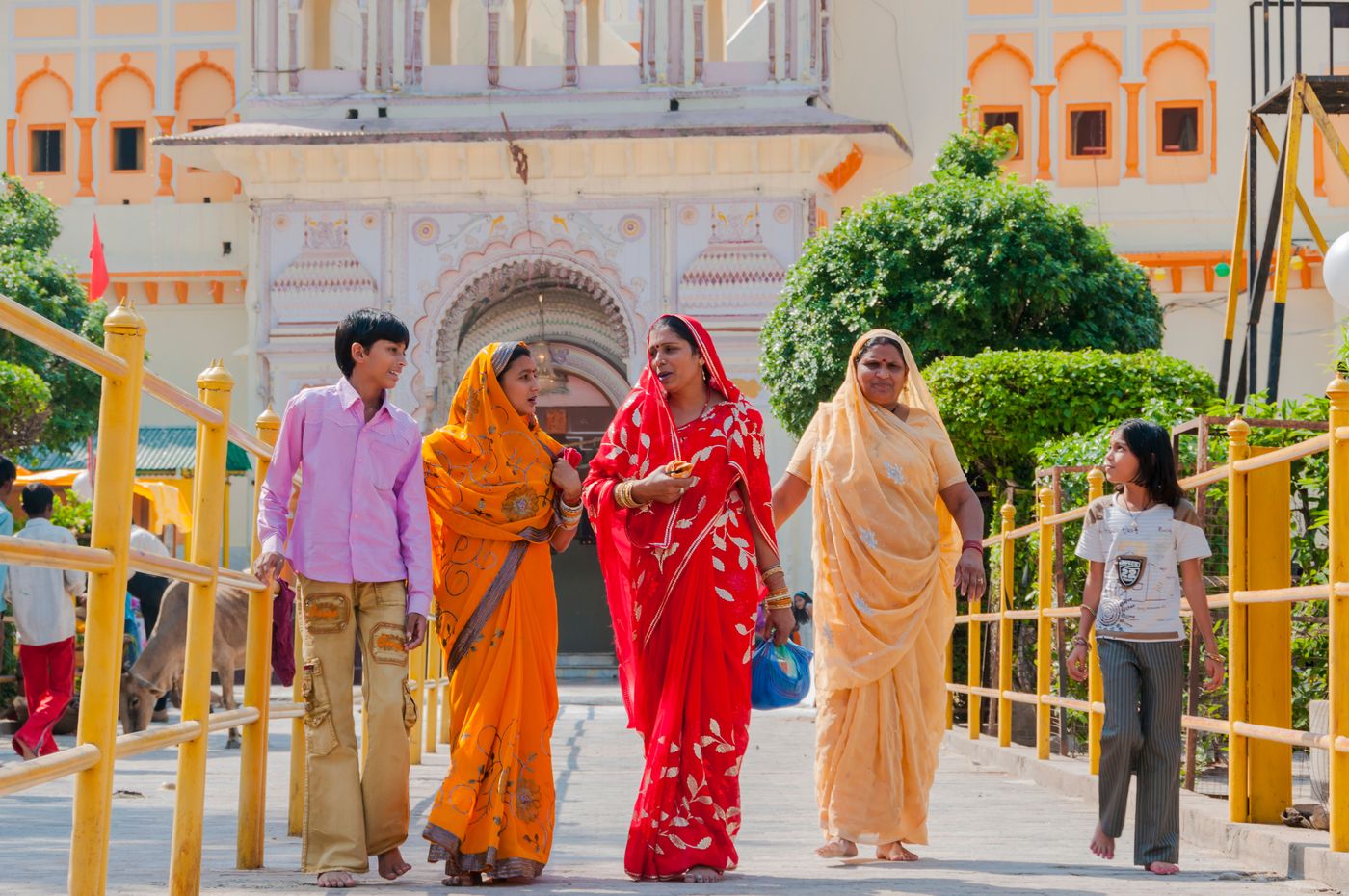
Conversations Beyond the Temple: After prayers, families gather and converse outside the temple gates — a blend of spirituality and everyday warmth. © Jose Sanchez Munoz
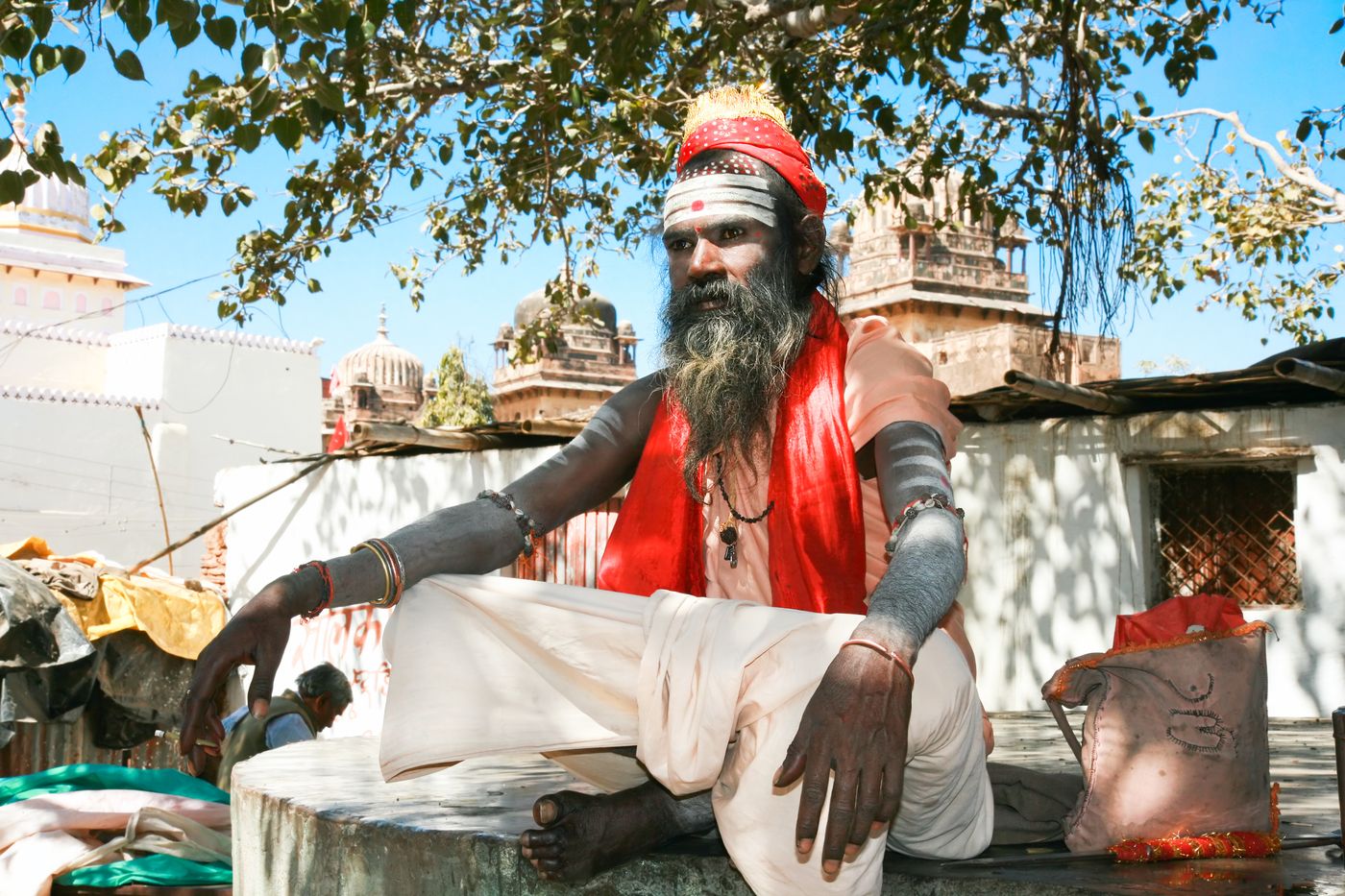
The Hermit’s Blessing: An ash-smeared Sadhu, forehead marked with sacred ash, sits beneath a tree near Ram Raja Temple — a living emblem of divine simplicity. © Aleksandar Todorovic
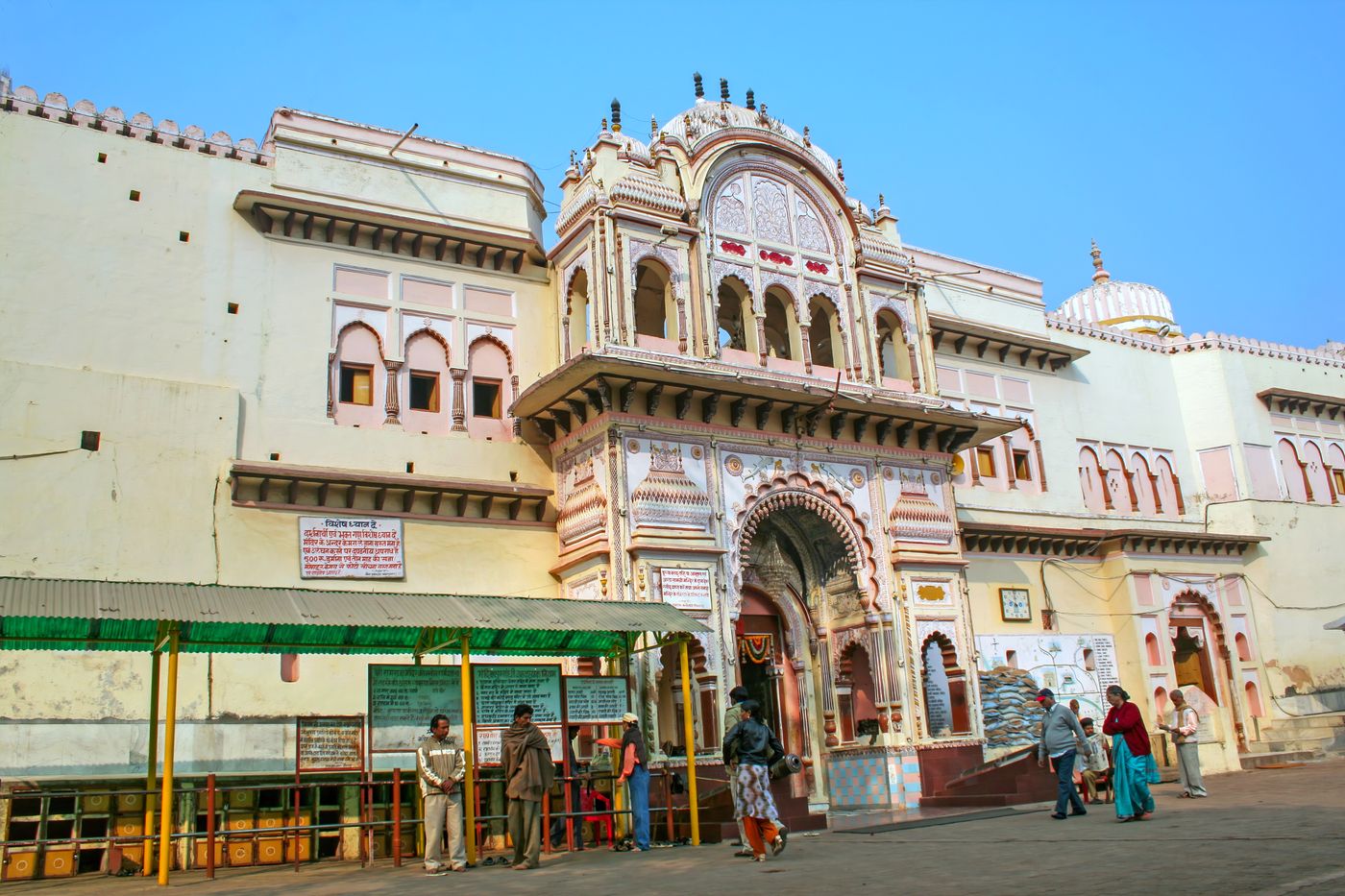
The Royal Temple of Orchha: With its ornate domes and regal façade, the Ram Raja Temple stands apart — a rare shrine where Ram reigns as a monarch, not merely a deity. © ImagesofIndia
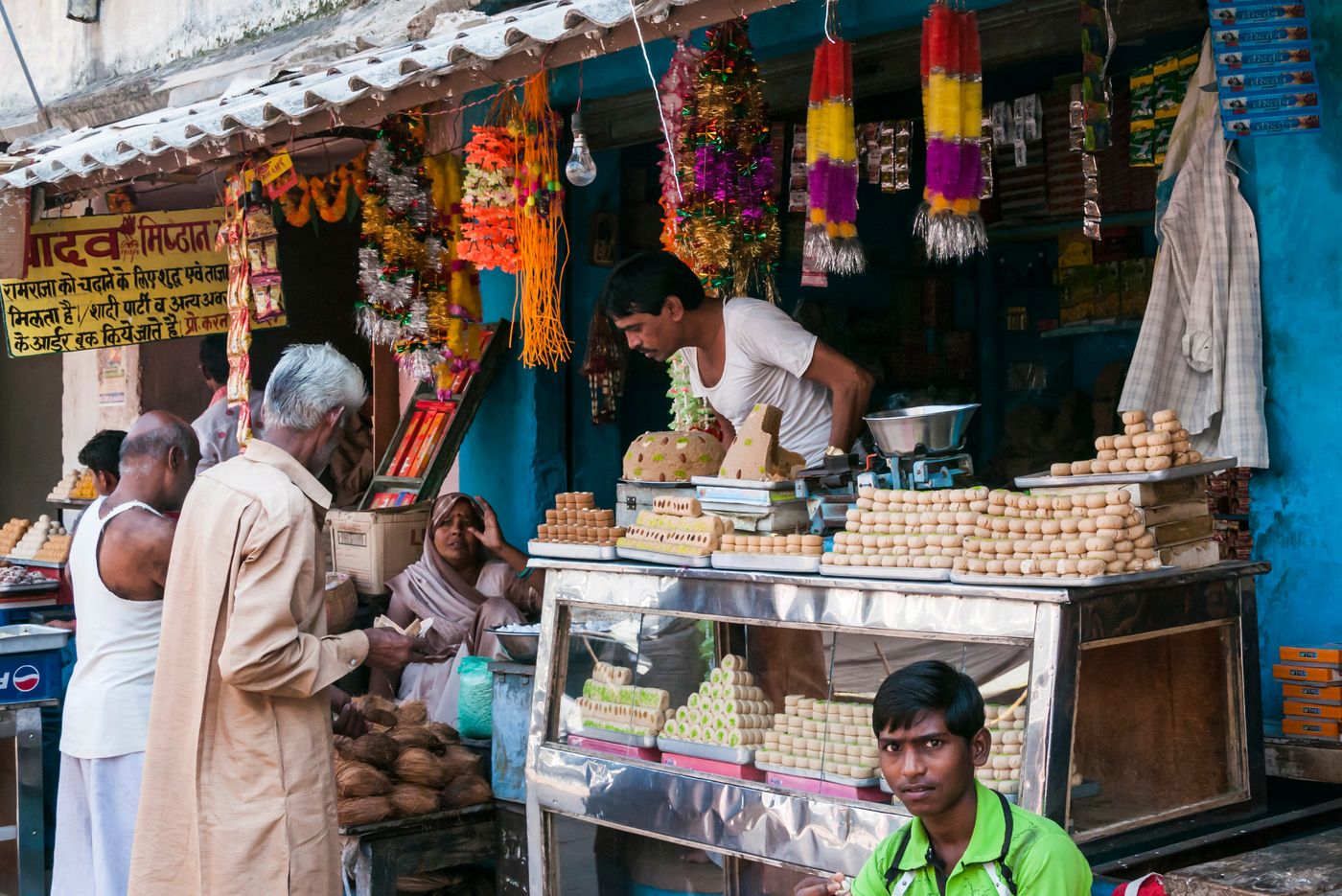
The Sweet Market: In the bustling bazaar near the temple, trays overflow with brightly colored sweets as a woman looks on — faith and flavor intertwined. © Jose Sanchez Munoz
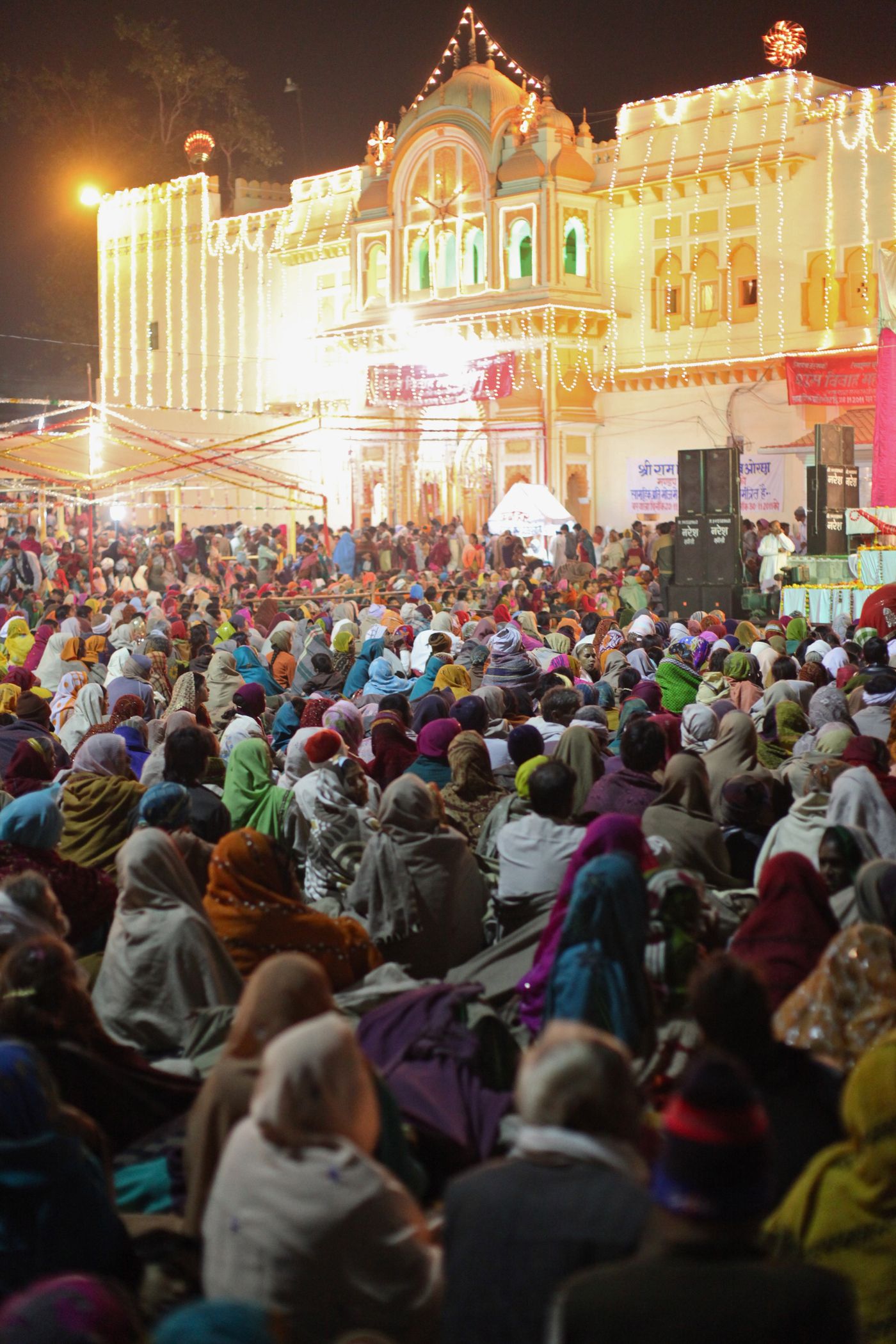
Festival of Devotion: Crowds gather in joyous celebration outside the Ram Raja Temple, their chants filling the air with spiritual energy and song. © Wirestock Images
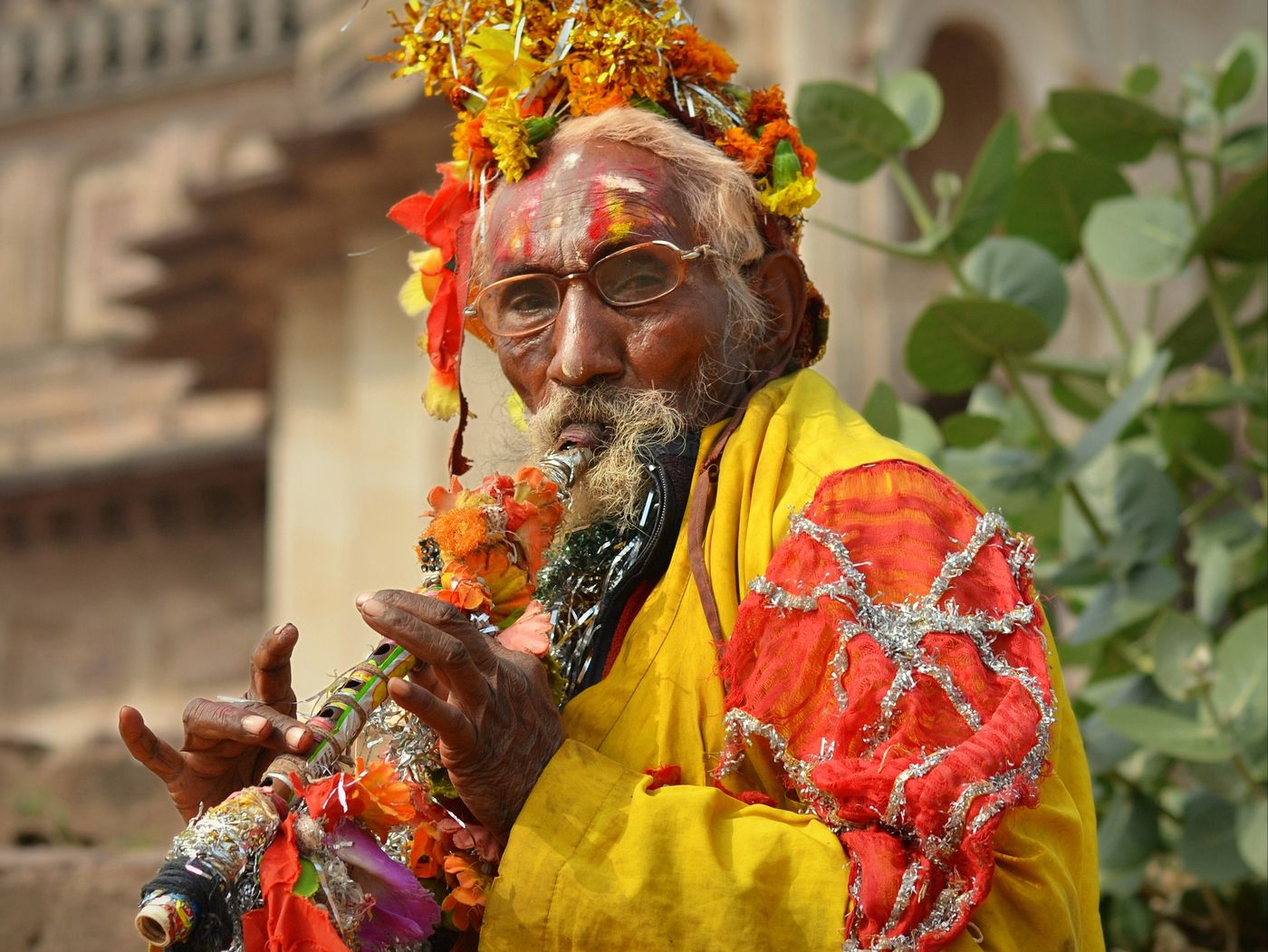
The Singing Sadhu: A bespectacled holy man in a colorful turban strums his jheeka, his music blending seamlessly with the rhythm of the temple bells. © Matt Hahnewald
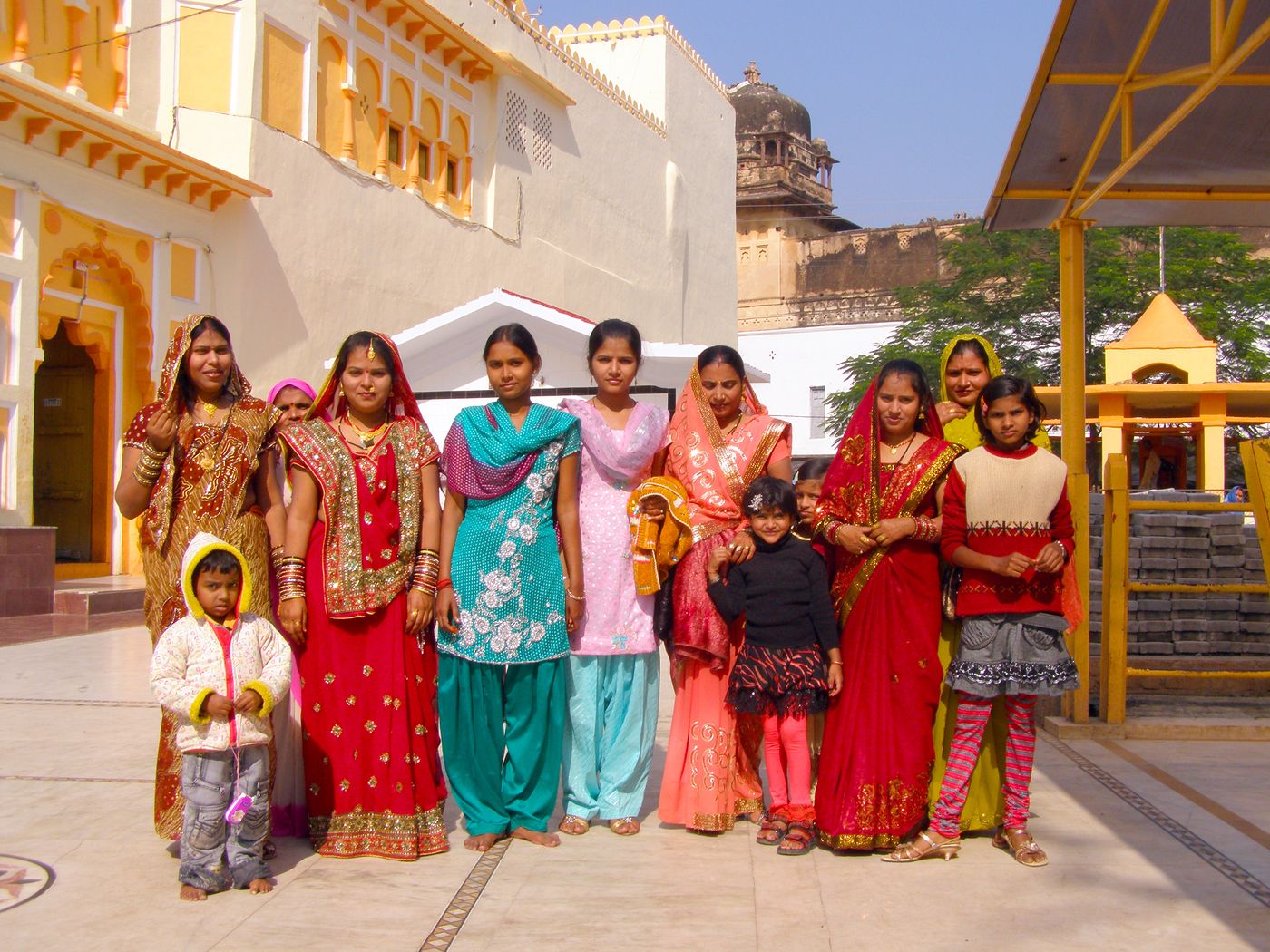
Moments of Joy: In front of the temple’s grand domes, women in vivid saris pose for photos, capturing moments of joy at one of India’s most sacred sites. © Ukrolenochka
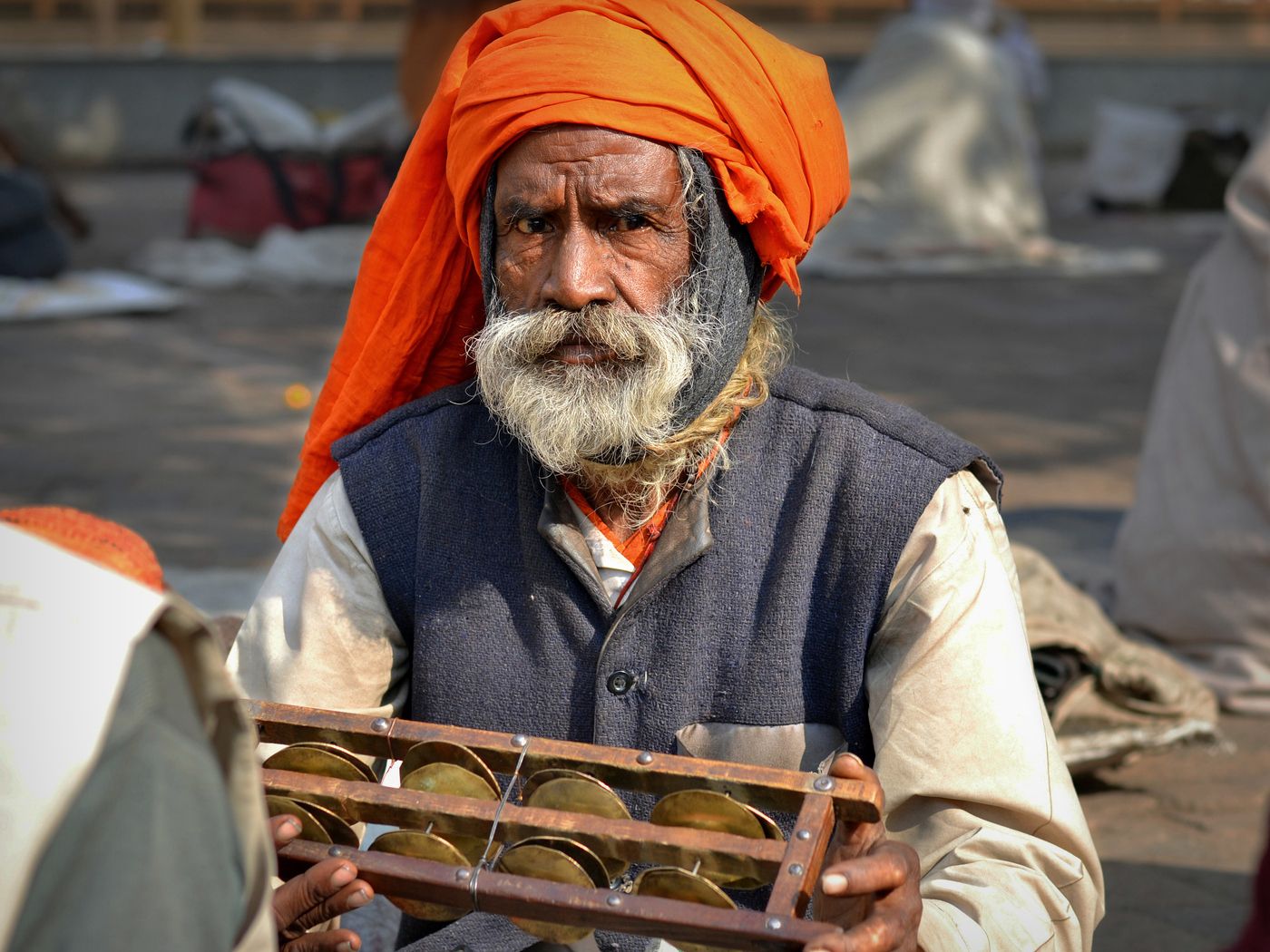
The Music of Faith: An elderly musician, his beard white and turban bright, plays a traditional string instrument — his melody a humble offering to the kingly Ram. © Matt Hahnewald





![Golden Triangle Tour with Goa [Culture + Beach Vacation] (12 days)](https://www.vacationindia.com/wp-content/uploads/2022/06/golden-triangle-tour-with-beach-vacation-270x160.jpg "Golden Triangle Tour with Goa [Culture + Beach Vacation] (12 days)")