
The Palace of Dinman Hardoul (Phoolbagh), Orchha
Dinman Hardoul’s Melancholy Palace
The Heartbreaking Legend of Dinman Hardoul
Dinman Hardoul’s Living Cultural Heritage
Dinman Hardoul’s Melancholy Palace
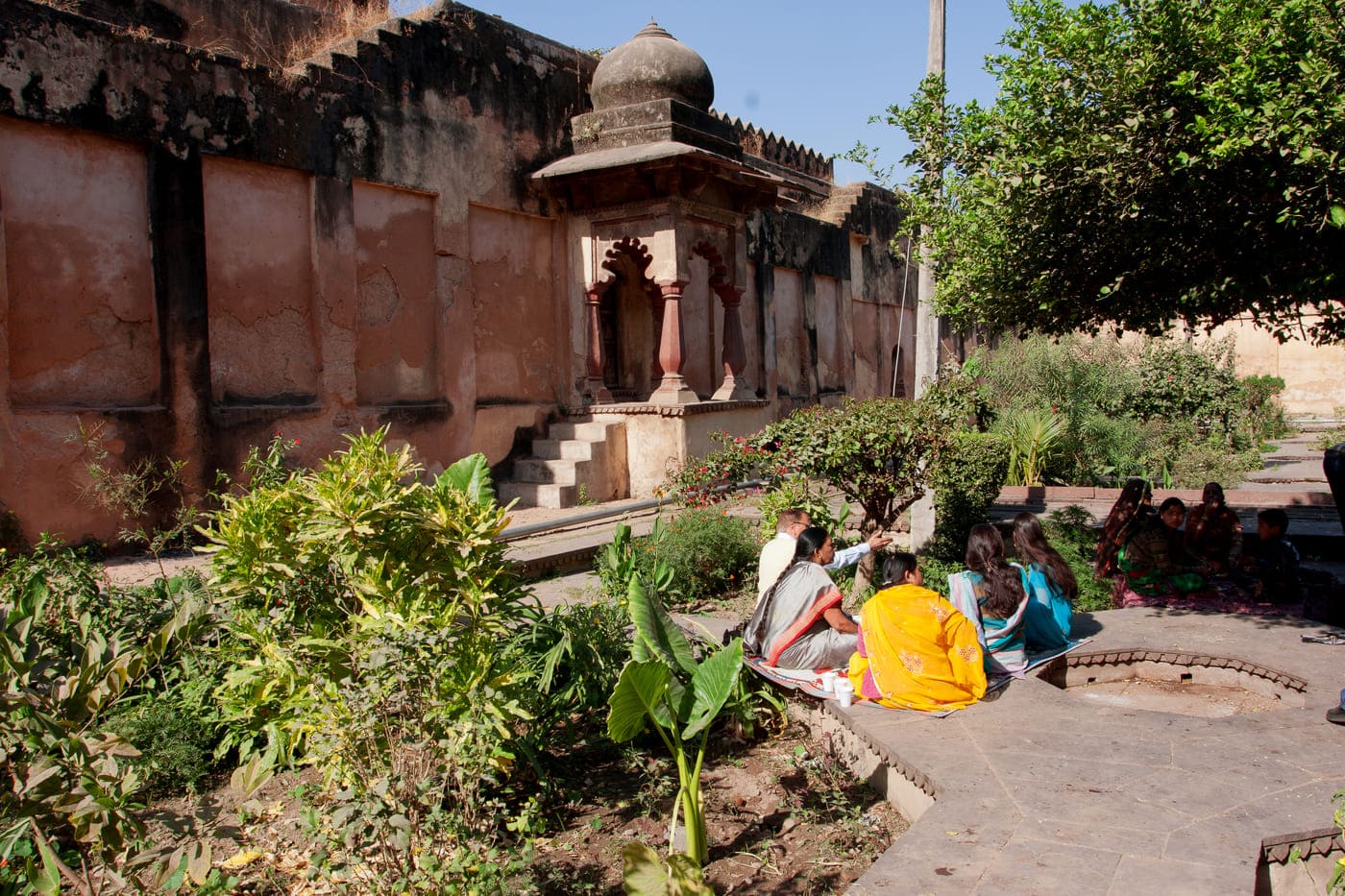
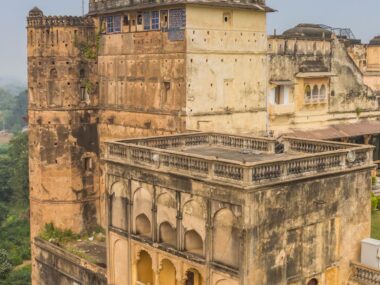
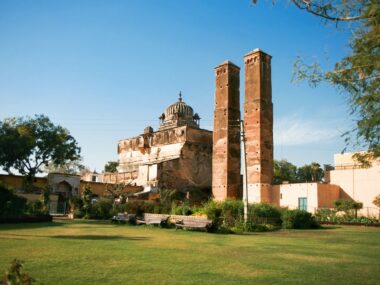
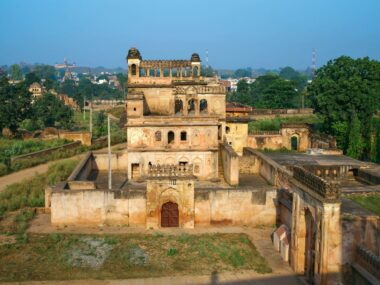
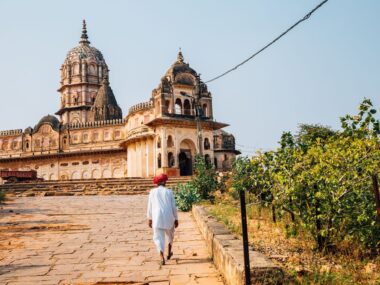
Just north of the Ram Raja Temple stands one of Orchha’s most wistful treasures—Dinman Hardoul’s Palace, a structure that seems to breathe with stories of sorrow and devotion. Its moss-kissed towers, slender pillars, and uneven domes rise quietly against the sky, while the soft yellow hue of its walls adds a gentle, nostalgic sadness to the whole scene.
Step through the entrance and you’ll immediately notice an enormous stone vessel, a relic wrapped in local legend. Folklore says that in ancient times, pilgrims flocked to Orchha in such overwhelming numbers that this vessel—filled daily with sandalwood paste—would be emptied by evening. People pressed their fingers into it to apply tilak before entering the palace, until not a drop of the fragrant Chandan remained.
Today, the palace stands serene and reflective, its silent corridors echoing the devotion, mystique, and everyday rituals of a bygone era.
The Heartbreaking Legend of Dinman Hardoul
The story of Dinman Hardoul is one of Orchha’s most poignant tales—a saga of loyalty, sacrifice, and enduring devotion.
Hardoul, the beloved son of Bir Singh Deo, served as prime minister while his brother, Raja Jhajjar, ruled the kingdom. Admired deeply by the people, Hardoul’s growing popularity sparked envy in Jhajjar’s heart. Matters grew worse when malicious rumors began to swirl—whispers of a forbidden affection between Hardoul and the queen. These rumors did not arise by chance. It is said that Emperor Shah Jahan himself planted two spies in Orchha’s court to sow discord between the brothers and weaken the Bundela stronghold.
Consumed by jealousy and suspicion, Jhajjar confronted his queen. In a cruel test of her loyalty, he commanded her to poison Hardoul to prove her innocence. Powerless and devastated, she confided in Hardoul. In a final act of selfless love—and to protect her honor—Hardoul drank the poison willingly.
His death shook the kingdom. To the people of Orchha, Hardoul was no longer just a prince—he became a martyr of integrity.
But his story did not end with his passing.
Legend tells of a moment during his niece’s wedding that transformed Hardoul into a deity-like figure. His sister, Kunjawati, desperately sought help from Jhajjar for the celebrations. In bitterness, he mocked her, suggesting she turn to her “favorite” brother—Hardoul, who was already dead. Heartbroken, she went to Hardoul’s samadhi and prayed. In her moment of despair, Hardoul’s spirit reassured her that she would not be abandoned.
On the wedding day, the impossible happened. Hardoul is said to have returned—not only to support the ceremonies but to personally serve the bridegroom’s meal. From that moment, he was revered as Lala Hardoul, the divine guardian of weddings.
His legacy grew far and wide. Across villages, his platform shrine (chabutra) became a place of worship. Even today, families seek his blessings for protection from hunger, storms, misfortune, and obstacles during marriage ceremonies. Parents still symbolically invite him to weddings, honoring him as Dinman Hardoul, Hardoul, or lovingly, Lala Hardoul.
His story lives on—not in sorrow, but in devotion—proof that love and sacrifice can echo through centuries.
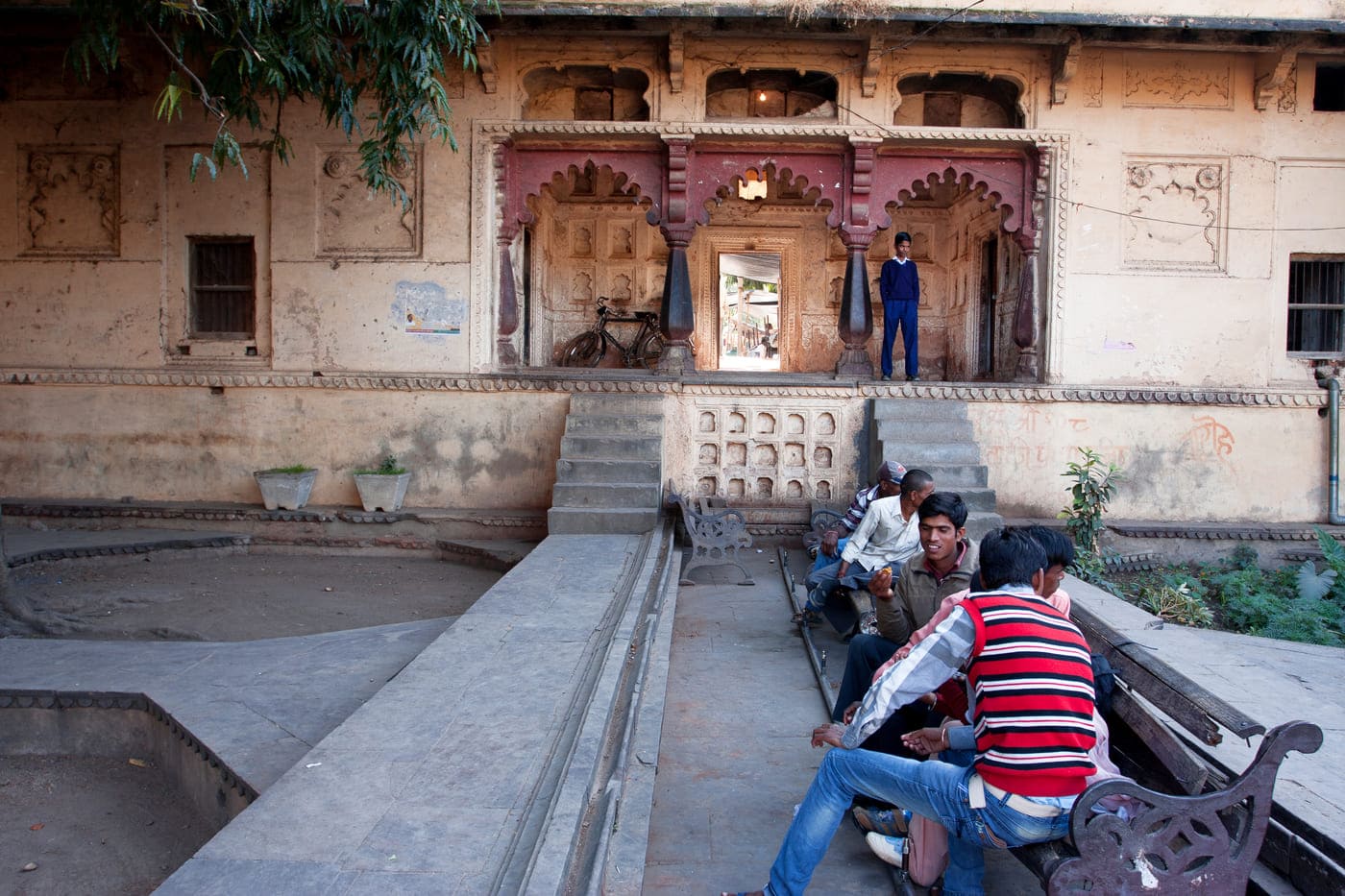
In the heart of Orchha’s old city garden, a group of cheerful teenagers gathers beneath the shadows of ancient architecture—where locals and travelers alike come to soak in history, beauty, and youthful energy © Radiokafka
Dinman Hardoul’s Living Cultural Heritage
The legend of Dinman Hardoul did not fade with time—instead, it blossomed into a vibrant cultural tradition cherished across Bundelkhand. In 1989, Deep Shikha Manch was founded with a heartfelt mission: to preserve the region’s rich culture, literature, and folk art. One of their proudest contributions has been keeping alive the soulful tradition of Hardoul Katha Gaayan—the musical retelling of Hardoul’s heroic sacrifice.
For generations, the Koria Panda community of professional singers safeguarded these stories, passing them from one era to the next. Today, with Deep Shikha Manch’s support, their art continues to flourish. Accompanied by traditional musicians playing age-old instruments, these performers bring Hardoul’s legend to life at festivals, ceremonies, and special occasions.
Their voices have traveled far beyond Orchha—echoing through Orissa, Bihar, West Bengal, Maharashtra, and even Delhi—carrying with them the timeless spirit of a local hero whose story still moves hearts across India.
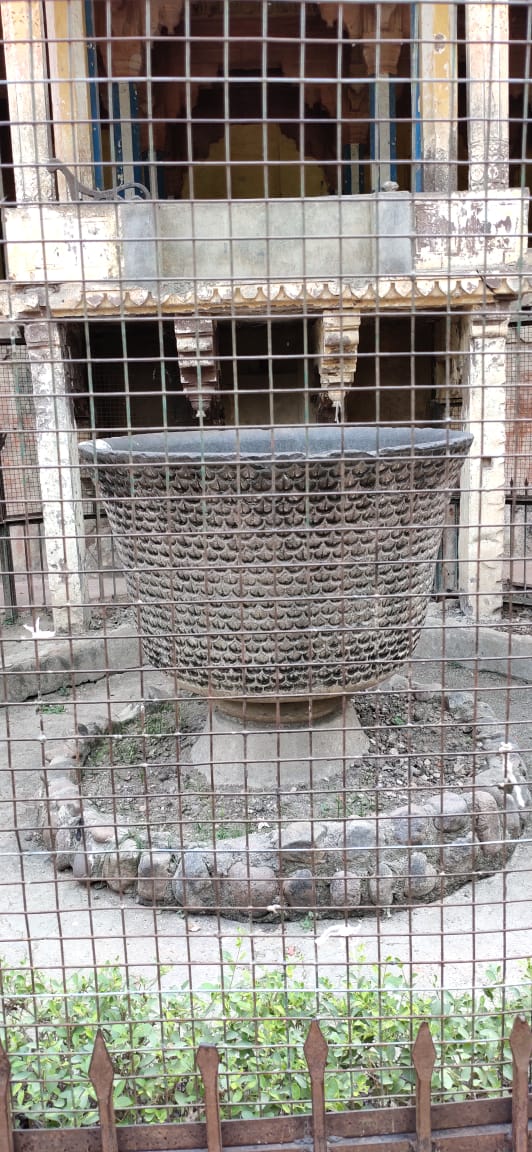
At the entrance of Dinman Hardoul’s palace stands a massive stone vessel, a mysterious relic steeped in folklore and tradition, greeting every visitor with a whisper from Orchha’s legendary past © Sunil Singh















![Golden Triangle Tour with Goa [Culture + Beach Vacation] (12 days)](https://www.vacationindia.com/wp-content/uploads/2022/06/golden-triangle-tour-with-beach-vacation-270x160.jpg "Golden Triangle Tour with Goa [Culture + Beach Vacation] (12 days)")