
Visit to Rai Praveen Mahal, Orchha
Rai Praveen Mahal – A Palace Steeped in Legend
The Fearless Rai Praveen
An Architectural Marvel in Sandstone
The Enchanted Gardens of Rai Praveen Mahal
Rai Praveen Mahal – A Palace Steeped in Legend
In the heart of Orchha stands a palace that still hums with poetry — the Rai Praveen Mahal, built by Raja Indrajit in the late 1500s to honor his muse, the enchanting Rai Praveen. Dancer, poet, and beauty beyond compare, she was known as the “Nightingale of Orchha,” her charm celebrated in verse:
Sobha subh sani parmnarth nidhani diha
Kalusha kripani mani sab jag jani hai
Poorav ke poore punya suni jai
Parveen Rai Teri vani meri rani, ganga kaiso pani hai
— “O my queen Parveen, your beauty is the essence of goodness, a bridge to heaven, and a sword that destroys evil. Your words are as pure as the waters of the Ganges.”
Her fame soon reached the Mughal emperor Akbar, who demanded that Raja Indrajit send her to his court. Defiant in love, the king refused — and paid a heavy fine. Eventually, Rai Praveen journeyed to Agra, accompanied by the poet Keshav Das, to face the grandeur of the Mughal court.
There, legend says, her wit outshone her beauty. When Akbar praised her grace, she replied that only a devoted woman belongs to her lord, not to another king’s command. So moved was the emperor that he sent her back to Orchha with honor. Today, the graceful arches and painted walls of Rai Praveen Mahal still seem to echo with her songs — the melody of a woman who turned love into legend.
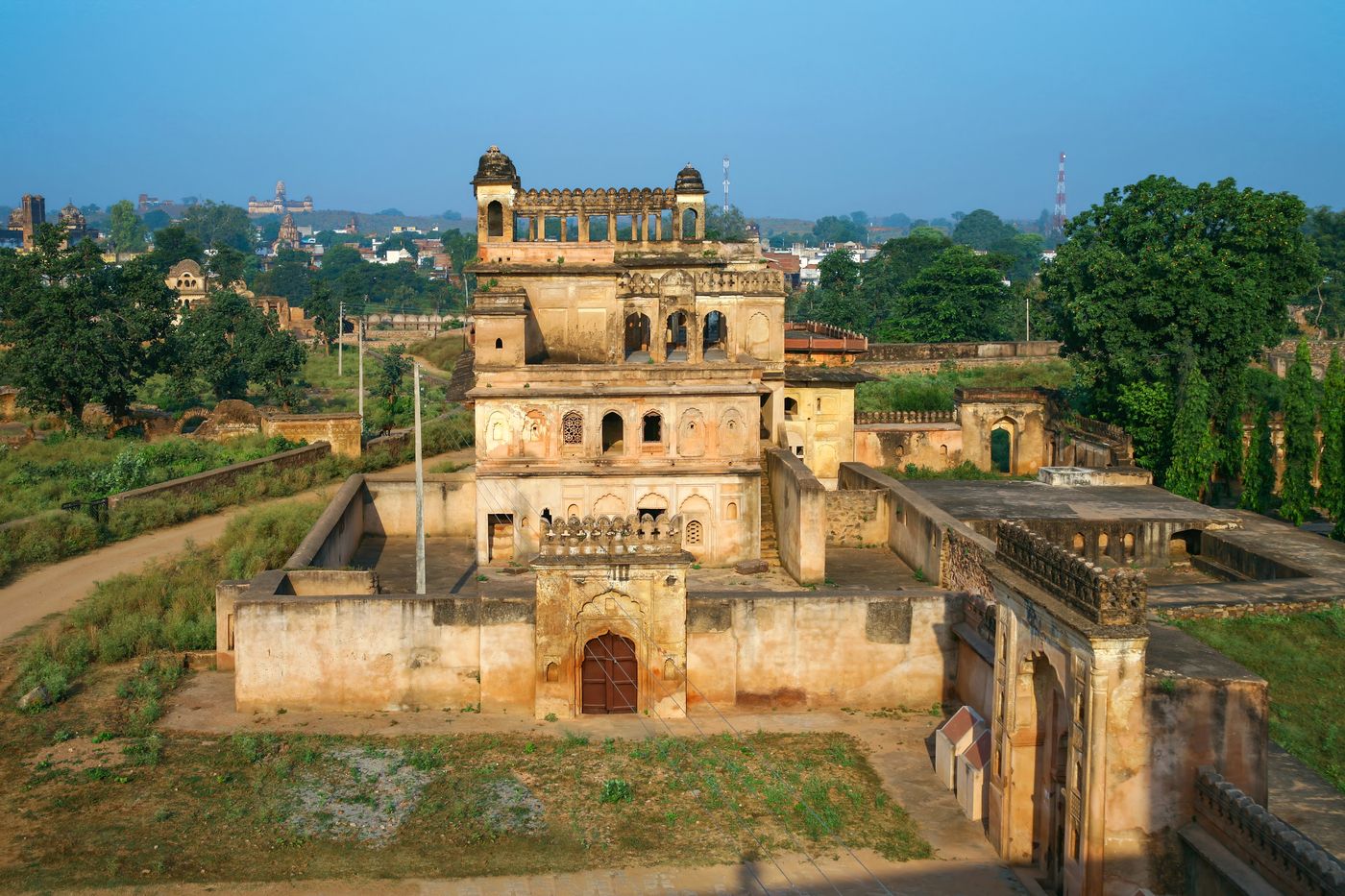
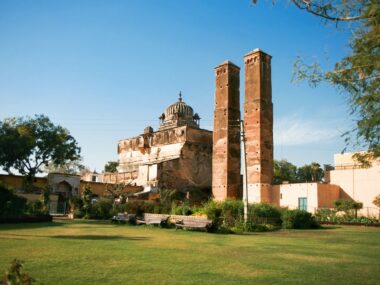
The Nightingale’s Palace: The graceful ruins of Rai Parveen Mahal overlook a tranquil garden in Orchha — a timeless tribute to Rai Parveen, the celebrated poetess and dancer known as the Nightingale of Orchha. Even in decay, the palace hums with the melody of her legend. © Sanga Park
The Fearless Rai Praveen
The Mughal court, accustomed to poets, dancers, and courtiers of every kind, had never encountered anyone quite like Rai Praveen. Her beauty shimmered like moonlight, her words flowed like poetry, and her wit cut as sharply as a sword. When she appeared before Emperor Akbar, even the great ruler was enchanted — so much so that he declared she must join his royal harem.
But Rai Praveen, ever bold and self-assured, stood her ground. With grace and courage, she said:
“Oh my good king, please listen to my submission. Only a royal servant, or a crow, or a dog would like to eat something that has already been tasted and polluted by another.”
Her words, though daring, were delivered with such dignity that they silenced the court. Instead of anger, Akbar felt awe — admiration for a woman who spoke truth to power. He not only spared her but sent her back to Raja Indrajit, laden with jewels and fine gifts, her honor intact and her legend immortalized.
Folklore sometimes shifts the tale — naming Raja Indramani as her lover and Aurangzeb as her royal admirer — yet all stories agree on one thing: Rai Praveen was a woman of extraordinary talent and fearlessness. As the muse of the great poet Keshav Das, she shone as both artist and icon, transcending her role as a royal courtesan.
In an age dominated by kings and emperors, Rai Praveen stood as a queen of spirit — a woman who, armed only with her intellect and integrity, defied an empire and won.
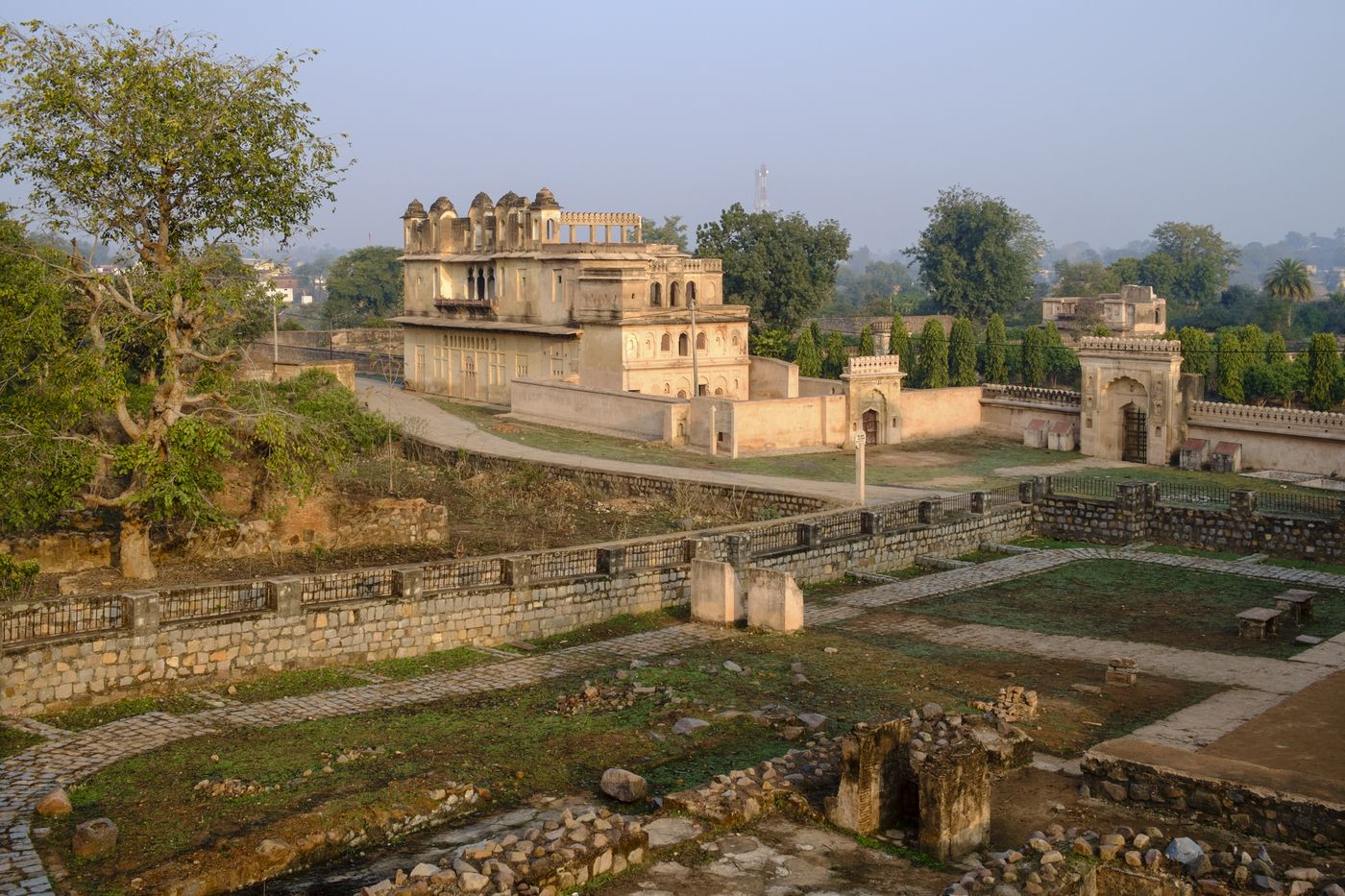
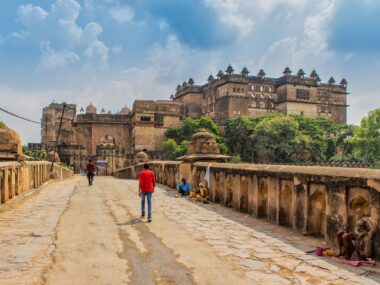
Arches of Cool Serenity: The wide, open arches of Rai Parveen Mahal invite soft breezes through their vast embrace, keeping the palace cool and airy — a perfect blend of royal design and poetic charm. © Konstantin Litvinov
An Architectural Marvel in Sandstone
The Rai Praveen Mahal rises gracefully from the heart of Orchha’s royal gardens — a symphony in sandstone and brick, elegant yet understated. Built north of the grand Jahangir Mahal, the two palaces are linked by a broad stone pathway with wide, flat steps, as if inviting one to walk through history itself. Between them lie the royal Hamams and an imposing eastern gateway, once echoing with the laughter and fragrance of courtly life.
To enter the palace gardens, visitors pass through a majestic stone archway into a serene, tree-lined compound. With just two stories, the palace seems to blend with the surrounding canopy — a harmony of architecture and nature. The entire complex, as scholar D.F. Ruggles described, is “a walled enclosure… two-storeyed with rooftop chhatris and a basement.”
Yet, the true enchantment lies within. On the upper walls of the palace, life-size murals celebrate the captivating Rai Praveen — depicted in graceful Nritya mudras, her movements frozen forever in pigment and stone. Each mural breathes her spirit, her poise, her art. Among them, a proud portrayal of Raja Indrajit astride his steed reminds visitors of the love and admiration that inspired this exquisite monument.
More than a palace, Rai Praveen Mahal is a timeless ode — where beauty, poetry, and architecture merge into one enduring legend.
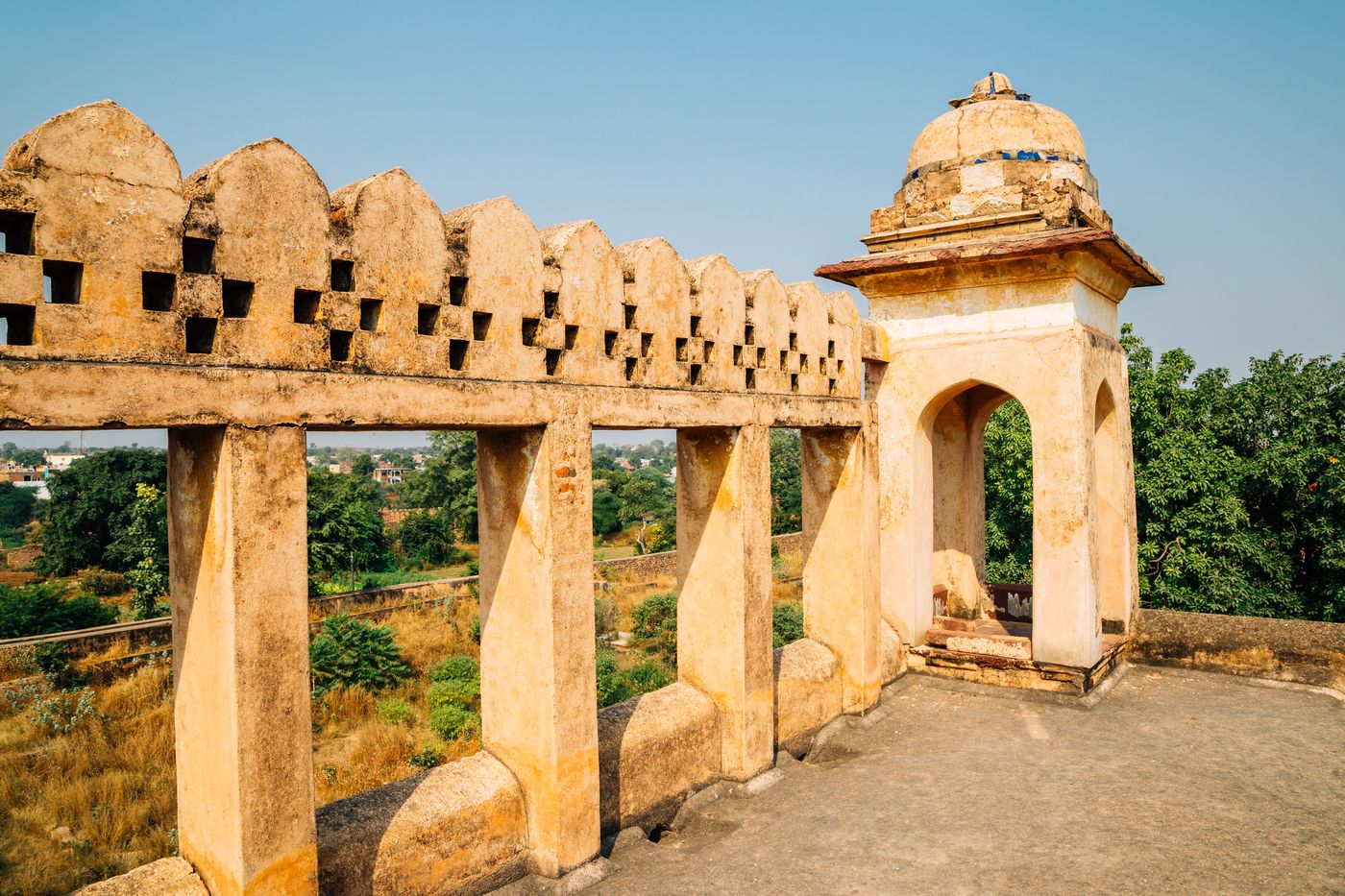
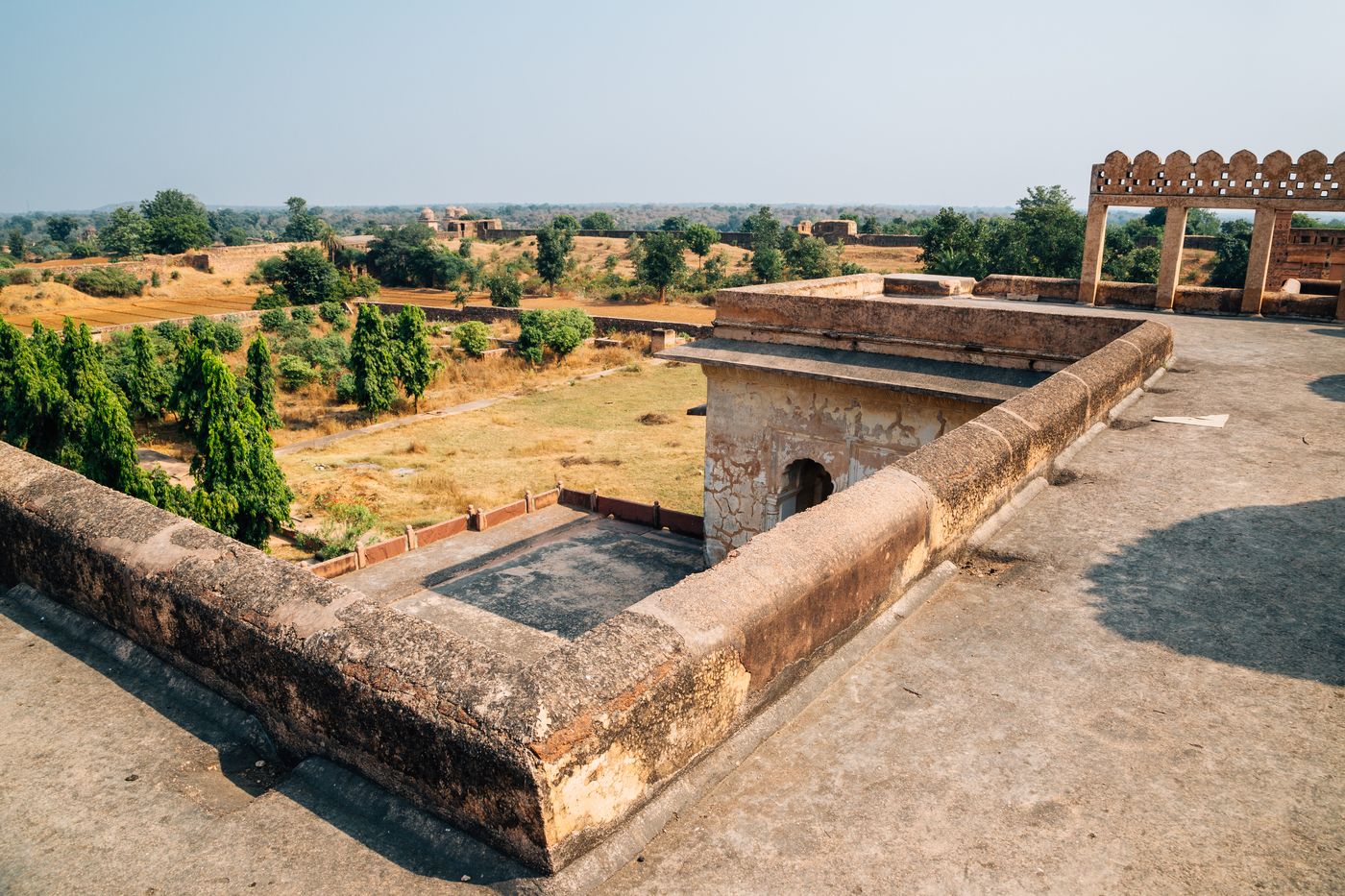
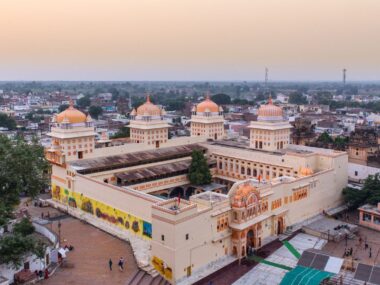
Pillars of Poetry and Grace: Slender balcony pillars frame the view of Orchha from Rai Parveen Mahal, built by King Indrajit for his muse — the gifted poetess and musician whose spirit still lingers in every curve of stone. © Sanga Park
The Enchanted Gardens of Rai Praveen Mahal
Graceful arches, carved niches, and large airy windows fill Rai Praveen Mahal with light and breeze, making it a sanctuary of calm and beauty. From these windows, visitors are treated to a majestic view of the towering Jahangir Mahal to the south — a sight that seems almost poetic, as if the two palaces are locked in a silent conversation across time.
In front of the palace stretches the lush Anand Mandal Bagh, a garden that mirrors Rai Praveen’s own grace — elegant, vibrant, and meticulously designed. Its shady Ashoka trees, octagonal flower beds, and ornamental basins create a tranquil retreat where stone and nature breathe in harmony. The garden’s water came from three ancient wells — one within and two beyond the walls — channelled through an ingenious irrigation system. As scholar D.F. Ruggles observed, the packed mortar surfaces that covered everything but the planting beds ensured precious water was never wasted — a masterstroke of medieval design in a parched land.
The garden’s very name, Anand Mandal, means “Circle of Joy,” and rightly so. It is said that among its shaded paths and blooming beds, Raja Indrajit and Rai Praveen would meet — the king and his muse, surrounded by the fragrance of jasmine and the murmur of fountains. Even today, the palace and its gardens exude the same timeless romance — a whisper of poetry carried on the evening breeze.
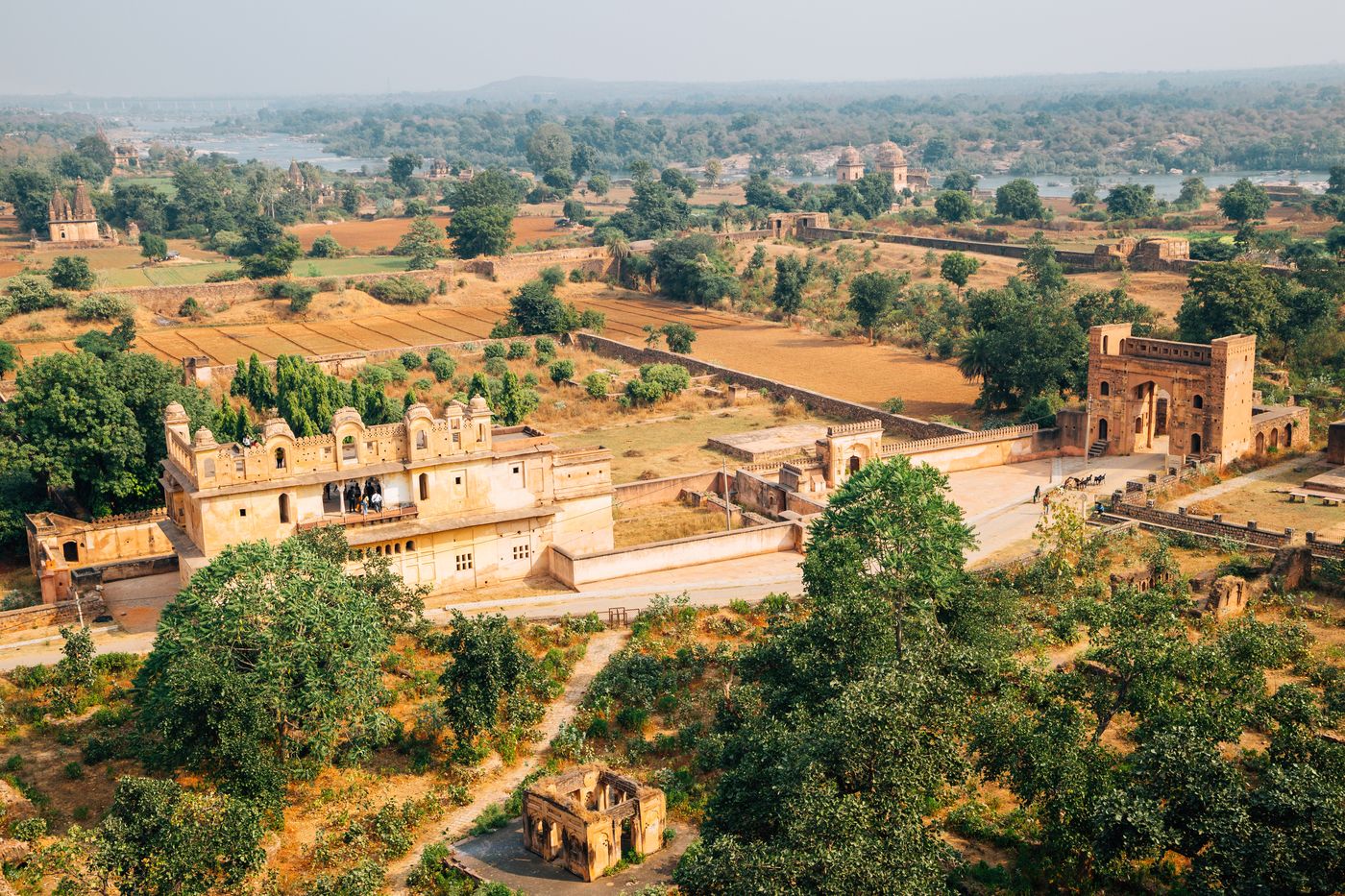
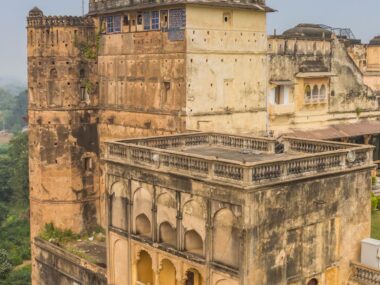
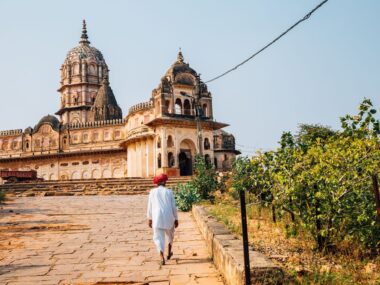
A Glimpse from Behind: From the rear, the Rai Parveen Palace reveals its quiet symmetry and faded splendor — a romantic silhouette against Orchha’s sunlit sky, whispering stories of love and art. © Sanga Park



















![Golden Triangle Tour with Goa [Culture + Beach Vacation] (12 days)](https://www.vacationindia.com/wp-content/uploads/2022/06/golden-triangle-tour-with-beach-vacation-270x160.jpg "Golden Triangle Tour with Goa [Culture + Beach Vacation] (12 days)")